










Tata Chemicals Limited Reports ₹50 Crore Q2 FY27 Net Loss
Key highlights
- Tata Chemicals reported a consolidated Q2 FY27 net loss of ₹50 crore, versus a ₹219 crore profit in Q2 FY26.
- Consolidated revenue increased 8% year-on-year to ₹4,177 crore in Q2 FY27.
- Consolidated EBITDA was ₹381 crore, down from ₹537 crore a year earlier, with a 9.1% margin.
- Standalone EBITDA rose 22% to ₹292 crore as salt, FOS and silica volumes increased.
powered by IRIS
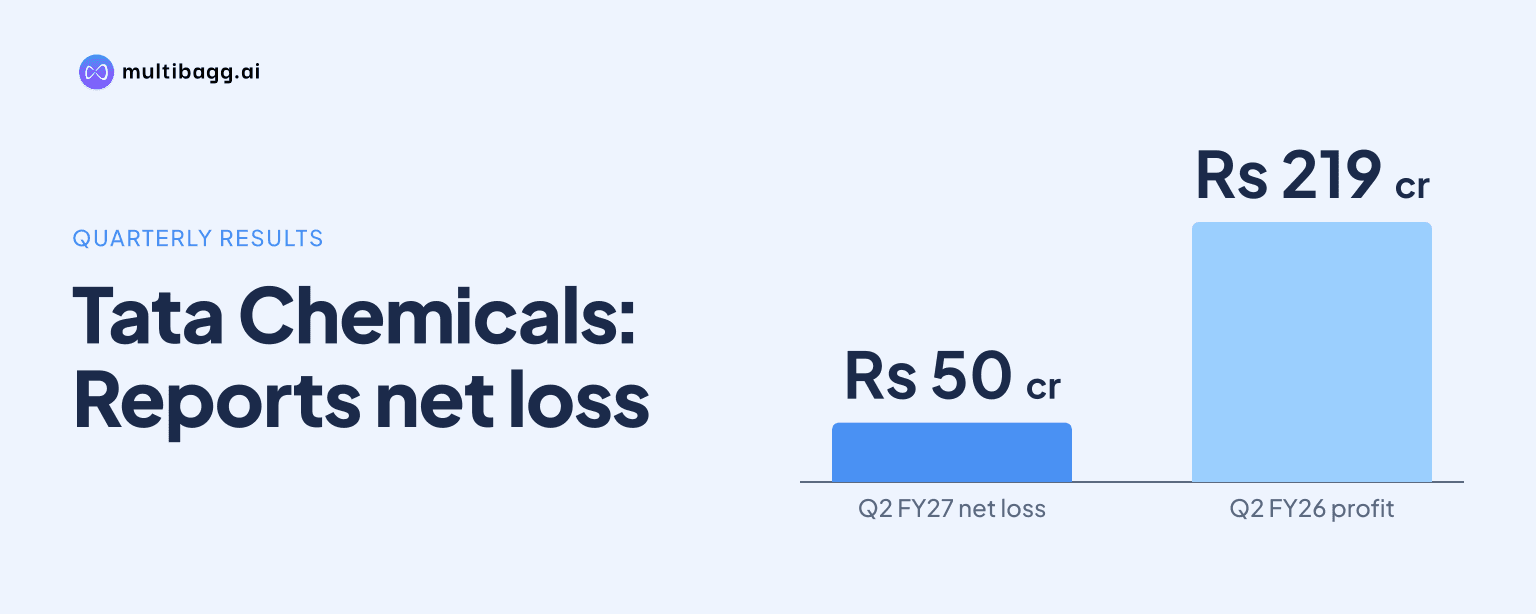
Tata Chemicals Limited reported a consolidated net loss of ₹50 crore for Q2 FY27, against a ₹219 crore profit a year earlier, although consolidated revenue rose 8% to ₹4,177 crore. The September-quarter result shows stronger volumes in India and the United States, while group-level profitability was affected by lower operating performance and higher costs.
Know Tata Chemicals inside out
Results, valuation, peers and who's buying, in one view.
What did Tata Chemicals report for Q2 FY27?
Tata Chemicals reported consolidated revenue from operations of ₹4,177 crore in Q2 FY27, up 8% year-on-year, while consolidated EBITDA stood at ₹381 crore. The company recorded a loss before tax of ₹26 crore and a net loss of ₹50 crore for the quarter ended September 30, 2026.
The consolidated loss compares with a profit after tax of ₹219 crore in the corresponding quarter of FY26. Earnings per share for the quarter were negative ₹4.79. Consolidated EBITDA was lower than ₹537 crore reported in Q2 FY26, a decline of 29% year-on-year.
The result reflects a gap between revenue growth and earnings performance. While higher sales volumes supported the top line, operating profit did not keep pace with revenue. The reported EBITDA margin was 9.1% for the quarter.
Why did revenue rise while consolidated profit turned negative?
Revenue rose because Tata Chemicals recorded higher volumes in both India and the United States, but the company reported weaker consolidated profitability. The available results data identifies lower EBITDA versus the prior-year quarter despite the 8% increase in consolidated revenue.
In India, management said higher volumes of salt, functional oligosaccharides, or FOS, and silica supported business performance. These products helped the India operations remain a relative area of strength during the quarter.
However, management also referred to oversupply and continued import pressure in the domestic market. These conditions are relevant because they can limit the extent to which increased volumes translate into higher margins. The company said India demand remained stable and positive, but flagged the pressure from market supply and imports.
The company also cited higher depreciation arising from the capitalisation of projects, which increased finance cost. This provides an additional explanation for why a stronger operating performance in the standalone India business did not result in a stronger consolidated bottom line.
Got a follow-up? Ask IRIS
How did Tata Chemicals' standalone India business perform?
Tata Chemicals' standalone revenue from operations increased 8% to ₹1,303 crore in Q2 FY27, while standalone EBITDA rose 22% to ₹292 crore. The improvement was linked to higher volumes in salt, FOS and silica.
Standalone profit after tax, however, declined 31% to ₹122 crore. The divergence between higher EBITDA and lower profit after tax is consistent with the company’s comments on higher depreciation after project capitalisation and higher finance cost.
The standalone figures show that the India business generated a substantial part of group operating profit for the quarter. Standalone EBITDA of ₹292 crore represented most of the ₹381 crore consolidated EBITDA, although the company did not provide further segment-level reconciliations in the supplied material.
For investors, the distinction between standalone and consolidated numbers is important. The standalone business showed revenue and EBITDA growth, whereas the consolidated entity reported a year-on-year fall in EBITDA and a net loss.
What do the Q2 FY27 numbers mean for investors?
The Q2 FY27 numbers show that Tata Chemicals grew consolidated revenue but faced material pressure on consolidated earnings. Revenue growth of 8% was driven by volumes, while EBITDA declined 29% from the previous year’s level of ₹537 crore and net profit moved to a ₹50 crore loss.
The quarter also highlights the effect of market conditions on the company’s operations. Management described domestic demand as stable and positive, but noted oversupply and steady import pressure. These factors matter because they affect the operating environment for the company’s products even when volume growth remains intact.
Higher depreciation and finance cost following project capitalisation were also identified by management. These are reported cost factors investors can monitor alongside future revenue, EBITDA and profit after tax figures.
No earnings guidance, forecast, or specific financial target was provided in the supplied call material. The management discussion was led by Managing Director and Chief Executive Officer R. Mukundan, along with Chief Financial Officer Nandakumar Tirumalai, during the November 7 earnings call.
Conclusion
Tata Chemicals delivered an 8% rise in consolidated Q2 FY27 revenue to ₹4,177 crore, supported by higher volumes in India and the United States, but reported a ₹50 crore consolidated loss. The result was marked by a 29% year-on-year decline in EBITDA, pressure from oversupply and imports, and higher depreciation and finance costs.
Investors will watch whether volume growth in salt, FOS and silica continues, whether domestic demand remains stable, and how oversupply and import pressure affect profitability. Future disclosures will also indicate the ongoing impact of project capitalisation on depreciation, finance costs and consolidated earnings.