










TCI Express Limited Q2 EBITDA Rises 10.8% as Margin Hits 12.7%
Key highlights
- TCI Express reported Q2 FY2027 total income of ₹339 crore, up 8.8% year-on-year.
- Q2 FY2027 EBITDA rose around 10.8% to ₹43 crore from ₹39 crore.
- TCI Express' Q2 EBITDA margin improved 30 basis points year-on-year to 12.7%.
- Management expects H2 FY2027 revenue growth of 14% to more than 15% and EBITDA margin above 13%.
powered by IRIS
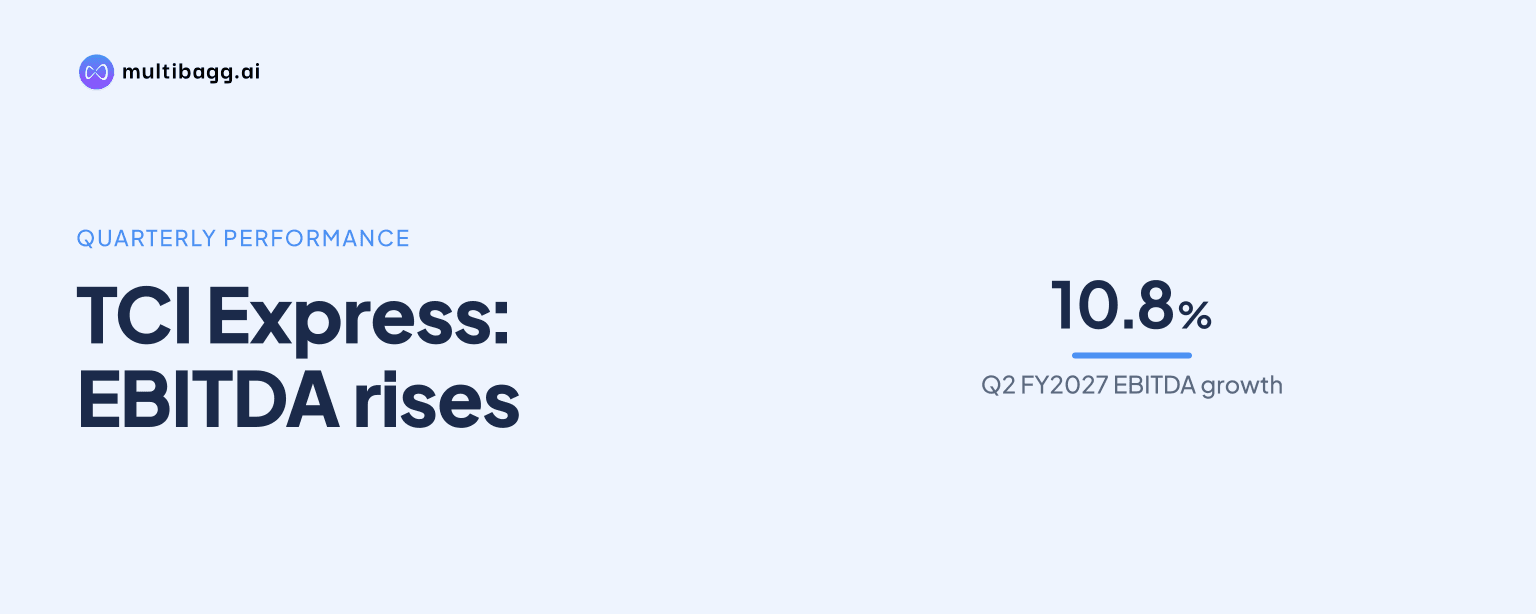
TCI Express Limited reported Q2 FY2027 EBITDA growth of 10.8% year-on-year to ₹43 crore, while its EBITDA margin improved to 12.7% from 12.4%, supported by 9% growth in income from operations to ₹336 crore and continued network and automation investment.
Know TCI Express inside out
Results, valuation, peers and who's buying, in one view.
What did TCI Express report for Q2 FY2027?
TCI Express reported higher revenue and EBITDA for the quarter ended in Q2 FY2027, with profitability growing faster than income. Income from operations increased to ₹336 crore from ₹309 crore a year earlier, while total income rose 8.8% to ₹339 crore from ₹312 crore.
EBITDA increased to ₹43 crore from ₹39 crore in the corresponding quarter of the previous year. The resulting EBITDA margin was 12.7%, compared with 12.4% a year earlier. Management described this as the highest margin recorded in the past five quarters.
The quarterly update was discussed during TCI Express' earnings conference call on November 5, 2026, hosted by PhillipCapital India Private Limited. The management team represented on the call included Managing Director Chander Agarwal, Executive Director and Chief Financial Officer Mukti Lal, and Chief Business Officer Pabitra Panda.
The company also reported that H1 FY2027 revenue grew 8.8% year-on-year. The disclosed figures indicate that operating profit growth outpaced the increase in total income during the second quarter, resulting in the margin expansion.
How does the quarter compare with TCI Express' recent performance?
TCI Express maintained a similar growth trajectory to the first quarter of FY2027, when it reported total income of ₹315 crore, up around 9% year-on-year, and EBITDA of ₹37 crore, up 11%. Q1 EBITDA margin was 11.7%, compared with 11.5% in the year-earlier period.
The Q2 margin of 12.7% was therefore 100 basis points higher than the Q1 FY2027 level. The company attributed its broader performance during the financial year to execution across its operations, along with ongoing network expansion and technology investment.
In Q1 FY2027, domestic air express revenue had grown 29% year-on-year and international express revenue had risen 27%, according to management. The company had linked those trends to enterprise account growth, direct airport deliveries, customer additions, carrier partnerships and automation in operational processes.
Earlier, TCI Express had outlined FY2027 guidance for volume growth of more than 10% and revenue growth of more than 15%. The Q2 call provided a more specific outlook for the second half, with management expecting revenue growth of 14% to more than 15% and an EBITDA margin above 13%.
Got a follow-up? Ask IRIS
What is management targeting for the second half of FY2027?
TCI Express expects H2 FY2027 revenue growth of 14% to more than 15%, alongside an EBITDA margin of more than 13%. This outlook was communicated by management during the Q2 earnings call and remains a forward-looking target rather than a reported result.
Management said it would continue investing in its network and automation. Such expenditure is relevant for an express logistics operator because its service model depends on the movement, sorting, routing and delivery of shipments across its operating network.
The Q2 result shows that the company entered the second half with a 12.7% EBITDA margin, leaving management's stated H2 target slightly higher. The transcript does not provide a detailed capital expenditure figure, a project timeline, or segment-level financial data for the second half.
Investors should distinguish between the reported Q2 financial results and the outlook. Revenue, total income, EBITDA and margin are disclosed actual figures for the quarter, while the H2 revenue and margin ranges reflect management's expectations and may be affected by operating and market conditions.
What does the Q2 result mean for investors and the logistics sector?
TCI Express' Q2 figures show that earnings grew faster than total income, with EBITDA rising around 10.8% against total-income growth of 8.8%. The 30-basis-point year-on-year improvement in EBITDA margin is the key measure of operating performance disclosed for the quarter.
For investors, the principal reported metrics are the ₹339 crore of total income, ₹43 crore of EBITDA and 12.7% margin. No share-price movement, profit after tax figure, shipment-volume measure or dividend information was provided in the Q2 material, so these cannot be assessed from the disclosed update.
For customers and industry operations, continued spending on network capacity and automation may support TCI Express' operating model. However, the company has not disclosed in the supplied information specific new facilities, geographies, automation projects or customer-service targets linked to the investment programme.
The earnings update also places the company within a logistics market where network reach, process automation and service execution are recurring operational factors. TCI Express' earlier FY2027 commentary identified e-commerce, air express and international express as areas that contributed to growth, while the Q2 update focused on consolidated income, EBITDA and margin delivery.
Conclusion
TCI Express delivered Q2 FY2027 income growth of about 9% and EBITDA growth of around 10.8%, taking EBITDA margin to a five-quarter high of 12.7%. The result matters because profitability increased faster than income, while H1 revenue rose 8.8% year-on-year.
The next point to watch is management's stated H2 FY2027 target of 14% to more than 15% revenue growth and EBITDA margin above 13%. Progress on network and automation investment, as well as the delivery of this outlook, will be central to subsequent earnings updates.