










Thomas Scott (India) Limited Q2 FY27 Revenue Rises 39% to ₹79 Crore
Key highlights
- Thomas Scott reported Q2 FY27 revenue of ₹78.9 crore, up 38.6% year-on-year.
- Q2 FY27 net profit rose 33.3% year-on-year to ₹6.28 crore.
- EBITDA was ₹10.5 crore, while EBITDA margin was 13.31%, down 163 basis points year-on-year.
- H1 FY27 revenue increased 31% year-on-year to ₹145 crore.
powered by IRIS
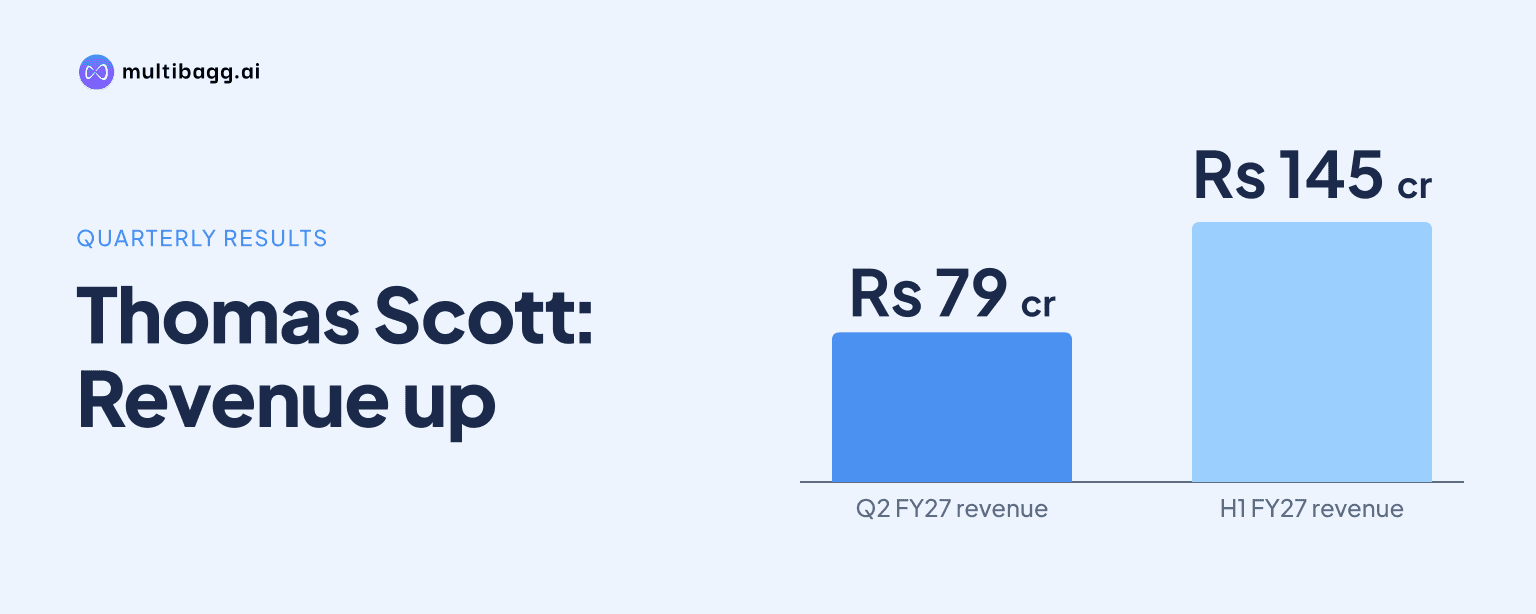
Thomas Scott (India) Limited reported Q2 FY27 revenue of ₹78.9 crore, up 38.6% year-on-year, while net profit rose 33.3% to ₹6.28 crore for the quarter ended September 30, 2026. The result matters because growth came from its licensed and own-brand businesses, even as EBITDA margin declined and management did not give quantified guidance.
Know Thomas Scott India inside out
Results, valuation, peers and who's buying, in one view.
How did Thomas Scott perform in Q2 FY27?
Thomas Scott delivered higher revenue, EBITDA and profit in Q2 FY27, with revenue reaching ₹78.9 crore and EBITDA rising 24.1% year-on-year to ₹10.5 crore. Revenue was also up 19.9% sequentially, while EBITDA increased 22.7% from the preceding quarter.
Net profit for the quarter was ₹6.28 crore, compared with growth of 33.3% year-on-year and 15.4% quarter-on-quarter. The company had approved unaudited financial results for the quarter and half year ended September 30, 2026, with a limited review report attached.
For the first half of FY27, revenue rose 31% year-on-year to ₹145 crore. The available earnings-call summary reported an H1 EBITDA margin of 13.13%, compared with a Q2 EBITDA margin of 13.31%.
What drove revenue growth during the quarter?
Thomas Scott said licensed brands and its own brand supported growth during the quarter. Licensed-brand revenue increased 52% year-on-year, while revenue from the own brand rose 28%.
The company has signed licences for Dockers and Forever 21 as part of its premiumisation and brand-expansion strategy. Management also discussed its export business, which it said had increased from about 2% to 3% of operations to 10%.
However, the call summary said revenue from the Forever 21 and Dockers licences had not yet been realised in exports. Thomas Scott plans to begin export segment reporting from the next quarter, which should provide more detail on the contribution of this business.
Contract manufacturing moved in the opposite direction. Revenue from this segment declined 29% year-on-year to ₹2 crore, showing that the quarter's expansion was concentrated in the licensed and own-brand portfolio rather than manufacturing for other parties.
Why did Thomas Scott's EBITDA margin decline?
Thomas Scott attributed the Q2 EBITDA margin decline to the timing of festive sales, stating that the quarter did not include festive sales that were present in the comparable period last year. Q2 EBITDA margin stood at 13.31%, down 163 basis points year-on-year.
Management said Q2 typically does not carry festive-season sales in the same way as the previous year's comparable period. It also noted that Dasara sales shifted into Q3, affecting the timing of reported demand and sales during the September quarter.
The company described festive and Diwali responses as encouraging, but it did not provide a quantified demand outlook. This distinction is important for investors because the reported margin movement was linked to sales timing rather than a formal revised margin target.
Got a follow-up? Ask IRIS
What did management say about growth and working capital?
Thomas Scott maintained its expectation of high double-digit growth, but did not provide a specific annual revenue, margin or profit target. Management said its growth targets remained unchanged from the broad high double-digit growth rates discussed in prior years.
The earnings-call summaries did not contain hard forward financial numbers. Investors therefore have management's qualitative growth view, but no stated revenue guidance, EBITDA-margin range or timeline for the expanded licensed-brand and export programmes.
Working-capital trends were also discussed on the call. Inventory days rose, while receivable days fell to 94 from 124. The lower receivable-days figure indicates faster collection relative to the earlier level, although the reported rise in inventory days remains relevant for assessing cash requirements as the business expands.
Management described exports as a business where inventory investments made for India can also be purchased by global partners at margins at par with, or better than, the India business. The company did not disclose a separate export revenue figure for Q2 FY27.
How does the Q2 result affect investors and operations?
The Q2 result shows continued sales and profit expansion, led by the licensed-brand and own-brand operations. Revenue growth of 38.6% exceeded EBITDA growth of 24.1%, which is consistent with the lower EBITDA margin reported for the quarter.
The company is pursuing several operating levers at once: growing business-to-consumer retail in India, adding premium brand licences and expanding exports. The next quarter's planned export segment reporting could help investors assess whether the stated export expansion is translating into separately identifiable revenue and profitability.
For shareholders, the main disclosed variables remain the margin trajectory, inventory build-up and pace of collections. The available call material did not give a quantified forecast, so the reported financial data and future segment disclosures remain the primary basis for tracking execution.
Conclusion
Thomas Scott posted Q2 FY27 revenue of ₹78.9 crore and net profit of ₹6.28 crore, extending its high growth in licensed and own-brand businesses. At the same time, EBITDA margin fell to 13.31%, and contract-manufacturing revenue declined, making the quality and mix of growth relevant alongside the headline sales increase.
Investors should watch the next quarter for the promised start of export segment reporting, the conversion of new brand licences into export revenue and updates on inventory and receivable days. Management has retained a high double-digit growth objective, but has not disclosed a numerical revenue or margin target.