




Other
Dabur India Receives ESG Rating of 75
Dabur India disclosed an ESG rating of 75 assigned independently by CFC Finlease based on publicly available information.



IRIS
Multibagg AI is an AI powered stock research and analysis platform. We provide data, information, content, and analytics for publicly traded Indian companies listed on NSE and BSE. AI can make mistakes, check important information.
Prices might be delayed by a few minutes.
Join our Exclusive Community


Join our Exclusive Community
Made with 💙 in India. © Finsky Technologies Pvt Ltd. 2026


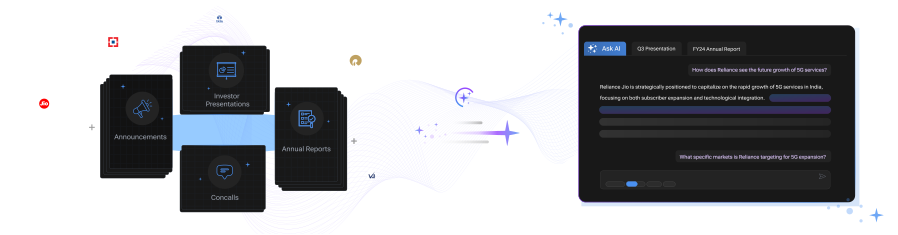
Get instant AI-powered insights about company performance, financials, and strategy. Ask questions about trends, competition, and developments while receiving responses backed by official documents and market data, with clear attribution to source documents.



 Discovery themes featuring this stock
Bearish
6
Neutral
4
Bullish
4
Bearish
9
Neutral
4
Bullish
33
Bearish
3
Neutral
0
Bullish
29
Bearish
3
Neutral
0
Bullish
29
Bearish
3
Neutral
0
Bullish
29
Bearish
3
Neutral
0
Bullish
29
View Standalone
View Standalone
View Standalone
View Standalone
View Standalone
View Standalone
View Standalone
View Standalone
Dabur India Ltd (DABUR) is currently trading at 417.50 per share. Stock prices fluctuate during market hours on NSE and BSE based on demand, company updates, and overall market conditions. Refer to the live price chart above for the most recent price movement.
Dabur India Limited is a leading Indian FMCG company focused on health care, personal care, home care, foods, beverages, and Ayurvedic products, with operations spanning India and more than 120 countries. Its portfolio combines the Dabur master brand with major platforms including Real, Vatika, Hajmola, Fem, Badshah, and several category-leading consumer franchises. Dabur’s Q2 FY27 consolidated revenue grew 11.6% to ₹3,563 crore, while profit after tax rose 11.7% to ₹505 crore. International revenue increased 20%, food and beverages grew 17.4%, and India FMCG delivered 10.7% growth with 5.5% volume expansion, indicating improving momentum despite elevated input costs and inflationary pressure. The company is shifting from broad portfolio expansion toward sharper capital allocation. Dabur discontinued six brands and more than 350 SKUs, consolidated distributors by 43%, doubled distributor throughput, and is redirecting resources toward core brands, premium products, health and wellness, and selected future growth platforms. Dabur’s competitive advantage is increasingly combining traditional Ayurveda and natural-health credibility with modern science, premium formats, digital media, quick commerce, and alternate channels. Category-leading brands generate approximately half of revenue, while premium products already contribute around 20% of the portfolio and are targeted to reach 23% by FY2028. Management is pursuing profitable growth through stronger execution rather than only new launches. Project Saksham, AI-enabled sales and assortment tools, manufacturing optimisation, strategic sourcing, and portfolio rationalisation generated ₹115 crore of cost savings during the stated 18-month period, creating scope to reinvest in advertising and brand building.
Over the past 52 weeks, Dabur India Ltd has traded between a low of ₹354.15 and a high of ₹533.80. The 52-week high and low indicate the stock’s price range over the last year and help investors understand its volatility and recent trading levels.
Dabur India Ltd has a market capitalization of approximately 76,125.14. Market capitalization represents the total value of a company’s outstanding shares and helps investors understand its size, stability, and relative risk compared to other listed companies.
Dabur India Ltd’s investment profile depends on its business fundamentals, valuation, and long-term outlook. The stock currently trades at a PE ratio of 38.06 and operates in the its sector sector. Investors typically assess financial performance, growth prospects, and individual risk tolerance before making investment decisions.
Based on its market capitalization of 76,125.14 Cr, Dabur India Ltd is classified as a Mid Cap stock. Large-cap stocks are generally more stable, while mid-cap and small-cap stocks tend to offer higher growth potential along with higher price volatility.
Dabur India Ltd operates in the its sector sector. Sector classification matters because companies in the same sector are often affected by similar economic conditions, regulatory changes, and competitive dynamics, which can influence overall stock performance.
The Price-to-Earnings (PE) ratio of Dabur India Ltd is 38.06. The PE ratio compares a company’s share price to its earnings and is commonly used to assess valuation. Comparing the PE ratio with sector peers and historical levels provides better context.
Dabur reported consolidated revenue of Rs 3,563 crore in Q2 FY27. Revenue increased 11.6% from the comparable prior-year period, according to the presentation.
Dabur says it discontinued six brands and rationalised more than 350 SKUs to sharpen portfolio focus and release capital for selective bets. The named exits include Vedic Tea, Dabur Vita, baby diapers, adult diapers, Dabur Red Balm and Oliv-O-Oil.
Dabur is aiming for double-digit growth in FY27. The company links the objective to a 150-basis-point increase in AdPro, investment in core brands and the scaling of healthcare, skin care, home care and food platforms.
Dabur appointed Bhalla as an additional director and whole-time director effective November 14, 2026. His disclosed whole-time-director term is five years, subject to shareholder approval through postal ballot.





Dabur India Limited is a leading Indian FMCG company focused on health care, personal care, home care, foods, beverages, and Ayurvedic products, with operations spanning India and more than 120 countries. Its portfolio combines the Dabur master brand with major platforms including Real, Vatika, Hajmola, Fem, Badshah, and several category-leading consumer franchises.
Dabur’s Q2 FY27 consolidated revenue grew 11.6% to ₹3,563 crore, while profit after tax rose 11.7% to ₹505 crore. International revenue increased 20%, food and beverages grew 17.4%, and India FMCG delivered 10.7% growth with 5.5% volume expansion, indicating improving momentum despite elevated input costs and inflationary pressure.
The company is shifting from broad portfolio expansion toward sharper capital allocation. Dabur discontinued six brands and more than 350 SKUs, consolidated distributors by 43%, doubled distributor throughput, and is redirecting resources toward core brands, premium products, health and wellness, and selected future growth platforms.
Dabur’s competitive advantage is increasingly combining traditional Ayurveda and natural-health credibility with modern science, premium formats, digital media, quick commerce, and alternate channels. Category-leading brands generate approximately half of revenue, while premium products already contribute around 20% of the portfolio and are targeted to reach 23% by FY2028.
Management is pursuing profitable growth through stronger execution rather than only new launches. Project Saksham, AI-enabled sales and assortment tools, manufacturing optimisation, strategic sourcing, and portfolio rationalisation generated ₹115 crore of cost savings during the stated 18-month period, creating scope to reinvest in advertising and brand building.
Personal Products
Personal Care
76,125 Cr
Low Risk
38.06
42.67
3.30
6.62
533.80
354.15
Sales CAGR
Profit CAGR
ROE
ROCE
Discovery themes featuring this stock
Other
Dabur India disclosed an ESG rating of 75 assigned independently by CFC Finlease based on publicly available information.
AGM/EGM Notice
Dabur India published notice confirming electronic dispatch of its Postal Ballot Notice to eligible members for remote e-voting.
AGM/EGM Notice
Dabur India seeks shareholder approval to appoint Gopal Krishna Jain as Independent Director and Herjit Singh Bhalla as Whole Time Director through remote e-voting.
| Symbol | Watchlist | Price | Market Cap | P/E | P/B | Div Yield (%) | ROE (%) | ROCE (%) | ROA (%) |
961.00 | 98,355 Cr | 49.75 | 7.79 | 2.08 | 15.67 | 17.34 | 8.86 | ||
429.10 | 76,125 Cr | 38.06 | 6.62 | 1.92 | 17.62 | 21.12 | 11.19 | ||
1824.00 | 49,610 Cr | 36.43 | 30.67 | 3.18 | 84.19 | 110.15 | 37.44 | ||
366.55 | 49,289 Cr | 290.86 | 87.57 | 0.00 | 30.11 | 33.65 | 22.24 | ||
7212.70 | 23,506 Cr | 34.39 | 21.90 | 3.33 | 63.69 | 86.83 | 33.21 | ||
7098.95 | 23,044 Cr | 29.67 | 26.06 | 3.59 | 87.85 | 120.02 | 36.48 | ||
427.20 | 18,647 Cr | 24.96 | 6.37 | 2.34 | 25.44 | 27.03 | 16.66 | ||
| Median: 7 Co. | — | 961.00 | 49,289 Cr | 36.43 | 21.90 | 2.34 | 30.11 | 33.65 | 22.24 |


