










Ajax plans 2% Q4 price rise as steel reaches Rs 68/kg
Key highlights
- Ajax plans a further 2% price increase in the fourth quarter.
- Ajax implemented 1% price increases in September and November.
- Steel rose from Rs 58 per kg to about Rs 68 per kg, management said.
- SLCM revenue was about Rs 487 crore and had the largest effect on commodity-cost exposure.
powered by IRIS
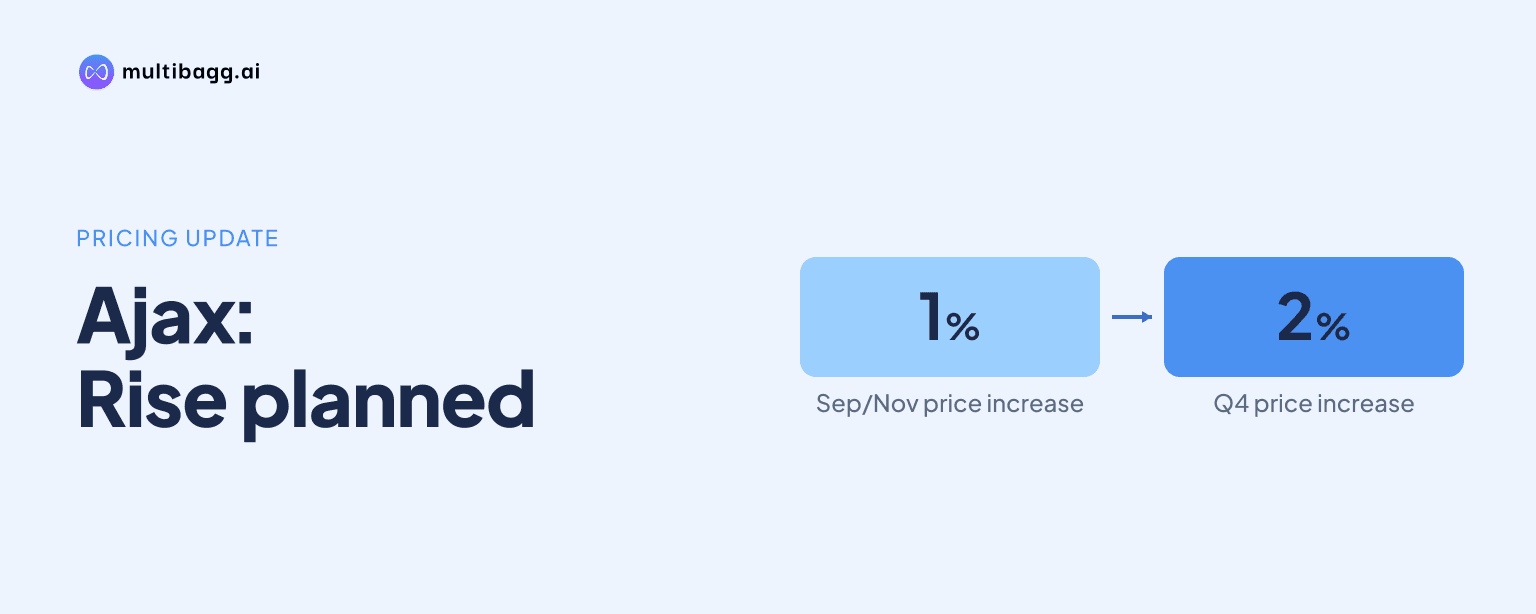
Ajax plans a further 2% price increase in the fourth quarter after steel rose from Rs 58 per kg to about Rs 68 per kg, management said. The planned move follows 1% increases in September and November, while management said customer contracts at earlier prices and dealer margins delay the full effect of revised prices.
Know Ajax Engineering inside out
Results, valuation, peers and who's buying, in one view.
Why is Ajax planning another 2% price increase?
Ajax is planning another 2% price increase in the fourth quarter to respond to higher commodity, foreign-exchange and fuel costs. Management said it had first raised prices by 2% in the fourth quarter ahead of the industry, then faced cost increases of about 3% in the first half from those three factors.
The company subsequently implemented a 1% price increase in September and another 1% in November. Management described the fourth-quarter 2% action as a further response to inflation rather than confirmation that previous increases had fully offset the cost movement.
Ajax said the timing of any price recovery is affected by commercial execution. Some customer deals have already been concluded at agreed prices, meaning a revised price list cannot immediately affect all deliveries. Management also identified dealer margins as a factor in implementing increases, creating a lag between the announced 2% increase and realised selling prices.
How far have steel prices increased for Ajax?
Ajax said steel increased by Rs 10 per kg, from Rs 58 per kg to about Rs 68 per kg under its last programme. Management also said steel was close to Rs 70 per kg at the time of the call, showing that its cited cost pressure extended beyond the earlier Rs 58 per kg level.
Management said there was market anticipation that steel could rise towards Rs 75-Rs 76 per kg, but did not present that range as a forecast or a confirmed purchase price. If that level were reached, the increase from the Rs 58 per kg starting point would be Rs 17-Rs 18 per kg. Ajax said it would respond as commodity prices develop.
Commodity inflation was the larger contributor to the quarter-on-quarter movement in raw-material cost relative to revenue, according to management. An analyst referred to a change of about 200 basis points in gross margin, where one basis point is one-hundredth of a percentage point; management agreed that commodities had played the larger role while noting that sales mix had also changed.
Ajax’s self-loading concrete mixers, or SLCMs, had about Rs 487 crore of revenue and remained its largest business. Management therefore said SLCMs had a much greater effect on the company’s raw-material-to-revenue outcome than non-SLCM equipment, even as the analyst noted that non-SLCM revenue had risen 17% quarter on quarter.
Got a follow-up? Ask IRIS
How is Ajax managing costs beyond selling-price increases?
Ajax is managing procurement and inventory pricing alongside the planned 2% fourth-quarter increase. Management said its controllable actions were to buy steel at a suitable price, carry inventory at the appropriate cost and use that inventory position when responding to higher input prices.
Management said this purchasing and inventory approach had worked successfully in the first half. However, Ajax did not disclose its steel inventory coverage, procurement volumes, or a quantified financial benefit from buying steel before further movement from about Rs 68 per kg towards the Rs 75-Rs 76 per kg range it cited.
The company’s product mix also matters because SLCM revenue of about Rs 487 crore creates the largest exposure to commodity-cost movements. Non-SLCM growth is being supported by concrete pumps, boom pumps and batching plants, but management said the scale of SLCMs means they remain the principal influence on company-level raw-material costs.
Ajax is also simplifying non-SLCM configurations, commercial scope, service and parts to support dealer sales. Management said 62 of 68 dealers had sold at least one concrete pump, while 12-15 dealers had started participating across concrete pumps, boom pumps and batching plants. It added that 20 and 30 cubic metre batching plants were gaining dealer traction.
Will Ajax’s price increases fully protect gross margin?
Ajax has not said its announced price increases will fully protect gross margin because it does not know how steel and other commodities will move. Management said its impression was that the next cost move could be in the range of 2%-3%, while also noting the possibility that commodities could soften amid geopolitical developments following events in the United States.
The gap between input costs and selling-price recovery is central to the margin outcome. Ajax had implemented 1% increases in September and November and plans another 2% in the fourth quarter, but management said existing orders at earlier prices can delay pass-through in full terms.
Dealer margins add a second constraint to price implementation. Management said it had taken the decision to raise prices despite the dealer-margin impact, but did not state what portion of the 2% fourth-quarter increase would be retained by Ajax, passed through dealers or absorbed by customers.
The export portfolio has a different mix from the domestic business that management described as dominated by SLCMs. Exports comprised 65% SLCMs and 35% non-SLCM products, while export revenue represented 7.4% of total revenue in the second quarter, down from the 9% figure cited by an analyst for the first quarter. That mix difference could affect how individual product categories experience commodity costs, although management gave no separate export-margin figure.
Conclusion
Ajax is using pricing, steel procurement and inventory management to address a rise in steel from Rs 58 per kg to about Rs 68 per kg. Management identified commodities as the main driver of the quarter-on-quarter change in raw-material costs relative to revenue, with the about Rs 487 crore SLCM business carrying the greatest company-level exposure.
The next issue is whether steel moves towards the Rs 75-Rs 76 per kg range management said the market anticipated, and whether the planned 2% fourth-quarter increase is realised despite contracted prices and dealer-margin effects. Management said it would continue to pivot as steel, other commodities, foreign exchange and fuel costs change.