










Augmont plans 10 SPOT centres using IPO working capital
Key highlights
- Augmont plans to start 10 identified SPOT delivery centres in the current financial year.
- Augmont targets 35 SPOT delivery centres over the next couple of years, up from 20 centres.
- The Rs 825 crore IPO included Rs 625 crore of primary capital, less issue expenses, for working capital.
- Scrap gold rose to approximately 24.5% of procurement in Q2 FY27 from about 3% in Q2 FY26.
powered by IRIS
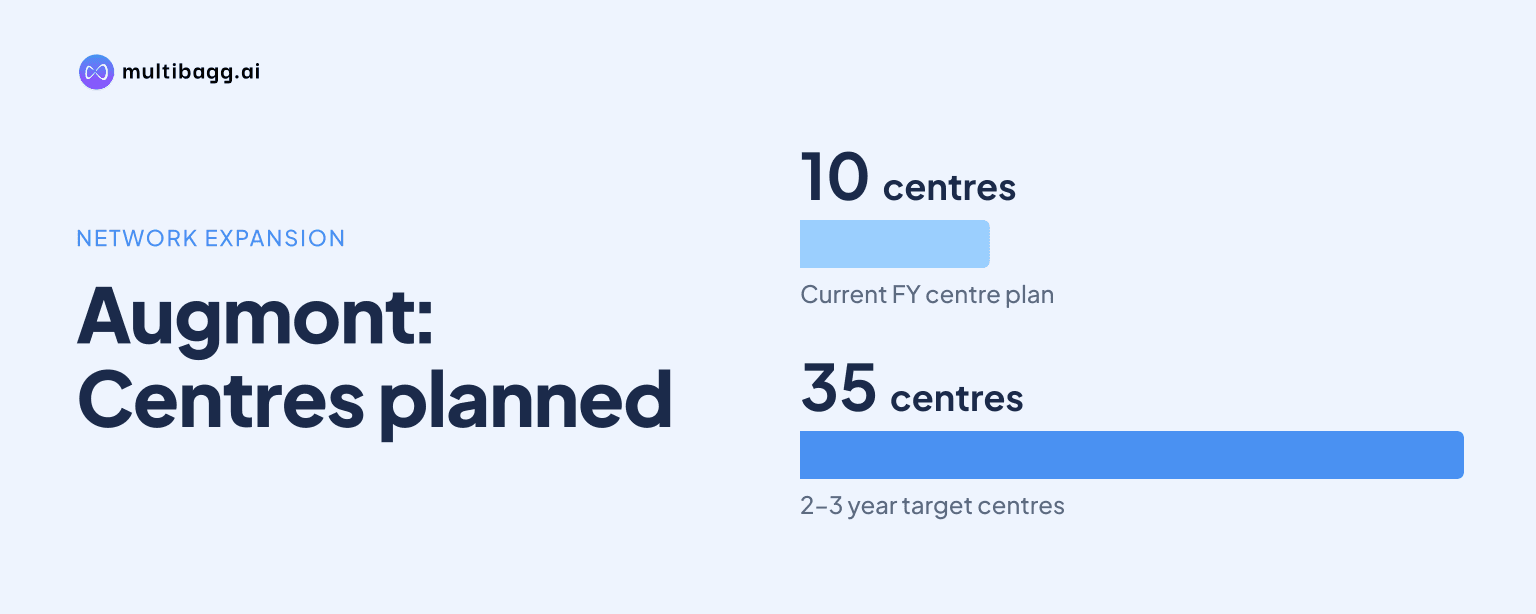
Augmont Enterprises Limited plans to open 10 identified SPOT delivery centres in the current financial year after deploying its primary initial public offering proceeds, less issue expenses, into working capital. Management said the funds address a capital constraint that had limited the SPOT network to 20 centres and become more significant as gold prices rose nearly 40% year on year.
Know Augmont Enterprises inside out
Results, valuation, peers and who's buying, in one view.
Why is Augmont using IPO proceeds for working capital?
Augmont is using the primary IPO proceeds for working capital because it must finance metal purchases before customer collections arrive. Management said it pays advances to suppliers first, while customers pay within three to four days, requiring capital to be blocked for goods during that interval.
The IPO was for Rs 825 crore, including Rs 625 crore of primary capital. Management said the company realised the Rs 625 crore less IPO expenses, with working capital as the stated use. In the presentation, Augmont also said the entire Rs 620 crore fresh issue had been used in line with red herring prospectus objectives; the call did not explain the difference between that figure and the Rs 625 crore primary amount before expenses.
Management said gold businesses cannot use bank leverage against their balance sheets, making equity capital important to finance a two-to-four-day operating cycle. Gold prices had risen almost 40% year on year, according to management, raising the rupee value of metal flows and the working capital required to support them. The capital deployment is therefore intended to fund more delivery centres, dealers and products rather than only replace existing funding.
How many SPOT delivery centres will Augmont add?
Augmont plans to start 10 identified SPOT delivery centres during the current financial year. Management said these launches are part of a plan to increase the network from 20 to 35 delivery centres over the next couple of years, adding 15 locations in total.
The rollout is intended to expand delivery coverage and add jewellers to Augmont SPOT. Management said the company had been stuck at 20 delivery centres because gold prices increased working-capital needs and the business could not use bank leverage. The 10 identified sites are the first disclosed stage of the 15-centre expansion target.
Augmont also plans to offer diamonds, alloys and chemicals to the same jeweller base through its SPOT platform. Management presented these as higher-margin product additions alongside network growth. In the consumer segment, Gold for All contributed 13% of overall quarterly revenue, compared with 7% for the whole of the prior financial year, while management said it would add partnerships and Gold for All centres.
Got a follow-up? Ask IRIS
How does recycling affect Augmont's revenue and profit?
Augmont's larger use of recycled gold lengthened its working-capital cycle to as much as four days, compared with less than two days for imported gold. Management said the slower cycle meant available capital rotated less frequently, reducing revenue capacity even as recycling increased profitability.
Scrap procurement rose to approximately 24.5% of procurement in Q2 FY27 from about 3% in Q2 FY26. Management attributed the increase to old-gold-for-new-jewellery exchange programmes and Augmont's recycling infrastructure, including two refineries and multiple centres. It said imported doré bars would remain part of sourcing, but recycling gives the business an alternative when the disparity between international and Indian gold prices makes imports unviable.
Augmont said recycling can create a margin when it buys old gold and another when it sells refined bars, with handling and refining also part of the process. That mechanism coincided with PAT, or profit after tax, of Rs 85 crore in Q2 FY27, up from Rs 34 crore in Q2 FY26, despite lower revenue. Management said enterprise revenue fell 32% year on year as procurement shifted toward scrap, while consumer revenue increased 47%.
What revenue target has Augmont set for the new capital?
Augmont has not set a specific revenue or profit target for the Rs 625 crore primary IPO proceeds or the 10 planned delivery centres. Management said capital deployment will depend on market opportunities, available spreads and returns at the time, rather than on pursuing turnover for its own sake.
The same position applies to FY27 revenue growth and margin guidance. Management said gold and silver prices, sourcing opportunities, business mix, supply mix and market conditions can change both measures from quarter to quarter. It declined to provide a numerical outlook for the Diwali-containing Q3 or the remainder of FY27.
Management said additional working capital should provide more flexibility to capture opportunities across the value chain while maintaining its return thresholds. However, it did not quantify how much revenue each additional centre, dealer or product category could add. The disclosed operating mechanism is that a four-day scrap cycle uses capital for longer than an imported-gold cycle, while potentially producing procurement and refined-bar margins.
Conclusion
Augmont's stated capital plan connects the primary IPO proceeds with a specific operational constraint: paying for gold before customers settle within a three-to-four-day period, without bank leverage. The planned 10 SPOT delivery centres this financial year begin a move from 20 to 35 centres, while a higher scrap share of procurement contributed to Q2 FY27 PAT of Rs 85 crore and a 0.65% PAT margin.
The next developments to watch are the opening of the 10 identified centres, progress toward the 35-centre target and the mix between recycled gold and imported doré bars. Management has provided no revenue or profitability forecast for the capital deployment, citing market opportunities, spreads and returns, and it also disclosed an aspiration to obtain London Bullion Market Association accreditation for its refinery operations.