










Awfis Space Solutions Limited Q2 Revenue Rises 26% to INR 451 Crore
Key highlights
- Awfis reported Q2 FY27 normalised revenue of INR 451 crore, up 26% year-on-year.
- Cash EBITDA rose 45% year-on-year to INR 49 crore in Q2 FY27.
- Cash EBITDA margin reached 10.8%, up 140 basis points year-on-year and 70 basis points quarter-on-quarter.
- India's Grade A office stock across the top seven cities was cited at 887 million square feet.
powered by IRIS
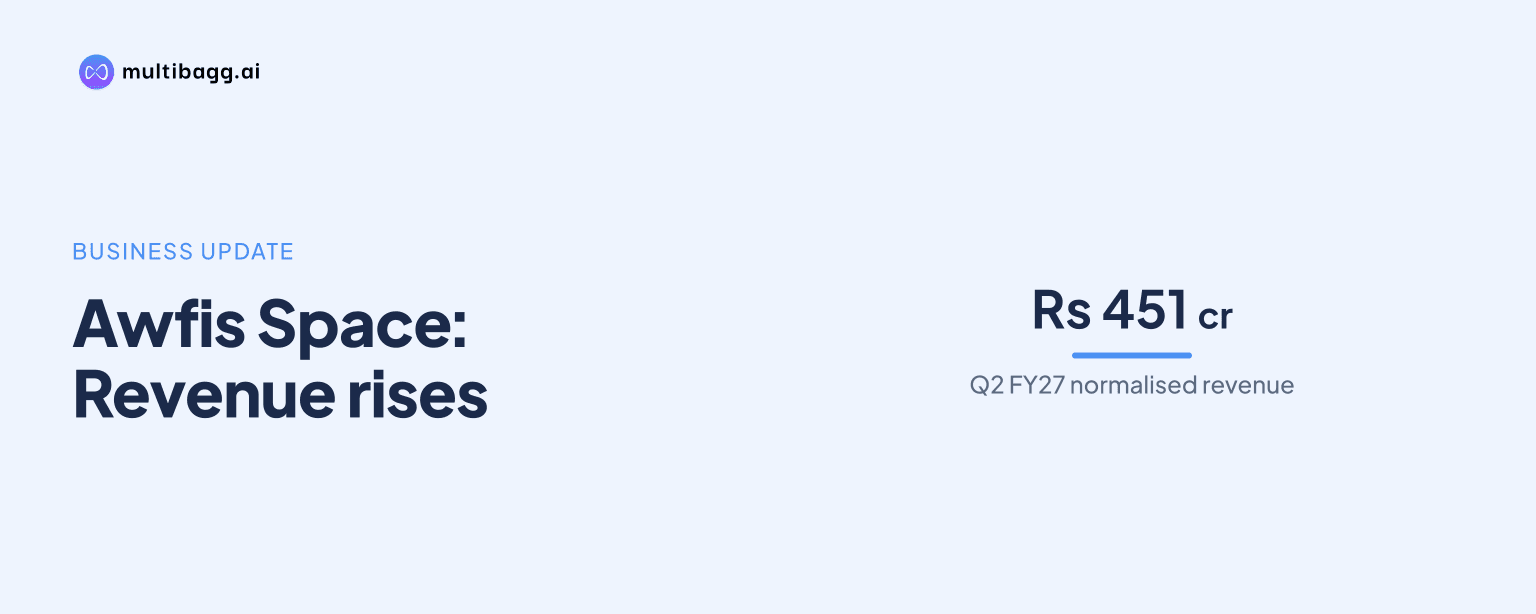
Awfis Space Solutions Limited reported 26% year-on-year growth in normalised revenue to INR 451 crore for Q2 FY27, while cash EBITDA rose 45% to INR 49 crore. The result matters because Awfis improved its cash EBITDA margin by 140 basis points despite operating in a lease-intensive flexible-workspace model.
Know AWFIS Space Solutions inside out
Results, valuation, peers and who's buying, in one view.
What did Awfis report for Q2 FY27?
Awfis reported normalised revenue of INR 451 crore in Q2 FY27, up 26% year-on-year, alongside cash EBITDA of INR 49 crore, up 45%. Cash EBITDA margin stood at 10.8%, improving by 140 basis points from a year earlier and by 70 basis points from the preceding quarter.
The management presented these figures during its Q2 and H1 FY27 earnings call on November 4, 2026. Amit Ramani, Chairman and Managing Director, Sumit Lakhani, Chief Executive Officer, and Sumit Rochlani, Chief Financial Officer, represented the company on the call hosted by Nirmal Bang Institutional Equities.
The improvement in cash EBITDA growth exceeded revenue growth during the quarter. That relationship is significant for a flexible-workspace operator because profitability is affected not only by occupied seats and client demand, but also by lease commitments, property-level arrangements and operating costs.
How did lease arrangements affect Awfis's earnings measures?
Awfis stated that profit-sharing paid to landlords is included within EBITDA, while much of the remaining portfolio is reflected through depreciation and interest under Indian financial reporting. This distinction explains why cash EBITDA is an important operating measure alongside reported accounting metrics for the company.
In a profit-sharing arrangement, the amount paid to a landlord is treated as part of the operating cost structure and therefore affects EBITDA. For other locations, lease-related costs may be recognised through depreciation and finance costs instead. The supplied call extract does not provide a portfolio-wise split between these structures.
The source material separately cites reported revenue from operations of INR 425 crore, up 27% year-on-year, and EBITDA of INR 162 crore with a margin of 38.2%. However, the material also carries an August 13, 2026 release date alongside those figures and does not explicitly establish that they belong to the same Q2 FY27 reporting period as the November call. These metrics should therefore not be combined with the Q2 FY27 normalised revenue and cash EBITDA figures without a corresponding company filing.
Got a follow-up? Ask IRIS
What is supporting demand for flexible workspaces in India?
Awfis linked its operating environment to the large and expanding Grade A office market and the growing presence of global capability centres. India’s Grade A office stock across the top seven cities stood at 887 million square feet, according to the figures cited during the call.
The management also noted that India hosts more than 2,100 global capability centres across more than 3,700 units. These organisations are relevant to the flexible-workspace sector because they can require distributed teams, managed office capacity and scalable seat arrangements across several business locations.
The broader market context is also shaped by smaller workspace requirements. A previous Awfis earnings-call extract in the supplied material said a large portion of Indian demand is for fewer than 100 seats. This indicates that demand is not limited to large enterprises taking entire floors, though the Q2 FY27 call extract does not provide fresh seat-demand or occupancy data.
Why do the Q2 figures matter for investors?
The Q2 figures matter because Awfis delivered 45% cash EBITDA growth against 26% normalised revenue growth and expanded its cash EBITDA margin to 10.8%. The margin movement provides a clearer view of the company’s operating progress than revenue growth alone in a business with different landlord payment structures.
The 70-basis-point quarter-on-quarter improvement in cash EBITDA margin suggests stronger operating conversion during the reported quarter. Still, the supplied information does not disclose net profit, occupancy, seat additions, centre additions, enterprise-client additions, debt levels or a full-year FY27 financial target. Those omissions limit the ability to assess the drivers of the margin increase in detail.
For the wider office market, the figures show the relevance of flexible-workspace providers within India’s Grade A commercial property ecosystem. Demand from enterprises and global capability centres can support the sector, but the earnings effect for an operator remains tied to the terms of individual leases and profit-sharing agreements.
Conclusion
Awfis delivered a Q2 FY27 operating update marked by normalised revenue of INR 451 crore, 26% year-on-year growth, and cash EBITDA of INR 49 crore, up 45%. The 10.8% cash EBITDA margin, higher by 140 basis points year-on-year, was the key financial improvement disclosed on the earnings call.
Investors should watch subsequent company disclosures for occupancy, portfolio expansion, client and centre additions, and any reconciliation between normalised revenue, reported revenue and accounting EBITDA. The supplied material identifies different earnings measures and lease-accounting treatments, but does not provide a detailed portfolio split or a full-year FY27 target.