










Emami expects AI gains from April after completion next quarter
Key highlights
- Emami expects to complete its forecasting-to-fulfilment AI transition next quarter and begin seeing gains from April.
- The programme covers forecasting, supply chain, invoicing and distributor-led frontline booking.
- Emami said pilots in some markets have produced results management described as very impressive, without disclosing a savings figure.
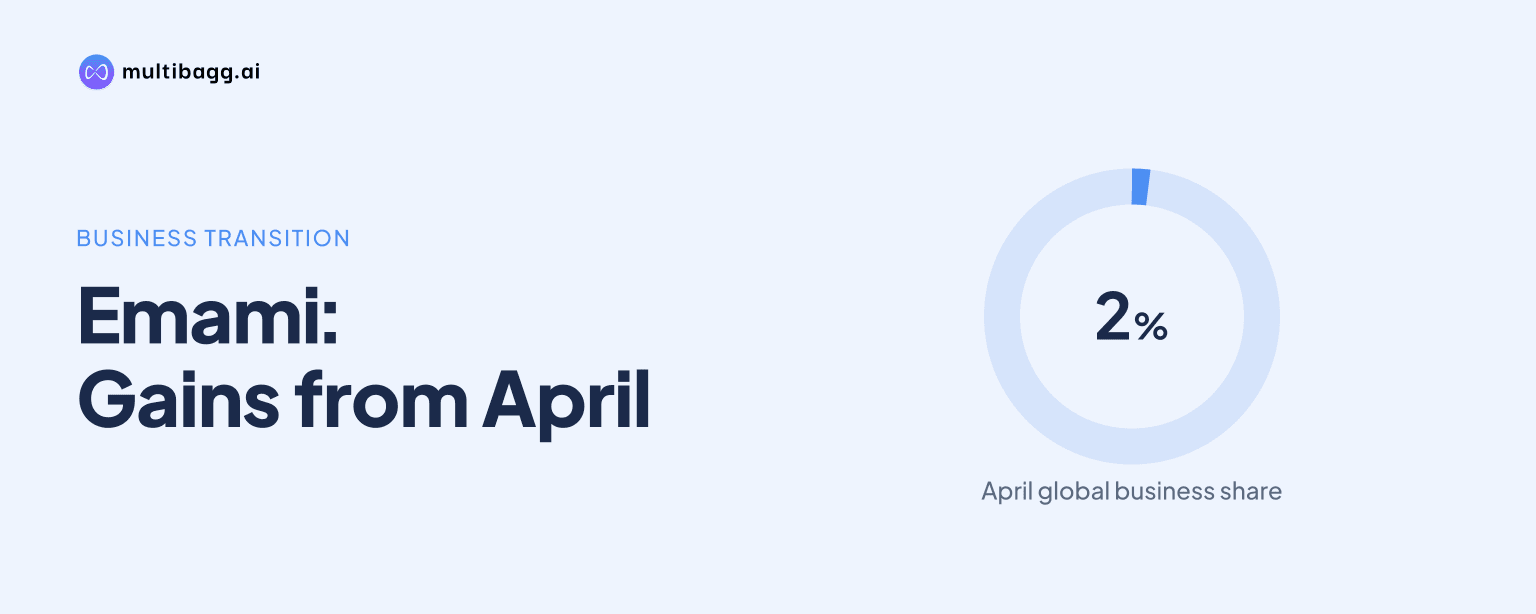
- Hazardous OTC goods that cannot currently move out of India account for roughly 2% of Emami's global business.
powered by IRIS
Emami Limited expects to complete its artificial-intelligence-led transition from forecasting to fulfilment next quarter, with management expecting real gains from April. The programme covers supply chain, invoicing and distributor-led frontline booking, while pilots in some markets have already generated results management described as very impressive.
Know Emami inside out
Results, valuation, peers and who's buying, in one view.
What does Emami's AI programme cover?
Emami's programme spans its operating chain from forecasting through fulfilment rather than being limited to data analytics. Manish Gupta said Emami is digitising end-to-end processes and putting artificial intelligence, or AI, to work across forecasting, supply-chain operations, invoicing and distributor-led frontline booking.
The stated model combines new technology, new tools and AI. Emami did not disclose the programme's cost, a savings target, a forecast-accuracy measure or a service-level objective. It also did not identify technology vendors or specify how many markets are in the pilot phase, so the disclosed evidence remains operational rather than financial.
The named steps cover both planning and execution. Forecasting feeds supply-chain planning, while invoicing and distributor booking are part of order processing and fulfilment. Emami has not said that every process will be automated or provided a percentage for AI adoption across its distributor network.
When will Emami complete the AI transition?
Emami expects to complete the transition next quarter and start seeing real gains from April, Gupta said on the Q2 results call. He said implementation was progressing on track and was a little ahead, although management did not provide a date within the next quarter for full completion.
Management linked broader benefits to completing the transition. Gupta said more results would come in following quarters as the changes are completed, which indicates that effects could extend beyond the initial April start. Emami has reported pilot results in some markets, but it has not reported company-wide outcomes from the programme.
The transcript identifies the event as Emami's Q2 quarterly-results call but does not provide the financial year or calendar date of that Q2 period. The timetable is therefore relative to the call: completion next quarter and gains expected from April. Both are management expectations, not reported financial results.
What proof has Emami provided that the pilots work?
Emami said pilot phases in some markets are already producing gains that management described as very impressive. This is the only direct performance evidence disclosed for the AI programme. The company did not state the number of pilot markets, the products involved, their duration or before-and-after operating data.
Management also said the project was on track and slightly ahead of plan. That is a management assessment rather than a measured rollout milestone. Emami did not disclose what share of the forecasting-to-fulfilment process has moved to the new tools or whether all four named functions are live in every pilot market.
No percentage improvement in forecasting accuracy, order fill rate, invoice turnaround or distributor productivity was given on the call. The April milestone provides the next disclosed point for assessing whether Emami begins to report metrics that separate pilot outcomes from results across its supply chain and distributor-led booking process.
Got a follow-up? Ask IRIS
How does the AI rollout fit Emami's operating priorities?
Emami is undertaking the transition while targeting growth in its domestic business and managing international distribution constraints. Management expects total business growth of 18% to 20% in the second half, following continued momentum in the domestic core portfolio. It also guided for full-year advertising and promotion spending of 18% to 19% of sales.
The supply-chain element is relevant to international operations because hazardous over-the-counter, or OTC, pain-management goods in spray and gaseous forms could not be moved out of India. Management said these goods account for roughly 2% of global business. It said alternative routes had been found for Iraq through Port Aqaba, while Black Sea disruption affected routes to Russia and other markets during the quarter.
Emami said its international business was in positive territory during August, September and October, after earlier disruption, and management said October recorded high-double-digit growth. The call did not attribute that improvement to AI. The comments instead show that the technology transition is occurring alongside route-management and product-movement issues.
Input costs were another backdrop. Management said raw-material costs accounted for 400 basis points of a 520-basis-point gross-margin impact during the quarter, with the remaining 120 basis points coming from mix. Emami said higher-cost inventory had been procured for the second half and input corrections could benefit the next year, but it did not connect this margin outlook to the AI programme.
Conclusion
Emami has provided a timetable for an end-to-end technology transition covering forecasting, supply chain, invoicing and distributor-led booking: completion is expected next quarter, with gains anticipated from April. Pilot activity is underway in some markets, but the company has not disclosed quantified savings, productivity improvements or company-wide financial benefits.
The next point to watch is whether Emami reports measurable post-April outcomes as the transition completes, including forecasting, fulfilment or distributor-process metrics. Management's plan runs alongside its 18% to 20% second-half growth expectation, its 18% to 19% full-year advertising and promotion range, and unresolved movement restrictions affecting roughly 2% of global business in hazardous OTC goods.