










GIFT Nifty Signals a 238.90-Point Gap-Up for Nifty
Key highlights
- December GIFT Nifty traded at 26,039.50 at 7.45 am IST, up 84.50 points or 0.33%.
- GIFT Nifty stood 238.90 points, or 0.93%, above the Nifty 50's Friday close of 25,800.60.
- South Korea's Kospi was reported down more than 3.5% in early trading despite the positive GIFT Nifty signal.
- The GIFT Nifty indication reflected easing oil prices, sustained foreign inflows and a stronger rupee.
powered by IRIS
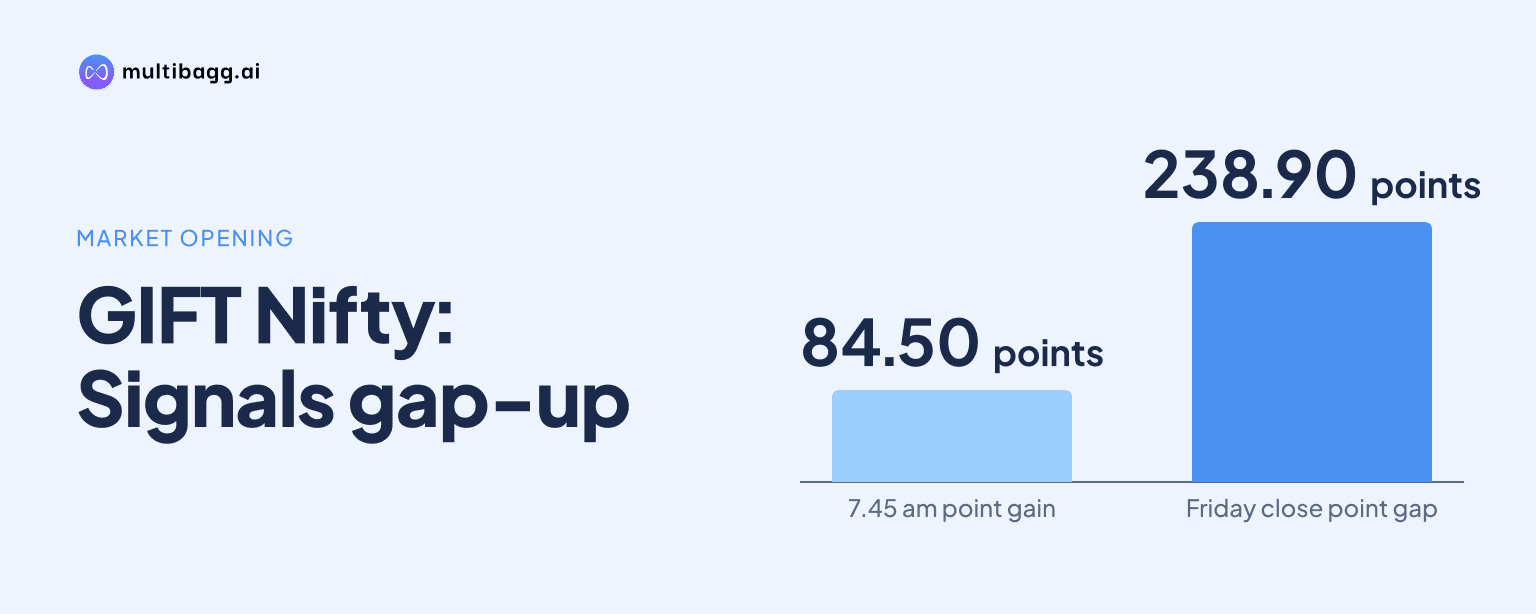
GIFT Nifty indicated a potential 238.90-point gap-up for the Nifty 50 on Monday, trading at 26,039.50 at 7.45 am IST against the domestic benchmark's Friday close of 25,800.60. The positive pre-market signal came despite a rout in Asian markets and weakness on Wall Street.
What is GIFT Nifty indicating for the Nifty 50 opening?
GIFT Nifty is indicating a potentially higher start for the Nifty 50, based on its level being 238.90 points above Friday's cash-market close. The December GIFT Nifty contract stood at 26,039.50 at 7.45 am IST, up 84.50 points, or 0.33%, from its previous close of 25,955.00.
The implied gap is a pre-market indication rather than a confirmed opening or closing result. GIFT Nifty is a futures market reference, while the Nifty 50 is the domestic cash benchmark. The actual opening can change as domestic orders are placed and global cues shift closer to the start of trade.
How large is the indicated gap-up in the Nifty 50?
The indicated gap-up is 238.90 points, or 0.93%, when the GIFT Nifty reading of 26,039.50 is compared with the Nifty 50's Friday close of 25,800.60. This comparison is the key reference used to assess the direction suggested by the pre-market futures market.
Other pre-market updates also placed GIFT Nifty above the Nifty 50's Friday closing level. Readings cited around 25,907 and 26,075 similarly pointed to a positive start, although such figures reflect different times during the futures session and should not be treated as one fixed forecast.
Got a follow-up? Ask IRIS
Why is GIFT Nifty higher despite weak global markets?
Easing oil prices, sustained foreign inflows and a stronger rupee were identified as factors supporting domestic sentiment. Lower crude prices can be relevant for India because oil is an important import, while foreign flows and currency movement are closely watched by equity investors.
The positive indication stood apart from the broader overseas backdrop. Asian markets were under pressure, with South Korea's Kospi reported down more than 3.5% in early trading, while Wall Street had also faced weakness. Concerns around global technology stocks and uncertainty linked to the Middle East conflict remain part of the risk environment described in the market discussion.
How should investors use the GIFT Nifty signal?
Investors should use GIFT Nifty as an indication of the likely opening direction, not as a guarantee that the Nifty 50 will hold those gains through the session. A level above the prior Nifty 50 close generally points to a positive opening, but the cash market can fade, reverse or extend the move after trading begins.
The most current GIFT Nifty readings before the domestic opening carry greater relevance because they incorporate later overnight developments and changing order flow. Investors also need to distinguish between a futures premium and an exact spot-market projection, since futures prices include a fair-value component related to interest rates and time to expiry.
Conclusion
GIFT Nifty's 238.90-point premium to the Nifty 50's Friday close points to a potentially firm Monday opening, supported by easing oil prices, foreign inflows and a stronger rupee. The signal is notable because it comes even as Asian equities and Wall Street have faced pressure, showing that domestic sentiment may be drawing support from factors specific to India.
The key issue to watch is whether the positive futures indication persists into the domestic opening and the first minutes of cash-market trade. Movement in crude oil, the rupee, overseas technology stocks, Asian equity markets and domestic institutional order flow could determine whether the initial gap-up is sustained.