










GIFT Nifty Signals Gap-Up, but Sustainability Is Unclear
Key highlights
- GIFT Nifty rose 282.50 points, or 1.22%, to 23,522.50 on November 3.
- The November GIFT Nifty contract was 93.70 points above the Nifty 50's Monday close at 7:23 am IST.
- The reported recovery in GIFT Nifty followed October lows near 22,200.
- GIFT Nifty is regulated by IFSCA, with SEBI-aligned surveillance and position-limit frameworks cited in the discussion.
powered by IRIS
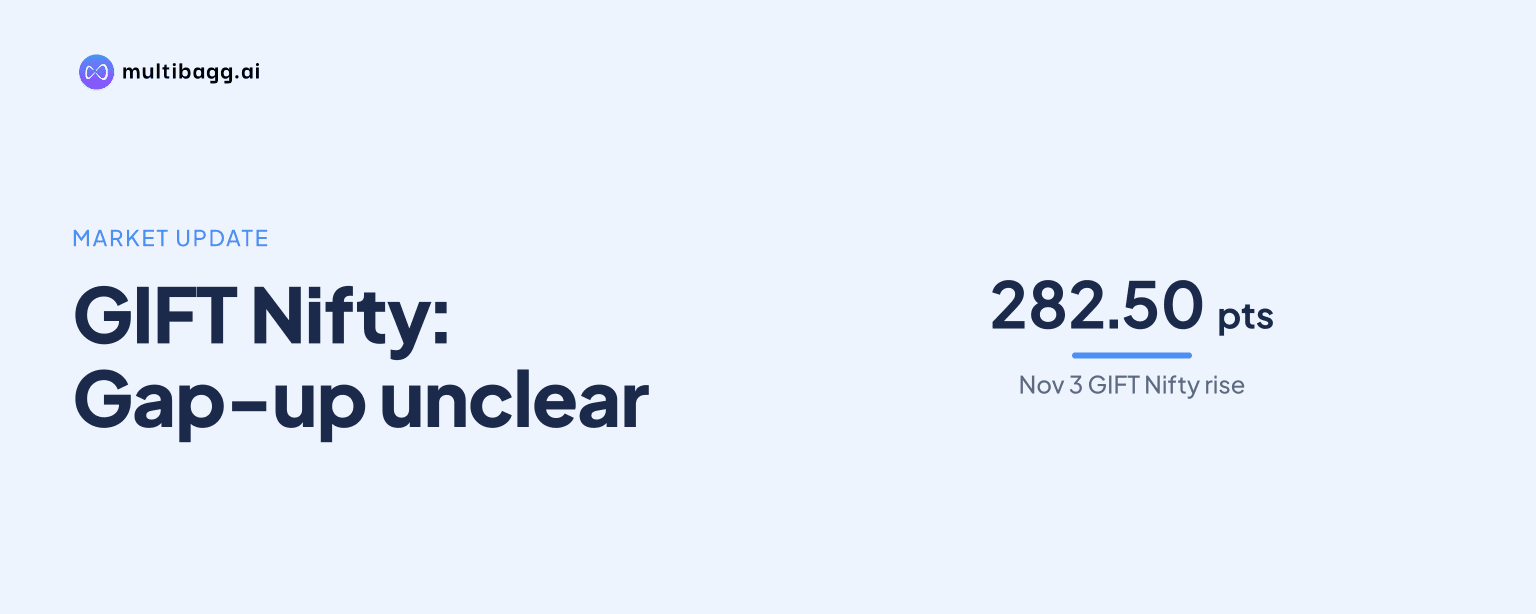
GIFT Nifty rose 1.22% to 23,522.50 on November 3, signalling a strong gap-up opening for the Nifty 50 after a recovery from October lows near 22,200. The indication pointed to firmer early sentiment, but it did not establish that gains would hold after the domestic cash market opened.
What does GIFT Nifty's rise indicate for the Nifty 50?
GIFT Nifty's rise indicates that the Nifty 50 could begin the session above its previous close, not that it will maintain those levels through the day. GIFT Nifty is the Nifty 50 futures contract listed on NSE International Exchange in GIFT City, Gujarat, and is priced in US dollars. Because it trades when the Indian cash market is shut, it absorbs overnight developments from US and Asian markets.
The most useful comparison is between GIFT Nifty and the Nifty 50's previous cash close, rather than GIFT Nifty's own prior close. On one November 3 reading, the November contract traded at 23,534.50 at 7:23 am IST, a premium of 93.70 points over the Nifty 50's Monday close of 23,440.80. That premium suggested a gap-up start, while other reported readings showed a larger move in the futures contract itself.
Why can a GIFT Nifty gap-up fade after the open?
A GIFT Nifty gap-up can fade because domestic cash-market trading, fresh news before 09:15, and the pre-open session can alter the initial signal. GIFT Nifty provides an early direction cue, but the Nifty 50 must still absorb selling pressure and establish participation after regular trading begins.
Social-media discussions highlighted an instance where GIFT Nifty pointed to a gap of about 205 points, while the Nifty opened 169 points higher and closed that gap within ten minutes. The example underlines why traders should separate the size of the futures move from the actual gap against the Nifty close. A report that GIFT Nifty is up by a certain number of points may refer only to its move from its own previous settlement.
The recovery above 23,400 was described as a sign of stronger buying momentum, but market participants also flagged the possibility of consolidation. During a busy earnings period, stock-specific reactions can be more important than an overnight index indication. Intraday volumes and the closing level are therefore more useful tests of whether the opening strength has broad support.
Got a follow-up? Ask IRIS
What risks could limit the market recovery?
Elevated Brent crude prices, mixed global signals, US yields, the dollar, global technology weakness and institutional flows could limit the recovery signalled by GIFT Nifty. Higher crude is particularly relevant for Indian equities because India is a major oil importer, making the import bill, the rupee and inflation pressures sensitive to oil prices.
Fuel-intensive sectors, including oil-marketing companies and aviation firms, may be especially exposed if crude rises further. Conversely, one reported gap-up setup followed a sharp decline in crude oil prices, showing how quickly oil can influence sentiment. The direction of crude therefore matters not only for the index open but also for sector performance after the opening.
Corporate earnings remain another near-term driver. Commentary in the market discussion said results announced so far had been good despite macro headwinds, yet concerns around inflation, a below-par monsoon and regional energy-supply uncertainty could cap gains through profit-taking. The sustainability of a broader recovery will depend on whether earnings strength offsets these pressures.
Is GIFT Nifty vulnerable to manipulation concerns?
GIFT Nifty operates under the International Financial Services Centres Authority framework, with SEBI-aligned surveillance, position-limit frameworks and dispute-resolution mechanisms cited as safeguards. The shift from SGX Nifty to GIFT City moved trading in Indian benchmark derivatives from Singapore to an Indian financial centre.
Under the earlier SGX Nifty arrangement, the contracts were regulated by the Monetary Authority of Singapore, while Indian regulators and exchanges had no jurisdiction over manipulation or settlement disputes on those contracts. The GIFT Nifty structure was presented as reducing counterparty and regulatory risk for Indian institutional traders because the contracts are now subject to Indian oversight through IFSCA.
Regulatory oversight does not make an opening signal a guarantee or prove that every price move reflects lasting demand. For retail participants, the practical issue is to avoid treating an overnight indication as a completed market move. Comparing the contract with the Nifty 50 close, then watching the pre-open, early volumes and price action after 09:15, provides a clearer basis for judging the move.
Conclusion
GIFT Nifty's rise to 23,522.50 and the premium over the Nifty 50 close pointed to a firm opening setup, extending the recovery from near 22,200. But the futures contract is an indication of early direction rather than confirmation of an all-day rally, particularly when the cash market may face selling pressure and sector-specific earnings reactions.
The next test is whether the Nifty 50 holds its opening levels with intraday volume and closes firmly rather than filling the gap. Investors will also watch Brent crude, global market cues, US yields, the dollar, institutional flows and corporate earnings commentary, all of which were identified as factors that could determine whether the recovery persists or consolidates.