










JLR cuts FY27 outlook as China slump drives £1.7bn reset
Key highlights
- JLR expects FY27 EBIT of 2% to 3% and cash outflow of about £1.25 billion.
- JLR's Q2 FY27 China wholesales fell 45% year-on-year, while H1 wholesales fell 36%.
- JLR committed to save £1.7 billion over two years and plans about 4,000 salaried voluntary exits.
- JLR's Q2 FY27 profit before tax was £6 million, down from £109 million in Q1 FY27.
powered by IRIS
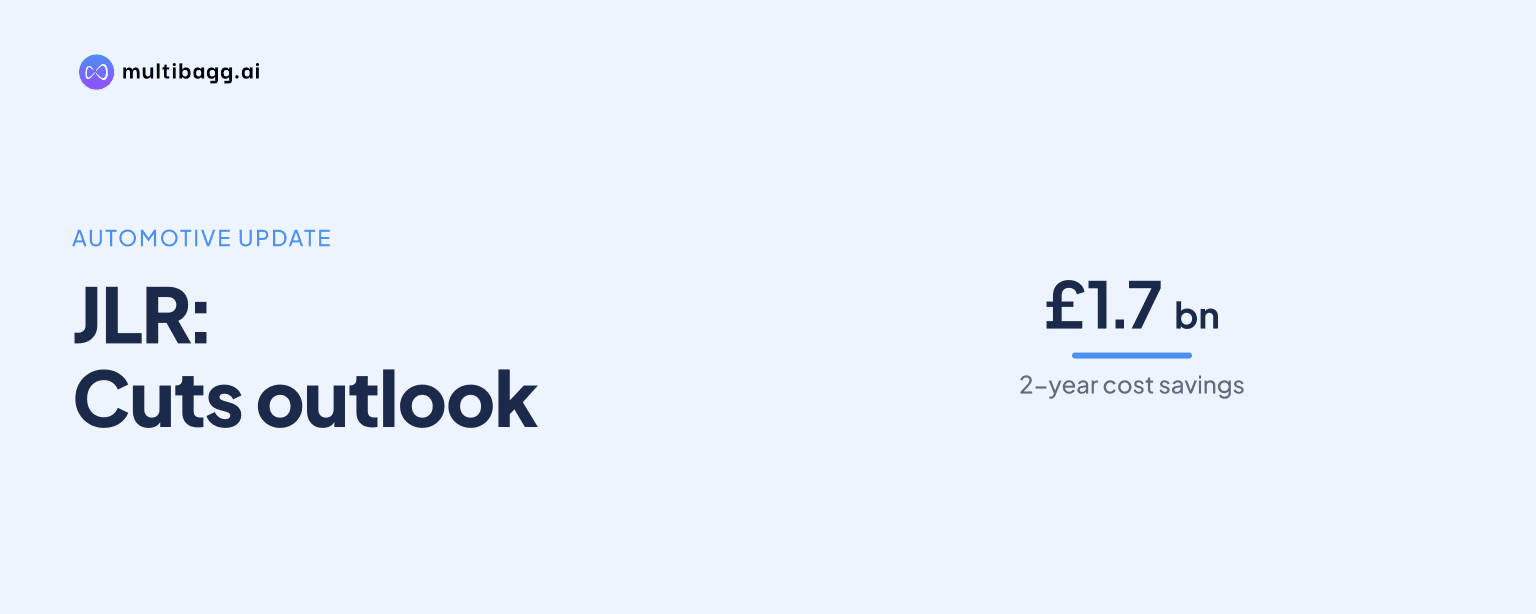
Jaguar Land Rover cut its FY27 earnings before interest and tax, or EBIT, outlook to 2% to 3% and forecast cash outflow of about £1.25 billion after Q2 China wholesales fell 45% year-on-year. JLR is responding with a £1.7 billion, two-year savings programme and voluntary salaried headcount reduction of about 4,000.
Know Tata Motors Passenger Vehicles inside out
Results, valuation, peers and who's buying, in one view.
What did JLR change in its FY27 outlook?
JLR now expects FY27 EBIT of 2% to 3% and cash outflow of about £1.25 billion. Management said multi-year programmes and fixed costs mean that major market changes cannot be offset immediately. In Q2 FY27, JLR sold 82,000 vehicles and reported revenue of £5.9 billion, which was flat versus Q1.
Profit before tax fell to £6 million in Q2 FY27 from £109 million in Q1 FY27. Management said EBIT and profit before tax were still slightly positive in Q2, but adverse vehicle and country mix reduced profitability. Q2 also included an exceptional charge of £530 million, including £295 million related to the voluntary redundancy programme.
JLR reported negative cash flow of £540 million in Q2, reflecting product investment and market pressures. In H1 FY27, EBIT was 2%, profit before tax was £115 million and cash outflow was £1.5 billion. Management said investment exceeded cash profit after tax by about £800 million in H1, while seasonal working capital was negative and should be mostly recovered in Q4.
How much did China and sales mix affect JLR in Q2?
China was the main disclosed reason for JLR's guidance change, as Q2 FY27 wholesales there declined 45% year-on-year and H1 wholesales fell 36%. Management said China was still deteriorating rather than stabilising, while JLR's import volumes were under pressure. It said dealer-stock discipline would continue and promised a fuller China plan in the next quarter.
Management described the wider China market as down by about 5 million units in the year, while exports by Chinese manufacturers increased by nearly 4 million units year-on-year. It said domestic Chinese manufacturers were operating with significant overcapacity and were crowding out global brands. China had represented about 17% of JLR's overall portfolio until last year, but that share had declined sharply in FY27.
Mix was the principal reason profit before tax declined from £109 million in Q1 to £6 million in Q2. JLR sold more vehicles in Q2, but the model mix moved towards Discovery and the regional mix moved away from China and the Middle East and North Africa, or MENA, towards the UK. Range Rover and Defender deliveries were each a few hundred units above Q1, but their share of total sales declined as Discovery sales increased.
MENA demand and logistics were disrupted by conflict, while UK wholesales benefited from the September registration-plate change. Management said copper, aluminium, petrochemicals and plastics had become more expensive, but its ex-works cost-reduction work was offsetting those pressures. Material cost therefore did not stand out in its Q1-to-Q2 profit bridge, unlike the brand and country mix effects.
Got a follow-up? Ask IRIS
What is included in JLR's £1.7 billion cost reset?
JLR has committed to save £1.7 billion over two years through actions on ex-works costs, warranty and structural costs. Management said regulatory costs, tariffs, taxes and market disruption had pushed its breakeven volume too high. The programme aims to reset breakeven volume to 300,000 vehicles while improving the company's resilience.
The workforce measure is a voluntary redundancy programme designed to reduce salaried headcount by about 4,000 over time. At the time of the call, management expected around 3,000 employees to leave in FY27, with most leaving at the end of November. It said it had enough further expressions of interest and applications to complete the remaining roughly 1,000 exits next year as critical launch work rolls off.
The £295 million redundancy provision accounted for more than half of JLR's £530 million Q2 exceptional charge. Tata Motors Passenger Vehicles Group reported Rs 6,700 crore of exceptional charges in Q2, which management said reflected difficult but necessary JLR actions. JLR said cost cutting was necessary, but that product launches and brand growth, rather than savings alone, would determine its longer-term recovery.
Management also stated an ambition to grow revenue by 10% a year through current vehicles and significant new launches. That ambition is separate from the 300,000-unit breakeven target: the first depends on volume and product execution, while the second seeks to lower the cost base required to support the business.
What could support JLR's FY28 recovery target?
JLR management is targeting double-digit earnings before interest, tax, depreciation and amortisation, or EBITDA, and cash generation in FY28. It also aims to return to net cash by the end of FY30. These are management targets that depend on the savings programme, growth initiatives and new vehicles producing higher EBITDA.
Investment remains substantial before that planned recovery. JLR invested £1.76 billion in H1 FY27 and expects H2 investment to be marginally below the first-half level, followed by a further decline next year. Management said it had invested £11.5 billion of a previously announced £15 billion to £18 billion five-year programme, with a large share directed to five vehicles launching over the next 18 months.
The Range Rover battery electric vehicle, or BEV, had nearly 5,000 orders before retail customers had seen or driven it, according to management. JLR also launched the Range Rover Sport BEV and revealed Jaguar Type 01 in Q2, with deliveries of the three new luxury electric vehicles expected from early 2027. Management said production would rise as quickly as reasonably possible while manufacturing teams progress through their ramp-up curves.
North America is another planned growth area, with H1 wholesales 20% above the prior year. JLR plans tailored approaches by city and region, smoother model-year product flows and expanded service operations. In China, management said it would remain invested but would not overreact before understanding market conditions; the Chery Freelander arrangement generates licence income rather than consolidated vehicle revenue.
Conclusion
JLR's revised FY27 outlook reflects the 45% Q2 decline in China wholesales, MENA disruption and an unfavourable mix of vehicles and markets that reduced Q2 profit before tax to £6 million. The £1.7 billion savings commitment and planned 4,000 salaried voluntary exits show that management is attempting to lower the breakeven point while preserving investment in future products.
The next items to watch are the planned departure of most of the 3,000 FY27 voluntary-redundancy participants at the end of November, the promised next-quarter update on China, and early-2027 deliveries of the three luxury electric vehicles. Management's FY28 double-digit EBITDA and cash-generation target, and its FY30 net-cash aim, depend on those cost and launch plans translating into higher earnings.