








Kaytex keeps Rasiya distributor-led and avoids online retail
MAX Plan at ₹4,999/yr

Find your next multibaggerBe a Pro Investor
Research stocks and track your picks on the go. Download the app.
Key highlights
- Kaytex said Rasiya will remain distributor-led, with no current plan for online sales or company-owned stores.
- Kaytex introduces a new seasonal Rasiya range every three months.
- Own brands were discussed as contributing about 60% of Kaytex revenue and requiring more inventory.
- Management said Kaytex's distribution network has a 30-year history.
powered by IRIS
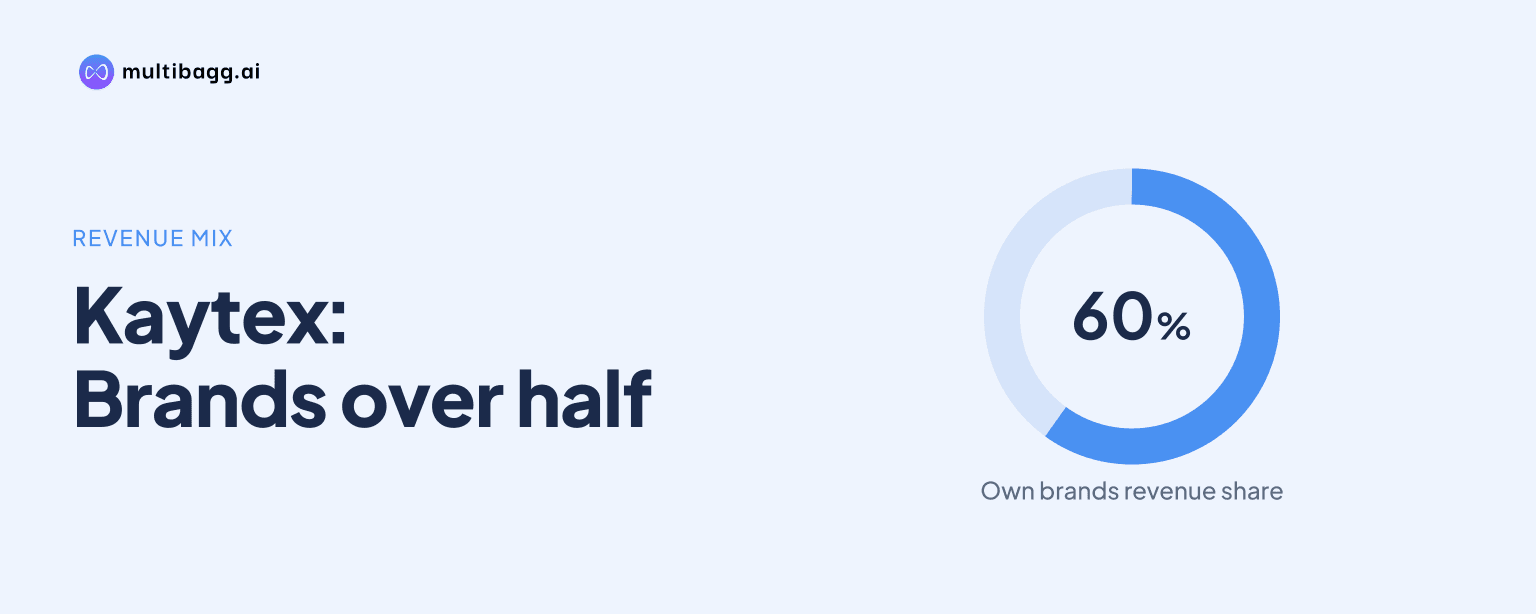
Kaytex will keep Rasiya in its distributor channel and has no plan for online sales or company-owned stores, while introducing a new seasonal range every three months. Management said the model is supported by a distribution network with a 30-year history, although own brands, discussed as about 60% of revenue, require higher inventory.
Know Kaytex Fabrics inside out
Results, valuation, peers and who's buying, in one view.
Why is Kaytex keeping Rasiya out of online and company-owned stores?
Kaytex is keeping Rasiya within its distributor channel and is not planning online sales or company-owned stores. Amit Kandhari said the company is expanding both its markets and its distributor channel, rather than setting up a direct retail route. Management described the existing network as having a 30-year history, which it said has supported steady growth.
The disclosed strategy is to place products through distributors, who then serve retailers, rather than to sell Rasiya directly to consumers. In the discussion on expansion, Delhi, Haryana, Chandigarh and Jammu were named as new markets. Kaytex did not provide a target number of distributors, a budget for stores or a date for reconsidering e-commerce.
Kaytex also said its distributor model does not include a policy of accepting all unsold stock. Management said the company is not bound to take goods back, although it may occasionally accept some unsold products to maintain customer relationships. That leaves returns as a discretionary commercial decision rather than a stated contractual obligation.
How often does Kaytex launch new Rasiya collections?
Kaytex launches a new seasonal Rasiya range every three months. Management said the new ranges have received good approvals from the market, but it did not disclose collection-level sales, sell-through data or the number of distributors carrying each launch. The three-month schedule is therefore a product-release practice, not revenue guidance.
Rasiya is a key part of Kaytex's focus on its own brands, and management said work done over the preceding three to four months had produced very good results. It did not quantify those results. The company said it needs inventory ready for sale so that distributors and retailers can be supplied when seasonal demand arrives.
The branded approach differs from Kaytex's plain-print and job-work activities. Sanjeev Kandhari said competitive pressure is concentrated in plain printing, including job work, while management said Rasiya benefits from value-added products and continued innovation. The company did not disclose Rasiya's separate margin, but said branded business has higher margins directionally.
Why does the Rasiya model need more working capital?
Kaytex said its own-brand business requires more inventory, making it more working-capital intensive than other channels. During the call, own brands were described as accounting for about 60% of revenue. Amit Kandhari said the branded model has higher working-capital needs but also higher margins embedded in it, while clarifying that Kaytex does not report segment-wise margins.
An analyst cited inventory rising by around Rs 15 crore since March, and management said this reflected preparation for the winter range and the second-half selling season. Kaytex said it keeps inventory available to avoid missing customer demand. Management also said it had built stock for the season under way and would maintain inventory for the next major season.
Kaytex sells all products on credit rather than for cash, according to Sanjeev Kandhari. Receivables had risen from Rs 47 crore to almost Rs 69 crore, which management attributed to higher sales and high-season demand. Management said collection days should decline in a following season, although the absolute receivables balance may remain broadly similar as sales grow.
Got a follow-up? Ask IRIS
Which markets and seasons is Kaytex targeting through distributors?
Kaytex is expanding distributor coverage in new markets including Delhi, Haryana, Chandigarh and Jammu. Management said these markets are meaningful from the outset and reported a very good response, but it did not disclose revenue, distributor counts or a time frame for any of those locations to reach a specified sales contribution.
Kaytex's inventory planning follows two main selling windows. Management identified the first major season as September to 15 December and the next as 15 April to 15 May. It said the winter range makes the second half particularly important, which is why stock is built ahead of seasonal demand rather than only against confirmed orders.
Management cited 24% growth in the first half and said it would try to achieve the same rate in the second half. Separately, it discussed 34% growth against a leaner first half in the prior year, saying the increase reflected both a lower base and customer building and product additions. Sanjeev Kandhari characterised underlying growth as 20% to 25%, but Kaytex gave no formal FY27 or FY28 revenue or margin guidance.
How does Rasiya fit with Kaytex's other sales channels?
Kaytex operates through own brands, brand enablement and non-branded bulk sales, rather than relying exclusively on Rasiya. Management described brand enablement as similar to white-label supply for established brands. It said the longer-term target is to move towards 100% own-brand production, but that the transition will take time.
The bulk channel uses capacity that is not immediately required by own brands or brand enablement. Amit Kandhari said Kaytex has multiple products and capabilities, and sells surplus capacity in the bulk market instead of leaving machines idle. He added that non-branded bulk sales as a share of the business have fallen drastically over the last four years, without providing the current percentage.
An analyst compared sales volume of 43 lakh metres in FY23 with 132 lakh metres in FY26, while revenue rose from Rs 98 crore to Rs 161 crore. Management agreed that product mix explained the difference, saying Kaytex has shifted towards cotton fabrics with demand over longer periods from more festive products previously. The company said its sales are mainly value-added fabric and unstitched suits, rather than plain grey fabric or stitched garments.
Conclusion
Kaytex's Rasiya strategy centres on distributor expansion, seasonal collections every three months and inventory availability rather than online retail or company-owned stores. The model uses a network management said has a 30-year history, but it also increases inventory and credit requirements because own brands were discussed as contributing about 60% of revenue.
The next disclosures to watch are whether expansion in Delhi, Haryana, Chandigarh and Jammu produces measurable sales, and whether receivable days decline after the current season. Management will also seek to match its 24% first-half growth in the second half, while retaining its stated plan of no online Rasiya sales or company-owned stores for now.

