










Kewal Kiran Clothing Q2 Revenue Rises 5% to Rs 373 Crore
Key highlights
- KKCL reported Q2 FY27 consolidated revenue of Rs 373 crore, up 5% year-on-year.
- Q2 FY27 EBITDA rose 12% to Rs 80 crore and EBITDA margin improved to 21% from 20%.
- Q2 FY27 profit after tax increased 15% to Rs 54 crore, with PAT margin rising to 14%.
- KKCL's store network reached 675 outlets as of September 30, 2026, after a net addition of five stores in Q2.
powered by IRIS
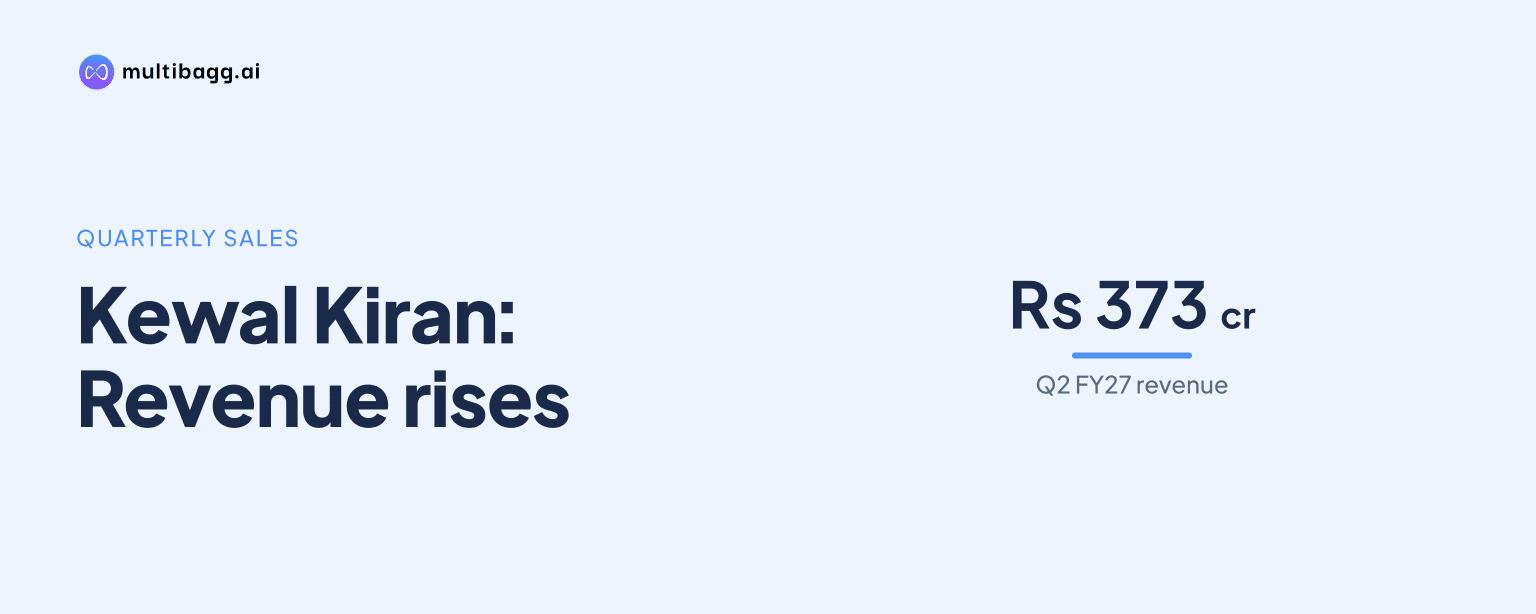
Kewal Kiran Clothing Limited reported consolidated Q2 FY27 revenue of Rs 373 crore, up 5% year-on-year, while profit after tax rose 15% to Rs 54 crore despite factory disruption from flooding and a shift in festive demand into the third quarter.
Know Kewal Kiran Clothing inside out
Results, valuation, peers and who's buying, in one view.
What did Kewal Kiran Clothing report for Q2 FY27?
Kewal Kiran Clothing Limited, referred to as KKCL, reported a 5% year-on-year increase in consolidated revenue to Rs 373 crore for the quarter ended September 30, 2026. EBITDA rose 12% to Rs 80 crore, and the EBITDA margin improved to 21% from 20% in the corresponding quarter of the previous year.
Profit after tax increased 15% year-on-year to Rs 54 crore, compared with Rs 47 crore in Q2 FY26. Gross profit grew 7% to Rs 160 crore from Rs 149 crore, with gross margin reported at 43%. The PAT margin improved to 14% from 13% a year earlier, indicating that profit growth exceeded the increase in revenue.
For the first half of FY27, KKCL recorded revenue from operations of Rs 652 crore, up 11% from Rs 588 crore in H1 FY26. The company said H1 EBITDA rose 19% year-on-year and H1 PAT increased 19% year-on-year to Rs 94 crore. Its H1 EBITDA margin stood at 20%.
Why was quarterly revenue growth limited to 5%?
KKCL said the quarter was affected by macro headwinds, including inflationary pressure on consumer sentiment linked to geopolitical tensions. Management also pointed to a timing effect in the festive calendar, with Navratri and Durga Puja falling in October during FY27 rather than September in the previous year. This moved some festive demand into Q3 FY27.
The company also reported exceptional heavy rainfall and localised flooding in Vapi and Daman, which temporarily disrupted factory operations. President Pankaj Jain said the destruction at the manufacturing facility was estimated to have affected Q2 FY27 sales growth by 34%. The company did not provide a separate absolute revenue figure for the impact.
Despite these factors, KKCL described its revenue performance as positive and cited disciplined cost management and operational efficiency for the improvement in profitability. The higher EBITDA and PAT margins show that costs grew at a slower pace than revenue during the quarter.
Which brands and retail channels supported KKCL's performance?
KKCL said its womenswear brand Kraus delivered sales growth of more than 25% in Q2 FY27, alongside EBITDA margins in line with the company. Management presented the performance as part of its strategy to build a larger presence in the womenswear segment.
The company operates brands including Killer, Lawman, Integriti and Kraus. It said its Kiran brand continued to grow and operated through 477 exclusive brand outlets, while strengthening distribution through large-format stores and online channels. The supplied material did not provide brand-wise revenue or profit figures.
KKCL added a net five stores during Q2 FY27, taking its total network to 675 stores as of September 30, 2026. Pankaj Jain said the total exclusive brand outlet target had been revised to 800 stores from 900, while the company retained its revenue targets. This indicates a greater focus on store productivity and revenue delivery rather than only outlet additions.
Got a follow-up? Ask IRIS
How is KKCL balancing growth with brand profitability?
KKCL said it is focused on profitable growth, operational execution and a sustainable business model. Joint Managing Director Hemant Jain said the company was working to improve the proportion of fresh sales relative to discounted sales, as excessive discounting can dilute brand value.
That approach is relevant to the reported margin movement. Gross margin was 43%, EBITDA margin rose to 21%, and PAT margin rose to 14% in Q2 FY27. While the company did not quantify the contribution of pricing, product mix or discounting to those changes, the reported figures show an improvement in profitability alongside moderate top-line growth.
For investors, the quarter combines two distinct factors: operational disruption and stronger margins. Revenue growth was constrained by weather-related manufacturing disruption and the festival shift, while EBITDA and PAT grew faster than sales. The timing of festive demand in Q3 and the restoration of factory operations are therefore relevant to assessing the following quarter's performance.
What should investors note from the H1 FY27 results?
KKCL's H1 FY27 revenue reached Rs 652 crore, compared with Rs 588 crore in H1 FY26, while H1 PAT rose 19% to Rs 94 crore. The first-half numbers suggest that the company maintained growth across the six-month period even as Q2 faced a more difficult operating environment.
The company released its revised Q2 and H1 FY27 investor presentation on November 5, 2026. It had also made available the audio recording of its November 3 conference call covering its audited Q2 and H1 FY27 financial results through its investor website.
The available disclosures do not give a quantified revenue outlook, capex plan or a timeline for the normalisation of the affected Vapi and Daman operations. They do, however, set out the revised 800-store exclusive brand outlet target and management's stated emphasis on preserving brand value through a healthier fresh-to-discounted sales mix.
Conclusion
KKCL delivered Q2 FY27 revenue growth of 5% to Rs 373 crore, but its 12% rise in EBITDA and 15% increase in PAT resulted in improved operating and net profit margins. Flood-related factory disruption, inflation-linked consumer pressure and the festive-calendar shift constrained the quarter, while Kraus growth and controlled costs supported the result.
Investors will watch whether festive demand moving into Q3 FY27 supports sales, how quickly the Vapi and Daman manufacturing disruption is resolved, and whether the company progresses towards its revised target of 800 exclusive brand outlets while retaining its revenue targets.