










Kirloskar Ferrous Industries Limited targets H2 tube recovery
Key highlights
- KFIL reported Q2 tube volume of about 48,000 metric tons after a weak Q1 caused by delayed oil-and-gas projects.
- KFIL expects more than 100,000 metric tons of tube volume in the second half of this year.
- Tube realisation improved 1.6%, compared with 12.5% for pig iron and 6.8% for castings.
- KFIL said anti-dumping duty was extended for another five years and expects Chinese dumping to decline.
powered by IRIS
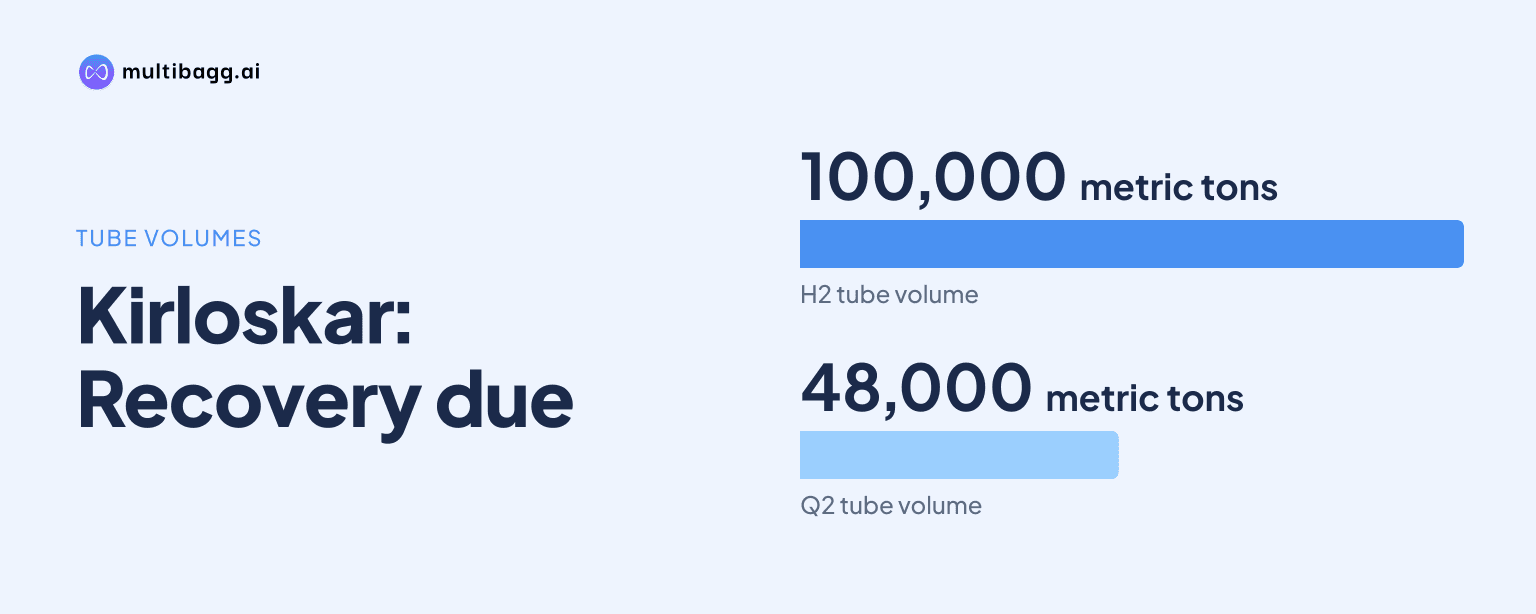
Kirloskar Ferrous Industries Limited expects more than 100,000 metric tons of tube volume in the second half of this year after a weak first half, with management seeking higher pricing and margins from oil-and-gas and boiler orders rather than lower-margin line pipes. Q2 tube volume recovered to about 48,000 metric tons.
Know Kirloskar Industries inside out
Results, valuation, peers and who's buying, in one view.
Why did KFIL's tube business weaken in the first half?
KFIL said delayed oil-and-gas projects caused a weak Q1 for tubes, while Q2 recovered to about 48,000 metric tons. Management said tube volumes had generally been in a 40,000-to-50,000-metric-ton quarterly range over the preceding eight quarters, but the company entered the second half about 7.5% below its prior-year position. Delayed project execution reduced access to the order mix that KFIL identifies as more value-added.
Margins remained under pressure in Q2 because KFIL had to make line tubes and products typically stocked and sold by trading partners when higher-value projects were delayed. Management identified oil-and-gas tubing and pipe orders, along with high-alloy, high-pressure boiler tubes, as its prime products. Those products and export orders were down in the quarter, leaving a greater proportion of lower-margin line-pipe sales in the mix.
How does KFIL plan to improve tube pricing and margins?
KFIL plans to improve tube margins through customer settlements and by booking subsequent orders at prices reflecting new steel and commodity costs. Management said tube realisations improved only 1.6%, compared with 12.5% for pig iron and 6.8% for castings. The comparison shows that tube pricing lagged the improvement reported in the other two product categories cited on the call.
The company said confirmed orders already booked at existing prices must be serviced, limiting an immediate reset across all sales. However, management expects later orders to carry better pricing, and said a large consignment dispatched near the end of the month would contribute realisation in October, or Q3. The call did not quantify the consignment or the expected margin effect.
KFIL also expects a product-mix shift to support volume and margin in Q3 and Q4. Management said it wants project progress to allow a move from line pipes towards more value-added tubes for oil and gas and the boiler sector. The outcome depends on demand converting into executable orders, since KFIL said it had made lower-margin products while projects were delayed.
Got a follow-up? Ask IRIS
Can KFIL reach its second-half tube-volume target?
KFIL is targeting better than 100,000 metric tons of tube volume in the second half, which management said could enable growth over last year despite the 7.5% deficit after the first half. That expectation is above twice the approximately 48,000 metric tons reported in Q2. Management said it remained optimistic about achieving growth in tubes as well as steel.
The volume plan partly rests on an expected reduction in Chinese dumping after anti-dumping duty was extended for another five years. Management also said exports to the United States had been hampered by the war situation, leaving constraints beyond domestic competition. The call did not provide an estimate of the duty extension's effect on KFIL's orders or capacity utilisation.
KFIL tied the target more directly to oil-and-gas and boiler project progress than to a broad tube-market rebound. Management said oil-and-gas and export orders were down in the quarter, then identified those categories as necessary for an improved second half. KFIL did not disclose an order-book split between exports and domestic business or a separate tube-capacity figure.
What could prevent KFIL's second-half tube recovery?
KFIL said the tube market was “not very strong” and that improvement would be needed to achieve its Q3 and Q4 objectives. Management compared this caution with signs of softness in the tractor industry, while saying that tube recovery depends on market movement and project progress. The company therefore distinguished its operating target of more than 100,000 metric tons from a confirmed demand recovery.
Pricing remains an issue because some confirmed orders were booked before the intended price improvement. KFIL reported a 1.6% improvement in tube realisation, compared with 12.5% for pig iron and 6.8% for castings. Management said further improvement in tube sales realisation and margin was required, making customer settlements and pricing on subsequent orders important indicators.
KFIL identified tubes, castings and alloy steel as its focus growth drivers. Management also said long-term pig-iron sales would be targeted at 0.5 million metric tons as part of a plan to convert some hot metal into steel. That strategy gives tubes a stated role in the business mix, but does not remove the near-term dependence on delayed projects and higher-value order inflow.
Conclusion
KFIL's second-half tube recovery case is conditional: management is targeting more than 100,000 metric tons after Q2 volume of about 48,000 metric tons, while seeking a greater share of oil-and-gas and high-pressure boiler products over lower-margin line pipes. Tube realisation improved 1.6%, versus 12.5% for pig iron and 6.8% for castings, explaining management's emphasis on repricing and product mix.
The next results should show whether the October realisation from the late-month consignment, subsequent orders priced for higher steel and commodity costs, and delayed oil-and-gas projects improve Q3 performance. Management also expects the five-year anti-dumping-duty extension to reduce Chinese dumping, while cautioning that the tube market remains soft.