










Ola Electric targets 700 stores as dealer orders ramp
Key highlights
- Ola Electric had 319 dealer stores operated by 255 partners as of 8 November 2026.
- Ola Electric's dealer wholesale orders rose from 3,955 vehicles in September to 13,505 in October 2026.
- Ola Electric forecasts 20,000 wholesale orders and 25,000 vehicles produced in December 2026.
- Ola Electric's Auto borrowings fell from Rs 2,422 crore in December 2024 to Rs 337 crore in September 2026.
powered by IRIS
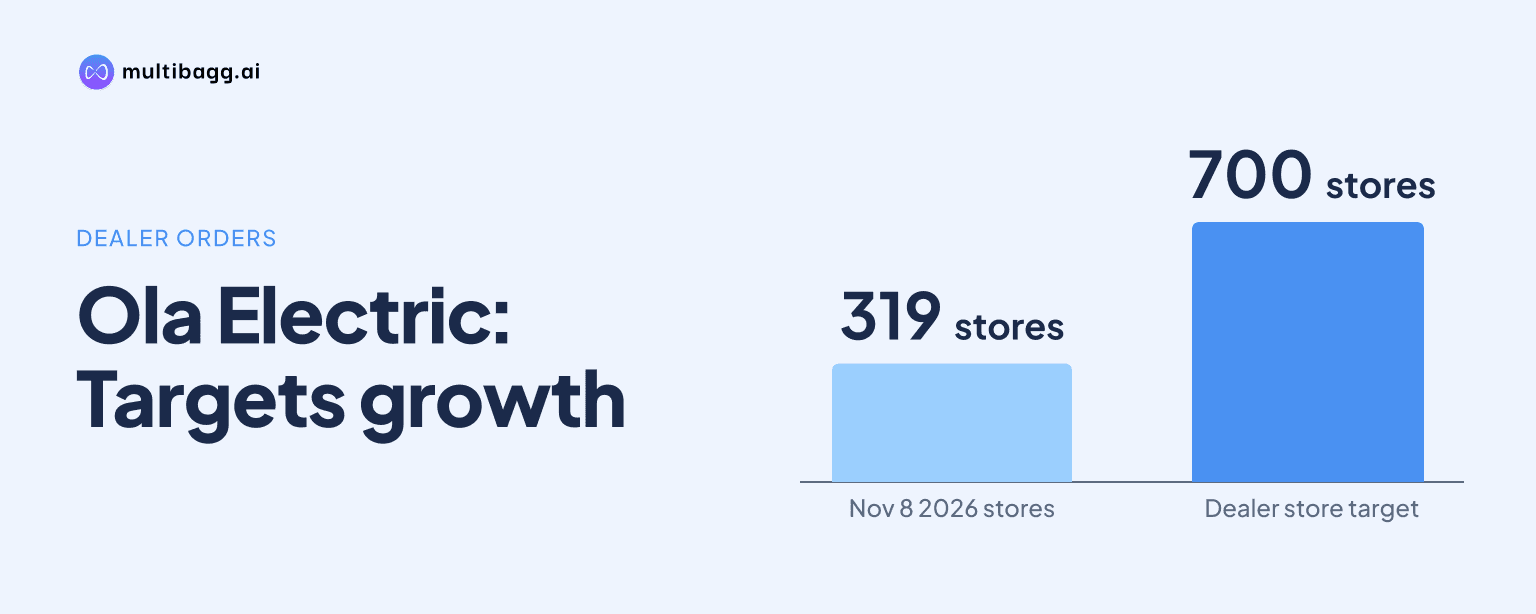
Ola Electric Mobility Limited plans to expand from 319 dealer stores on 8 November 2026 to about 700 by March 2027, after dealer wholesale orders increased from 3,955 vehicles in September to 13,505 in October. The rollout replaces company-operated direct-to-consumer stores with dealers that order, pay for and hold vehicle stock.
Know Ola Electric Mobility inside out
Results, valuation, peers and who's buying, in one view.
How quickly is Ola Electric expanding its dealer network?
Ola Electric plans about 450 dealer sales stores by December 2026 and 700 by March 2027, following 319 stores operated by 255 dealer partners on 8 November 2026. The first dealer stores opened on 4 September, meaning the network reached its reported November scale in about two months.
The March forecast implies 381 additional stores from the 8 November base, including 131 stores targeted by December and a further 250 by March. These are management forecasts, rather than reported openings, and execution depends on dealer appointments and the supply of vehicles to the expanded network.
Ola Electric stopped taking orders through its direct-to-consumer, or D2C, stores on 1 November 2026, and said those stores would largely close by December. All new vehicle production is now sent to dealers, which pay when they order and retain inventory in their own outlets, according to the shareholder letter.
Are Ola Electric dealers reordering vehicles?
Ola Electric said repeat orders are a rising share of wholesale orders and dealer dispatches, although it did not disclose a repeat-order percentage. Actual wholesale orders rose by 9,550 vehicles, from 3,955 in September to 13,505 in October, while the dealer network was being established.
Management forecast 16,000 wholesale orders in November and 20,000 in December. The November chart covers actual production only through 1-11 November and provides no final November wholesale-order result, so December's forecast cannot yet be assessed against a reported full-month November volume.
Ola Electric said dealer-channel inventory built through October and November as registrations were a little slower in October. Channel inventory was about 15 days when the letter was issued, while inventory at most of the earliest-opening stores was less than a week. This shows that wholesale dispatches were also being used to stock new outlets, not solely to satisfy immediate retail registrations.
Got a follow-up? Ask IRIS
Can Ola Electric produce enough vehicles for the dealer rollout?
Ola Electric expects to produce about 25,000 vehicles in December 2026, compared with actual output of 9,235 in August, 12,284 in September and 14,092 in October. It forecast 20,000 vehicles for November and reported 5,526 produced during 1-11 November.
Output increased by 4,857 vehicles between August and October, or about 53%. Ola Electric said its manufacturing plant could produce well above current output, but supplier capacity was the constraint; it is working with supplier partners and expects production to rise month by month.
The company reported that about 5,000 vehicles with paid orders in September were delivered a week late and moved into October because chargers were unavailable. Following the dealer transition, Ola Electric said it was carrying a paid-order backlog that it intends to clear as supply rises, making component availability relevant to delivery timing as well as factory production.
Ola Electric also plans to introduce the S1Z scooter in Q4 FY27 at a lower price point with a lithium iron phosphate, or LFP, cell. It expects gradually to integrate LFP cells into existing products from Q4 FY27, a plan management said should reduce bill-of-materials costs while demand for premium scooters and motorcycles rises.
What are the dealer model's reported financial effects?
Ola Electric reported automotive revenue from operations of Rs 420 crore in Q2 FY27, down from Rs 455 crore in Q1 FY27, while automotive gross margin declined to 29.76% from 30.5%. Management said gross margin would reduce a little in Q3 and Q4 because of dealer rollout, but expects operating margin to improve as the company-store network closes.
Automotive adjusted operating earnings before interest, tax, depreciation and amortisation, or EBITDA, recorded a loss of Rs 145 crore in Q2 FY27, compared with a Rs 141 crore loss in Q1 FY27. Automotive free cash flow was negative Rs 134 crore in Q2, versus negative Rs 123 crore in Q1, showing that the expected dealer-model benefits were not yet reflected in positive segment cash flow.
Management said operating expenses would reduce by about Rs 50 crore as company stores close. Its shareholder letter described Q2 consolidated operating expenses of Rs 369 crore as lower than Rs 390 crore in Q1 after excluding a one-time non-cash reversal of Rs 57 crore; the reported financial table shows Q1 operating expenses of Rs 333 crore.
Auto borrowings fell from Rs 2,422 crore in December 2024 to Rs 337 crore in September 2026, while total borrowings declined from Rs 3,132 crore to Rs 1,819 crore. Management expects Auto to generate free cash flow in the near term, citing lower debt, dealer-funded inventory and the working-capital cycle, but did not provide a quarter-specific target.
Conclusion
Ola Electric's dealer transition has rapidly moved distribution away from D2C stores, with 319 dealer stores as of 8 November 2026 and October wholesale orders of 13,505 vehicles. The reported increase from 3,955 September orders, repeat-order commentary and about 15 days of channel inventory provide early evidence of dealer activity, while dealer stocking and slower October registrations qualify what wholesale growth indicates about retail demand.
The next disclosed milestones are about 450 stores by December 2026, 700 by March 2027, 20,000 December wholesale orders and 25,000 December vehicles produced. Management's planned Rs 50 crore reduction in operating expenses from store closures, the supplier-led production ramp and the stated near-term Auto free-cash-flow expectation remain the key matters to watch.