










Pakka builds FlexC Base market before PM4 January launch
Key highlights
- Pakka sold more than 500 tonnes of outsourced FlexC Base before PM4 start-up.
- Management said the more than 500 tonnes represent roughly one-sixth of PM4's expected paper output.
- Pakka expects PM4 start-up in December and is aiming for commercial production in January.
- Wrap & Carry volumes rose to 10,700 tonnes from 7,600 tonnes in the same period a year earlier.
powered by IRIS
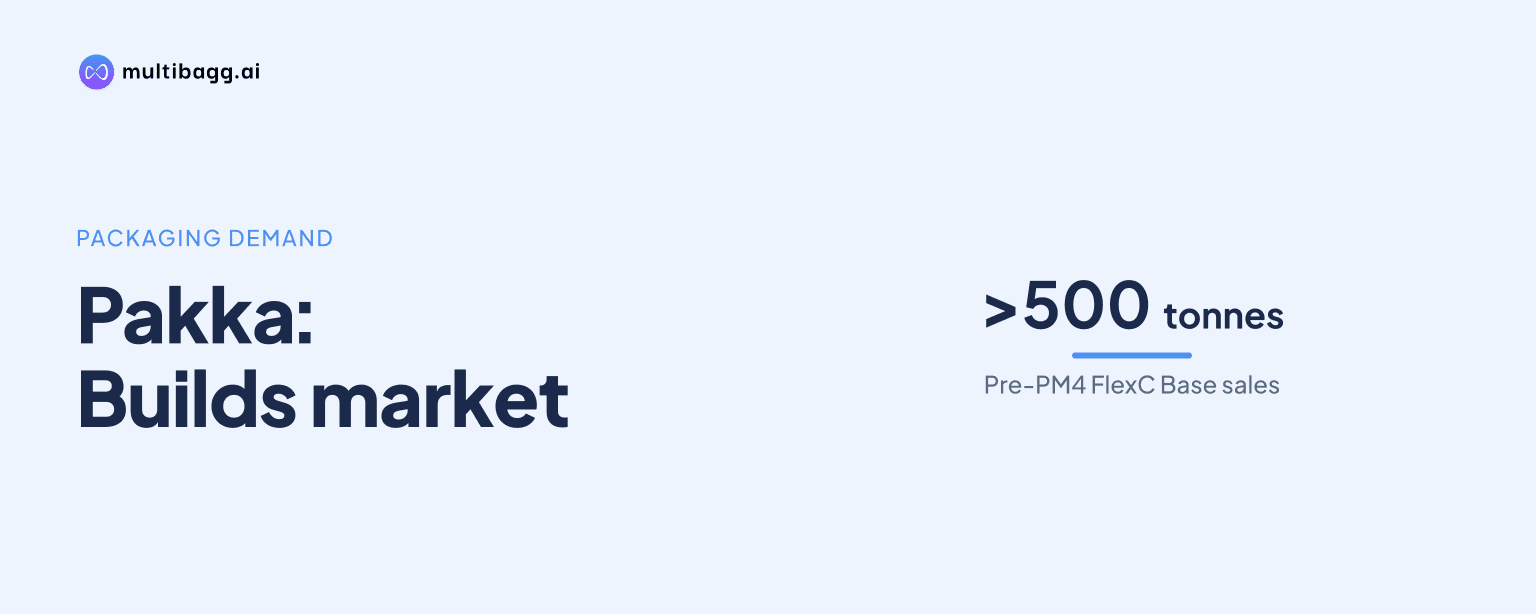
Pakka Limited has sold more than 500 tonnes of outsourced FlexC Base before PM4 starts, with management saying that volume represents roughly one-sixth of the paper expected from the new machine. Following European pilot trials, Pakka expects PM4 start-up in December and is aiming for commercial production in January.
Know Pakka inside out
Results, valuation, peers and who's buying, in one view.
How is Pakka building FlexC Base demand before PM4 starts?
Pakka is building FlexC Base demand by selling outsourced base paper before PM4, or Paper Machine 4, begins production. Managing Director Ved Krishna said on the 3 November 2026 earnings call that Pakka had started selling more than 500 tonnes of the base paper that it ultimately intends to make on PM4. The early sales establish market activity before the new machine enters its start-up phase.
Management said the more than 500-tonne volume was roughly one-sixth of the paper expected from PM4. That comparison links the outsourced product with the planned PM4 grade, although the call did not disclose PM4's full capacity, pricing, customer count or the period over which the more than 500 tonnes were sold. Pakka also did not disclose whether the outsourced sales were backed by long-term contracts.
Pakka held a soft launch at its site immediately before the call, when partners visited the new facility and viewed the machine. Executive Director Mayank Jindal said the partners were satisfied and confident after the visit, while management described the engagement as part of establishing the market before larger-scale output begins. Pakka therefore has product sales and partner discussions in place, but has not stated that PM4's future capacity is fully contracted.
What did Pakka's European FlexC Base trials establish?
Pakka said its European pilot trials gave it successful technical results and product-development learning for FlexC Base. Jindal said senior colleague Sudhir Mishra spent more than one month in Europe completing laboratory and pilot trials. Management described the work as very successful and said it generated insights and learnings, without disclosing trial volumes, test specifications, customers or commercial terms.
The trials matter because Pakka is positioning PM4 around flexible-packaging base paper rather than only adding paper volume. Krishna said FlexC Base remained under development while Pakka was becoming able to discuss Project Jagriti and the product expected from it in greater detail. Pakka separately said it was close to commercialising the wider FlexC structure strongly, indicating that the base-paper programme forms part of a broader material-development effort.
Pakka's existing Wrap & Carry business provides context for its focus on specialised products. Management said specialised grades, including interleaving grades and exports, accounted for almost 30% of Wrap & Carry sales. It also reported Wrap & Carry volumes of 10,700 tonnes, compared with 7,600 tonnes in the same period a year earlier. Those figures concern existing operations rather than FlexC Base, but they show Pakka pursuing specialised paper segments alongside PM4 preparation.
Got a follow-up? Ask IRIS
When will Pakka start PM4 and launch FlexC Base?
Pakka expects PM4 start-up in December and is aiming for commercial production in January, while management said the bigger FlexC Base launch would occur in January. The schedule is part of Project Jagriti, which includes PM4, a recovery boiler, a 15-megawatt power plant and a pulp-mill upgrade. The pulp-mill upgrade was complete, while the recovery boiler and 15-megawatt turbine had started and were under stabilisation.
The December timing is later than management's earlier expectation to begin PM4 start-up and testing in October, before Diwali. Jindal attributed the shift to testing each component thoroughly before start-up, citing the smooth commissioning of the recovery boiler and turbine as the approach being applied to PM4. He said Pakka was seeking to avoid errors at start-up that could lead to lost time later.
The revised schedule distinguishes machine start-up from commercial production. Management expects PM4 to follow a start-up curve rather than operate at full capacity immediately. Jindal described a gradual path through 30% to 40% and then 50% to 60% utilisation, meaning a December start-up would not equate to full-scale FlexC Base output in that month. January is management's target for commercial production, rather than an achieved milestone.
What risks remain in Pakka's FlexC Base commercialisation?
The principal disclosed execution risk is the PM4 ramp-up, because Pakka moved its start-up expectation from October to December and does not expect immediate full utilisation. Management acknowledged that a delay would have some impact, while stating that a one- or two-month delay was not significant for a project of this scale. Its stated objective is a rapid start-up progression after the machine begins operating.
Demand conversion will also depend on production performance and partner sales after PM4 starts. Responding to an analyst's question on order availability, Jindal said partners had expressed confidence that they could sell the output if Pakka produced it. The more than 500 tonnes already sold and the soft launch support that management view, but the call did not disclose binding order coverage, customer-specific commitments or an average FlexC Base realisation.
Pakka is using outsourced capacity in another segment while preparing PM4. Management said Food Services revenue increased 19% quarter on quarter and that the segment had turned earnings before interest, tax, depreciation and amortisation positive for the first time. It also said Food Services was adding 350 tonnes of monthly capacity through outsourcing partners in an asset-light, capital-expenditure-free model. That arrangement is separate from FlexC Base, but it shows Pakka using external manufacturing while expanding commercial reach.
Conclusion
Pakka has moved FlexC Base beyond a pre-production concept by completing European laboratory and pilot work, selling more than 500 tonnes of outsourced base paper and bringing partners to the PM4 site. The more than 500 tonnes, described as roughly one-sixth of PM4's expected paper output, is the clearest disclosed evidence that management is seeking to establish demand before the new machine produces at scale.
The next disclosed milestones are PM4 start-up in December and the January target for commercial production and a bigger FlexC Base launch. The key matters to watch are the speed of the stated 30% to 40% and 50% to 60% utilisation ramp-up, and whether partner confidence converts into disclosed orders, repeat volumes and commercial realisations after PM4 begins operating.