










POCL targets December start for 18,000-tonne cathode line
Key highlights
- POCL targets December 2026 commissioning of Phase I with 18,000 metric tonnes of annual copper-cathode capacity.
- The 36,000-metric-tonne cathode project has an approximately Rs 200 crore outlay, with about Rs 60 crore incurred by November 13, 2026.
- POCL expects 60%-70% of internally generated recycled copper material to feed the cathode facility.
- Management guided to cathode EBITDA of about Rs 65,000 per tonne, versus Rs 35,000 to Rs 40,000 per tonne for copper recycling.
powered by IRIS
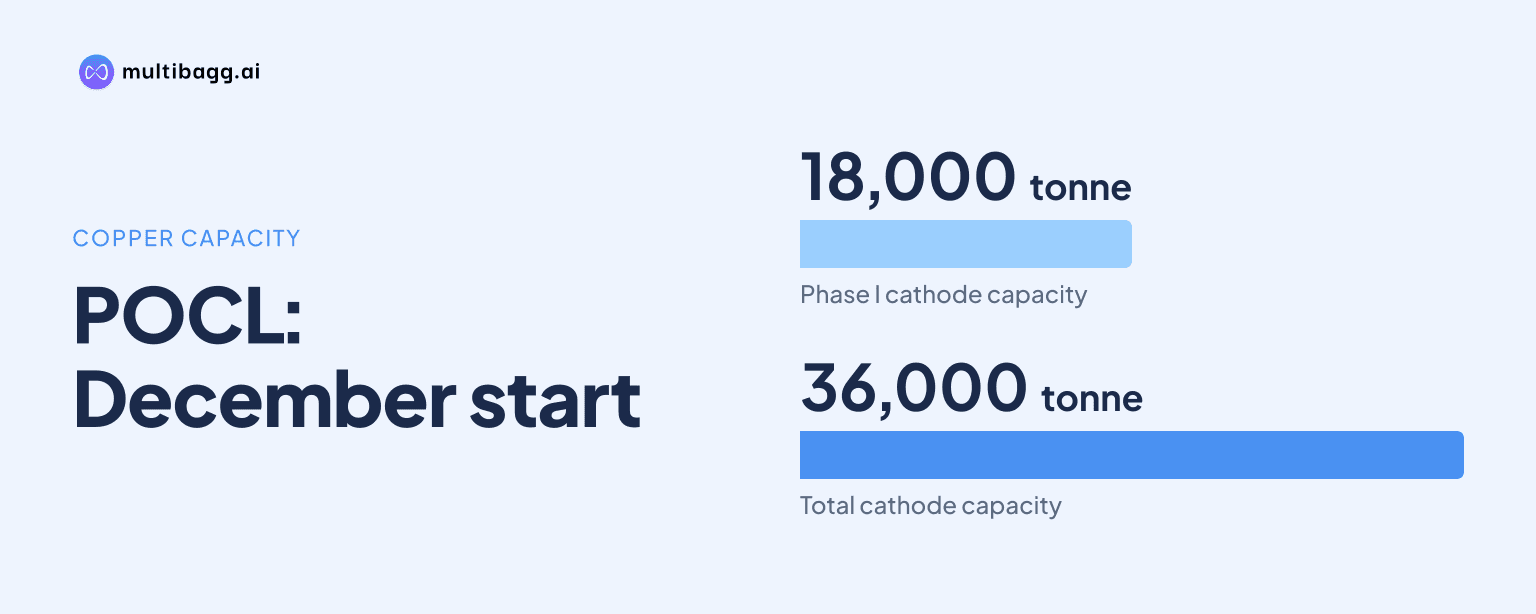
Pondy Oxides and Chemicals Limited targets December 2026 commissioning of an 18,000-metric-tonne annual copper-cathode line at Thervoy Kandigai, the first stage of a Rs 200 crore project funded entirely from internal accruals. POCL had spent about Rs 60 crore by its November 13, 2026 earnings call and expects trial runs in Q4 FY27.
Know Pondy Oxides & Chemicals inside out
Results, valuation, peers and who's buying, in one view.
What is POCL building at Thervoy Kandigai?
POCL is building a 36,000-metric-tonne-per-year copper-cathode facility at its Thervoy Kandigai plant in Tamil Nadu. The facility will combine pyro-refining and electro-refining to make London Metal Exchange, or LME, grade copper cathodes, extending POCL's copper operations from recycling into a cathode product.
The project has two equal phases of 18,000 metric tonnes a year each. Phase I is targeted for commissioning by December 2026, followed by trial runs in Q4 FY27, while Phase II, the remaining 18,000 metric tonnes of capacity, is targeted by Q3 FY28.
The phased construction means POCL's initial cathode capacity will be 18,000 metric tonnes a year rather than the full 36,000 metric tonnes. Management said major equipment deliveries and key construction activities were under way as of the November 13 call, but it did not disclose a separate date for commercial production after the Q4 FY27 trial runs.
How is POCL funding the copper cathode project?
POCL says the approximately Rs 200 crore cathode project will be funded fully through internal accruals. Management said about Rs 60 crore had been incurred by November 13, 2026, with the balance of the announced outlay still to be deployed across the two phases.
The project funding plan follows positive operating cash flow in H1 FY27, when POCL also said it maintained a net-cash and debt-free position. Revenue rose 33% year on year to Rs 1,639 crore in the six months, while profit after tax was Rs 55.6 crore.
Copper accounted for about 47% of POCL's H1 FY27 revenue after its revenue grew about 4.5 times year on year. Management expects copper to account for about 45% of overall revenue in FY27, reflecting the continued ramp-up of existing recycling capacity before the cathode line is commissioned.
How will POCL source material for the cathode line?
POCL expects 60%-70% of its internally generated recycled copper material to be used in the cathode facility. Management said the integration is intended to create operating synergies, increase value addition and support long-term profitability by processing a substantial share of recycled material into cathodes.
Management gave a more specific explanation for material from its Andhra copper operation during the call. About 60% of that current output is expected to be used for cathodes, while about 40% is expected to continue being sold externally; the cathode plant will also use other raw materials.
POCL's copper recycling capacity is currently 12,000 metric tonnes annually, including an additional 6,000-metric-tonne capacity commissioned in Q4 FY26. The 6,000-metric-tonne addition is expected to reach about 90% utilisation in FY27, while management said multi-stage processing can cause quarterly variation in reported copper volumes until the cathode and melting facilities operate.
Got a follow-up? Ask IRIS
What cathode profitability guidance has POCL given?
POCL has guided to cathode earnings before interest, tax, depreciation and amortisation, or EBITDA, of about Rs 65,000 per tonne. Management separately retained copper-recycling EBITDA guidance of Rs 35,000 to Rs 40,000 per tonne, placing its cathode guidance above the recycling range on an absolute per-tonne basis.
Management did not provide an earnings before interest and tax margin percentage for cathodes when asked by an analyst. It said its guidance was in absolute rupees per tonne, not a percentage of sales, and said a higher recycling margin in a prior quarter reflected a market squeeze and demand.
Copper production increased more than threefold year on year to 5,649 metric tonnes in H1 FY27, while sales rose more than threefold to 6,040 metric tonnes. Copper EBITDA was Rs 44,536 per tonne in the half year, 30% above the year-earlier period, providing a reported reference point before cathode production begins.
What could affect POCL's capacity ramp-up?
POCL's ramp-up depends partly on raw-material availability and shipping conditions after supply-chain disruption during H1 FY27. Management attributed the disruption to geopolitical developments in West Asia, said conditions were gradually easing, and described procurement initiatives across South America, Southeast Asia and domestic sources.
Management said it has strengthened ties with larger yards and new locations instead of establishing overseas collection yards or warehouses. It said an overseas yard for a single metal would add holding, shipping, financial and operational costs, whereas direct procurement from established yards offered material security.
The contrast with lead illustrates the effect of supply conditions on capacity use. POCL's expanded 72,000-metric-tonne annual lead capacity at Thervoy Kandigai operated at 40% utilisation in H1 FY27, compared with management's expectation that the 6,000-metric-tonne copper recycling addition will reach 90% utilisation during FY27.
Lead EBITDA was Rs 18,617 per tonne in H1 FY27, while management said lower lead volumes and higher logistics, power, fuel and flux costs affected profitability. Value-added products represented 65% of lead-segment revenue in H1 FY27, but their share was 60%-65% in the latest quarter versus about 85% in the preceding quarter.
What are POCL's copper and 2030 targets?
POCL is targeting copper sales above 20,000 metric tonnes in the next financial year after indicating that copper sales could be about 10,000 metric tonnes in FY27. Management linked the next-year target to the Phase I cathode start, existing recycling capacity and the reduction of process-related quarterly volume variation once the cathode and melting facilities operate.
For its 2030 roadmap, management is targeting volume growth above 15%, compound annual growth above 20% in revenue and profitability, EBITDA margins above 8%, return on capital employed above 20%, and more than 60% of revenue from value-added products. Management identified lead-capacity utilisation, copper additions, forward integration and product mix as the mechanisms intended to support those objectives.
Conclusion
POCL's December 2026 target would add the first 18,000 metric tonnes of annual cathode capacity to its copper operations, funded through a Rs 200 crore internal-accrual programme. The project is designed to direct 60%-70% of internally generated recycled copper into LME-grade cathodes, while management's per-tonne guidance differentiates the planned cathode output from recycling activity.
The next disclosed milestones are Phase I commissioning by December 2026, trial runs in Q4 FY27 and Phase II by Q3 FY28. Investors will also watch whether the additional 6,000-metric-tonne copper recycling capacity reaches the planned 90% utilisation in FY27 and whether raw-material sourcing and shipping conditions improve sufficiently to support the wider ramp-up.