










Praruh targets AI platforms above Rs 200 crore with partners
Key highlights
- Praruh said its AI proposals for ministries, ONGC and IOCL involve platforms exceeding Rs 200 crore.
- Praruh said it has an exclusive sales tie-up with Wizeverse AI for ready AI and machine-learning platforms.
- Praruh is participating in 24 cybersecurity-services tenders, according to management.
- Praruh said it monitored the G20 network for 10 days during the 2023 event.
powered by IRIS
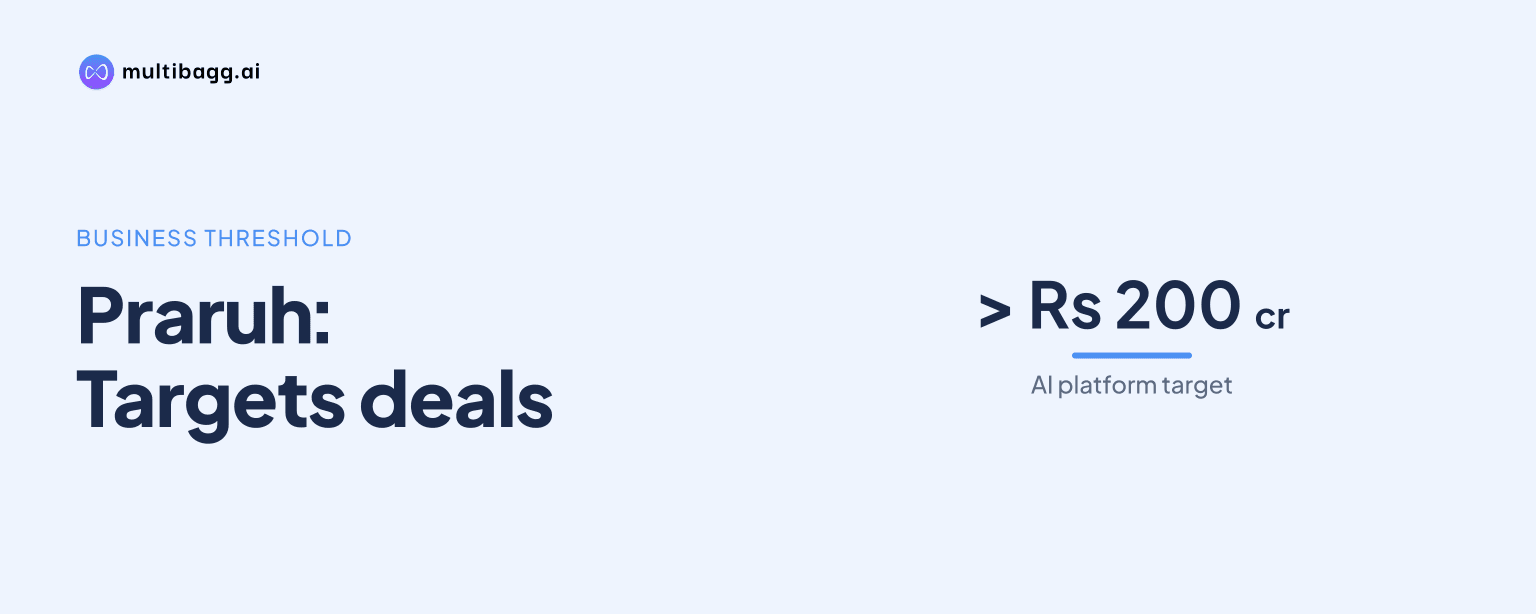
Praruh said it is combining its own tools with Google and Wizeverse AI platforms in customized proposals for ministries, Oil and Natural Gas Corporation and Indian Oil Corporation on platforms exceeding Rs 200 crore, while disclosing no award, implementation date or related revenue.
Know Praruh Technologies inside out
Results, valuation, peers and who's buying, in one view.
How is Praruh using Google and Wizeverse AI?
Praruh is using Google and Wizeverse AI to broaden its artificial-intelligence portfolio beyond NeuralOps, its own AI product. Management said Wizeverse AI has ready AI and machine-learning platforms, including a data-lake platform and a monitoring platform, and that Praruh has an exclusive sales tie-up for those products. The arrangement is intended to give Praruh products it can offer from day one while developing its internal software portfolio.
Google provides the second component of the proposed AI offering. Management described Praruh’s relationship with Google as an exclusive partnership covering Google’s AI-based solutions, with Gemini cited as one product. Praruh said it is combining its homegrown solution with Google’s wider set of products to make customized proposals, rather than limiting the arrangement to the resale of a single external platform.
Which AI customers and project values did Praruh identify?
Praruh identified several ministries and two large public-sector undertakings, Oil and Natural Gas Corporation, or ONGC, and Indian Oil Corporation, or IOCL, as targets for its AI-enabled use cases. Management said the work is being built for larger platforms exceeding Rs 200 crore. That amount describes the scale of the platforms discussed on the call, not a disclosed contract value, because Praruh did not report an order from a ministry, ONGC or IOCL.
The AI proposals are directed at government and large public-sector buyers, whereas Praruh’s planned security software also addresses small and medium enterprises. Management said Google and Wizeverse AI were tied up specifically to cover the AI portfolio. NeuralOps remains one product in that portfolio, while Wizeverse AI’s data-lake and monitoring products could extend the solutions Praruh presents to customers with broader technology requirements.
What role do IBM and Splunk play in Praruh’s strategy?
Praruh said its relationships with IBM and Splunk address cybersecurity requirements, separately from the Google and Wizeverse AI AI-portfolio strategy. Management said large enterprises can mandate globally established security solutions and certifications. Because Praruh is a newer participant seeking those standards, it said the IBM and Splunk arrangements help it address specified customer requirements while building its own eligibility.
Management said Praruh has bid for cybersecurity work involving ONGC and RailTel. It cited security operations centres, security information and event management, network detection and response, and endpoint detection and response as domains in which it is offering solutions. Praruh also said it is participating in 24 cybersecurity-services tenders, a quantified near-term tender channel that it did not provide for the AI proposals.
Got a follow-up? Ask IRIS
What cybersecurity delivery has Praruh disclosed?
Praruh cited its delivery of cybersecurity products and services for 10 days during the Group of 20, or G20, event in 2023. Management said Praruh monitored the entire G20 network during that period. It presented the assignment as evidence that Praruh has operated in cybersecurity since inception, even as IBM and Splunk products are being used for specifications that require internationally established technology.
The disclosed cybersecurity activity is more specific than the AI partnership disclosure. For cybersecurity, Praruh identified 24 tenders, bids involving ONGC and RailTel, and the 10-day G20 assignment in 2023. For the AI programme, it named ministries, ONGC, IOCL and platforms above Rs 200 crore, but did not give a tender count, order value, implementation date or revenue contribution.
How do these partnerships fit Praruh’s software plans?
Praruh said it wants software to help it operate as an original equipment manufacturer, or OEM, which management described as licensing software to other companies. In response to a question on NeuralOps, management said it expects the product’s revenue contribution to reach 20% in the upcoming years and suggested that a broader OEM model could take the contribution to 30% and beyond. These are management plans rather than reported revenue outcomes.
Praruh is also developing security-operations software for different customer groups, with its research and development team still testing the products. Management said its first intended route for small and medium enterprises is software as a service, combining a product with services because customers may lack staff to maintain security operations. Praruh said it will not announce a launch until backend vulnerabilities and testing have been addressed.
Conclusion
Praruh’s partnership strategy separates two commercial tracks. Google and Wizeverse AI are intended to help it assemble AI solutions for ministries, ONGC and IOCL on platforms management put above Rs 200 crore, while IBM and Splunk support cybersecurity bids where globally established technology and certification are required. The disclosed evidence is more developed for cybersecurity activity than for AI awards.
The next disclosures to watch are whether AI proposals to ministries, ONGC and IOCL produce announced orders, and whether any of the 24 cybersecurity tenders convert into business. Management’s stated targets also include NeuralOps contributing 20% of revenue in upcoming years, alongside an eventual software launch after testing and vulnerability work is complete.