










Rentomojo normalized Q2 EBITDA rises 53% to Rs 58.8 crore
Key highlights
- Rentomojo’s normalized Q2 FY27 EBITDA was about Rs 58.8 crore, up 52.7% year on year.
- A Rs 1.2 crore liability reversal and about Rs 80 lakh of IPO expenses created a net reported-EBITDA increase of about Rs 40 lakh in Q2 FY27.
- Rentomojo said subscribers rose about 42.5% and gross items ordered increased about 45% year on year in Q2 FY27.
- H1 FY27 cash flow from operations was about 110% of reported EBITDA, according to management.
powered by IRIS
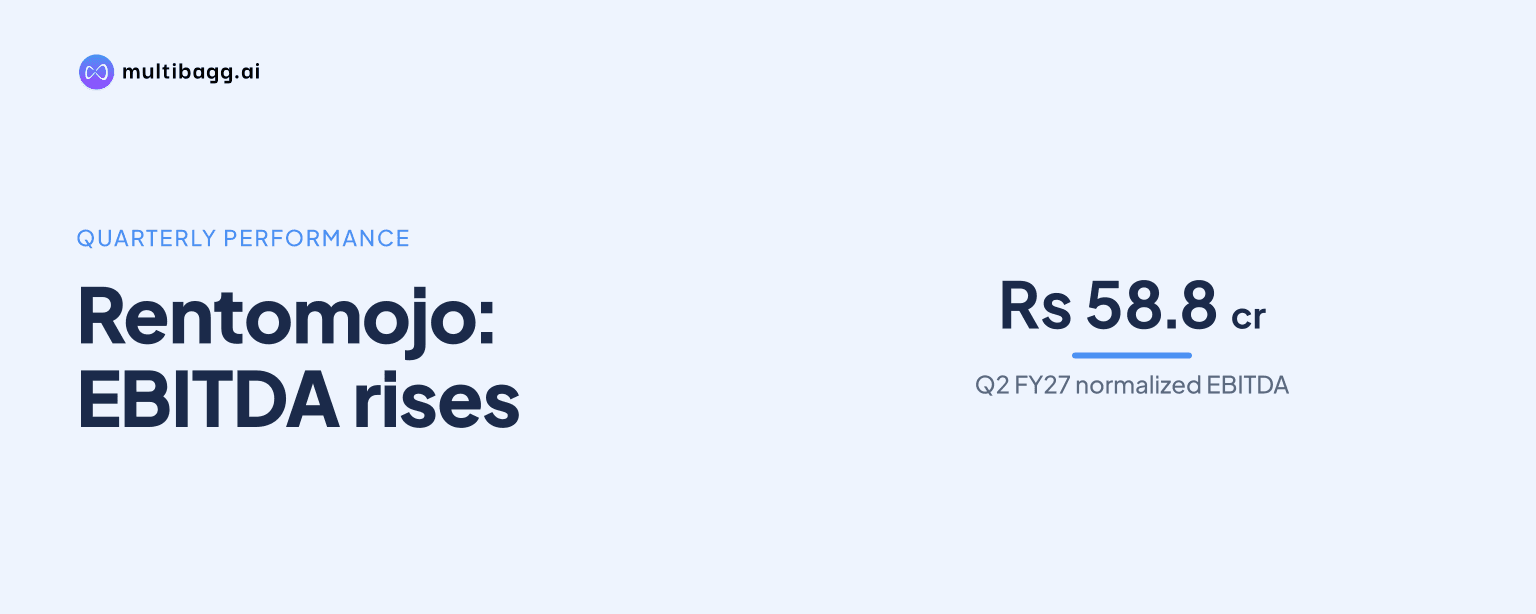
Rentomojo Limited reported normalized EBITDA of about Rs 58.8 crore in Q2 FY27, up 52.7% year on year and 12.6% sequentially, after management excluded exceptional and accounting items that made reported profit figures less comparable across recent quarters.
Know Rentomojo inside out
Results, valuation, peers and who's buying, in one view.
How should readers interpret Rentomojo’s reported Q2 earnings?
Rentomojo’s reported quarterly earnings should be considered alongside management’s normalized measures because separate one-time and accounting items affected Q1 and Q2 FY27. Management said a fire loss reduced Q1 FY27 reported EBITDA to about Rs 40.9 crore, compared with normalized EBITDA of about Rs 52.3 crore. It described the fire as a one-time event and said there was no human tragedy.
In Q2 FY27, the direction of the adjustment changed. A reversal of gratuity and leave-obligation liabilities added about Rs 1.2 crore to EBITDA, while IPO expenses reduced it by about Rs 80 lakh. Management said the net effect was an approximately Rs 40 lakh increase in reported EBITDA, while normalized EBITDA excluded both Q2 items.
Reported profit after tax, or PAT, was more volatile because of deferred-tax-asset accounting. Management said reported PAT appeared to decline 62.6% year on year in Q2 FY27 and increase 132% quarter on quarter. Its normalized PAT measure instead increased about 52% year on year and 9.4% sequentially, which management presented as a more consistent view of the operating trend.
What was Rentomojo’s normalized EBITDA progression?
Rentomojo’s normalized EBITDA rose from about Rs 38.5 crore in Q2 FY26 to about Rs 58.8 crore in Q2 FY27, after reaching about Rs 52.3 crore in Q1 FY27. Management said the Q2 FY27 result represented 52.7% year-on-year growth and 12.6% growth from Q1 FY27.
The Q2 FY26 base did not have a material gap between reported and normalized EBITDA, with both at about Rs 38.5 crore. Q1 FY27 included the fire loss, while Q2 FY27 included the Rs 1.2 crore liability reversal and Rs 80 lakh IPO cost. The normalized series therefore showed EBITDA increasing in both the year-on-year and sequential comparisons.
Rentomojo also said normalized earnings before interest and tax, or EBIT, increased 50.7% year on year and 12.6% quarter on quarter in Q2 FY27. Management attributed minor compression in return on capital employed and return on equity to IPO proceeds of roughly Rs 150 crore increasing net worth, while reiterating its aspiration to maintain both returns above 20%.
Got a follow-up? Ask IRIS
What drove Rentomojo’s Q2 FY27 revenue growth?
Rentomojo said revenue from operations increased about 53% year on year and 12.5% quarter on quarter in Q2 FY27, supported by the existing subscription base as well as new demand. Management said historical capital expenditure continued to generate rental revenue over contractual tenures, so revenue did not depend solely on items ordered during the quarter.
Subscribers grew about 42.5% year on year and gross items ordered rose about 45%, while sequential increases were about 14.5% and 16%, respectively. About 3.8 lakh items were ordered through the platform in Q2 FY27, representing approximately Rs 447 crore of purchase displacement, or the value of products customers might otherwise have bought rather than rented.
Revenue per item rose 4.6% year on year, while items per user remained about 2.8 and occupancy stayed within Rentomojo’s 83% to 85% target range. Management also cited traffic growth of about 50% and growth of about 66% in the Rentomojo keyword, alongside contributions from core categories, subcategories and new product introductions.
What does Rentomojo’s H1 FY27 cash conversion show?
Rentomojo said H1 FY27 cash flow from operations was about 110% of reported EBITDA, meaning operating cash generation exceeded reported EBITDA over the six-month period. Management used the ratio to show that EBITDA was converting into cash that could support further capital expenditure.
For H1 FY27, revenue from operations increased about 52% year on year, while reported EBITDA rose about 36.5% and the reported EBITDA margin was about 37%. Management said the reported-margin effect was predominantly due to the Q1 fire loss. On a normalized basis, it said most major H1 measures rose by about 50%, while normalized PAT increased about 61% and approached a 17% margin.
The H1 FY27 figures also show the scale of asset deployment supporting the subscription model. Rentomojo said it procured about Rs 192.3 crore of capital expenditure in H1 FY27, while cash flow from operations was about Rs 110 crore. The company said its focus remains on deepening operating cash flow and its conversion from EBITDA before placing greater emphasis on free cash flow in future years.
Conclusion
Rentomojo’s Q2 FY27 normalized figures show a higher underlying earnings level than reported PAT alone indicates. Normalized EBITDA reached about Rs 58.8 crore versus about Rs 38.5 crore in Q2 FY26, while normalized PAT rose from about Rs 15.8 crore to about Rs 24 crore. The comparison removes the effects of the Q1 fire loss, Q2 liability reversal, IPO expenses and deferred-tax-asset accounting.
The next operating markers are whether Rentomojo maintains its 83% to 85% occupancy target and whether subscriber and item-order growth continue to support the installed and newly deployed rental-asset base. Management said it does not base its targets on revenue per item or items per user, despite H1 revenue per item increasing about 6%, leaving those measures as outcomes to monitor rather than stated targets.