










Shigan extends CNG-LNG components into hydrogen systems
Key highlights
- Shigan lists gas injectors suitable for CNG, LPG, LNG and hydrogen applications at 1.5 Bar to 9.0 Bar.
- Shigan plans high-pressure injectors and pressure regulators for its hydrogen platform expansion.
- Shigan’s multi-point gas injection fuel rails serve 2-cylinder to 8-cylinder applications at 1.5 Bar to 9.0 Bar.
- Shigan plans nationwide conversion-kit channels, fleet retrofits and IoT diagnostics for alternative-fuel systems.
powered by IRIS
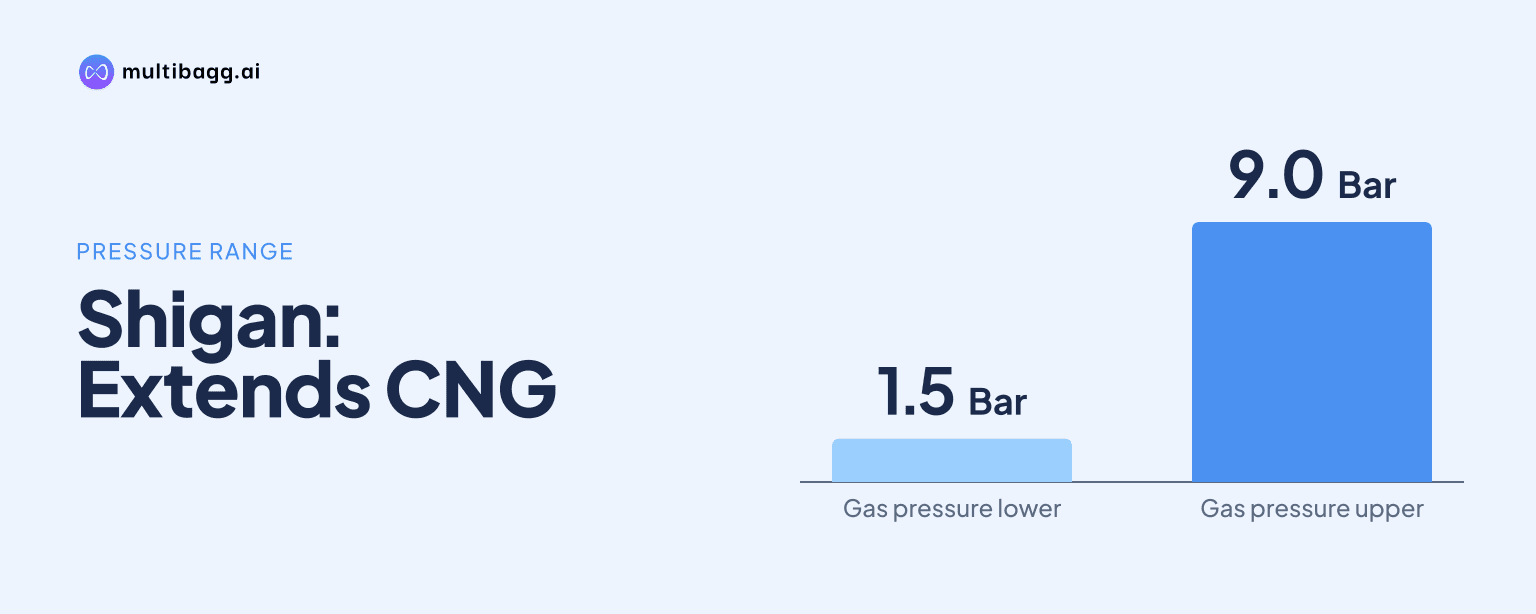
Shigan Quantum Technologies Limited is extending its compressed natural gas (CNG) and liquefied natural gas (LNG) component platform into hydrogen systems, with gas injectors listed as suitable for hydrogen applications at 1.5 Bar to 9.0 Bar. Shigan also plans high-pressure injector and regulator development, hydrogen research partnerships, fleet retrofits and diagnostics.
Know Shigan Quantum Technologies inside out
Results, valuation, peers and who's buying, in one view.
How is Shigan extending its CNG and LNG platform?
Shigan is extending its platform by expanding its modular injector range from CNG and LNG into hydrogen fuel applications. Shigan describes itself as an end-to-end clean-fuel systems partner for original equipment manufacturers (OEMs), supplying gaseous injectors, pressure regulators and other alternative-fuel components. Its stated approach includes domestic manufacturing under Atmanirbhar Bharat for cost and supply-chain efficiency.
The product range provides a technical base for that expansion. Shigan lists gas injectors suitable for CNG, liquefied petroleum gas (LPG), LNG and hydrogen fuel applications, rather than identifying hydrogen as an entirely separate range. The listed injectors operate at gas pressures from 1.5 Bar to 9.0 Bar and include top-feed saturated and peak-and-hold versions.
Shigan also offers side-feed injectors in low-flow and standard-flow configurations. These options show that the current injector platform serves differing flow and installation requirements across gaseous-fuel applications. The presentation does not disclose hydrogen injector sales, production capacity, customer names, order volumes or hydrogen-specific revenue.
The next step is explicitly developmental. Shigan says it plans to develop high-pressure injectors and pressure regulators as it broadens the platform from CNG and LNG to hydrogen. The source does not provide a launch date, development budget or commercial target for these planned products.
Which Shigan products are relevant to hydrogen fuel systems?
Shigan’s most directly disclosed hydrogen-relevant product is its gas injector range, which is listed as suitable for hydrogen applications at 1.5 Bar to 9.0 Bar. Pressure regulators, filters, filling units and multi-point gas injection fuel rails are also part of the CNG and LNG range, although the presentation does not state that each of those products is approved for hydrogen use.
Shigan’s pressure-regulator range includes CNG and LNG regulator variants, with 12-volt and 24-volt solenoid options. The company says the regulators are certified to International Organization for Standardization standard ISO 15500 and integrated with an HPSensor. However, Shigan does not state that its listed regulator variants hold hydrogen certification.
The multi-point gas injection fuel rails cover 2-cylinder through 8-cylinder applications and have the same stated 1.5 Bar to 9.0 Bar operating range as the injectors. Shigan also lists CNG filters, an LNG filter, NGV-1 and NGV-2 products, and an integrated filling module. The source does not specify whether these rails, filters, valves or filling units are hydrogen-compatible.
How will Shigan develop its hydrogen technology?
Shigan says it will pursue hydrogen technology development through research and development collaboration with Indian Institutes of Technology (IITs) and the Automotive Research Association of India (ARAI). The stated objectives are hydrogen research and intellectual-property creation, alongside the planned development of high-pressure injectors and pressure regulators.
This plan has no disclosed project timetable, investment amount, named IIT partner, patent target or certification milestone. Shigan identifies advanced research and development and global technology partnerships among its strengths, but the presentation does not identify a hydrogen-specific overseas technology partner.
The distinction between current capabilities and planned work is material. Shigan currently lists injectors suitable for four fuel applications: CNG, LPG, LNG and hydrogen. By contrast, the high-pressure injector and regulator programme, IIT and ARAI collaboration, and intellectual-property work are forward plans rather than reported commercial results.
Shigan’s group structure also places CNG, LNG and H2, meaning hydrogen, within Shigan’s stated operating scope. The presentation therefore links hydrogen to the existing clean-fuel business rather than setting out a separate hydrogen subsidiary, production line or standalone financial segment.
Got a follow-up? Ask IRIS
What aftermarket and fleet plans does Shigan have?
Shigan plans to build a nationwide aftermarket network for CNG, LNG or hydrogen conversion kits through either a group company or a dedicated dealer network. This is a stated route-to-market plan, not evidence of an existing dealer footprint, conversion-kit volume or rollout schedule.
The company also identifies fleet retrofit solutions for medium or large logistics operators and state transport undertakings. That route differs from Shigan’s OEM supply model: OEM customers can receive fuel-system components for vehicle production, while fleets could use retrofit services for vehicles already in operation.
Shigan says it will target urban conversion hubs in high CNG and LNG demand corridors. The presentation does not identify the number of hubs, their locations or whether hydrogen conversion facilities will be installed at the same sites. It does, however, connect the proposed network to CNG, LNG and hydrogen conversion-kit demand.
Internet of Things (IoT)-enabled diagnostics are another planned aftermarket feature. Shigan says the diagnostics would support fuel efficiency and emission compliance, adding monitoring to its proposed component, conversion-kit and retrofit offering. No launch date, software specification, subscription model or emissions target is disclosed.
How does hydrogen compare with Shigan’s other growth platforms?
Hydrogen is presented as an extension of Shigan’s clean-fuel platform, while vehicle fire safety and electrification are separate growth directions. In clean fuels, Shigan relies on CNG and LNG manufacturing and development expertise; in electrification, it says it will use its infrastructure to pursue electric-vehicle components and advanced electronics.
The clean-fuel comparison is between an existing multi-fuel component range and a planned higher-pressure development programme. CNG and LNG regulators, filters, filling products and fuel rails are already listed in the range, while hydrogen-specific expansion focuses on modular injectors, high-pressure injectors, pressure regulators and research partnerships.
Shigan separately estimates a market potential of more than Rs 300 crore over the next 3 to 4 years for fire detection and suppression systems across electric, diesel and CNG fleets. That estimate is for the fire-safety vertical, not for hydrogen products, and the presentation gives no comparable market-potential or revenue estimate for hydrogen systems.
The presentation therefore positions hydrogen as a product-platform extension rather than a quantified new revenue segment. Shigan links OEM supply, injectors, regulators, conversion kits, fleet retrofits and IoT diagnostics, but does not disclose a hydrogen sales target, margin outlook or contribution to the group’s revenue.
Conclusion
Shigan’s disclosed clean-fuel strategy moves beyond CNG and LNG by listing gas injectors suitable for hydrogen applications at 1.5 Bar to 9.0 Bar. The component platform also includes CNG and LNG regulators, filters, filling equipment and 2-cylinder to 8-cylinder fuel rails, although hydrogen suitability is not specified for every related product.
Next, investors should watch whether Shigan identifies high-pressure injectors and pressure regulators as commercial products, progresses the planned IIT and ARAI research work, and establishes its proposed nationwide conversion-kit network. The source leaves timing, development spending, certification scope, partner details and hydrogen revenue contribution unresolved.