










Sula Vineyards Limited Q2 FY27 Profit Rises 35% to ₹8.1 Crore
Key highlights
- Sula Vineyards Limited reported Q2 FY27 net profit of ₹8.09 crore, up 35% year-on-year.
- Net revenue rose 4% to ₹136 crore, marking Sula's third consecutive quarter of positive revenue growth.
- EBITDA increased 8% to ₹27.5 crore, and EBITDA margin expanded 82 basis points to 20.3%.
- Net debt declined ₹49 crore year-on-year to ₹306 crore as of September 2026.
powered by IRIS
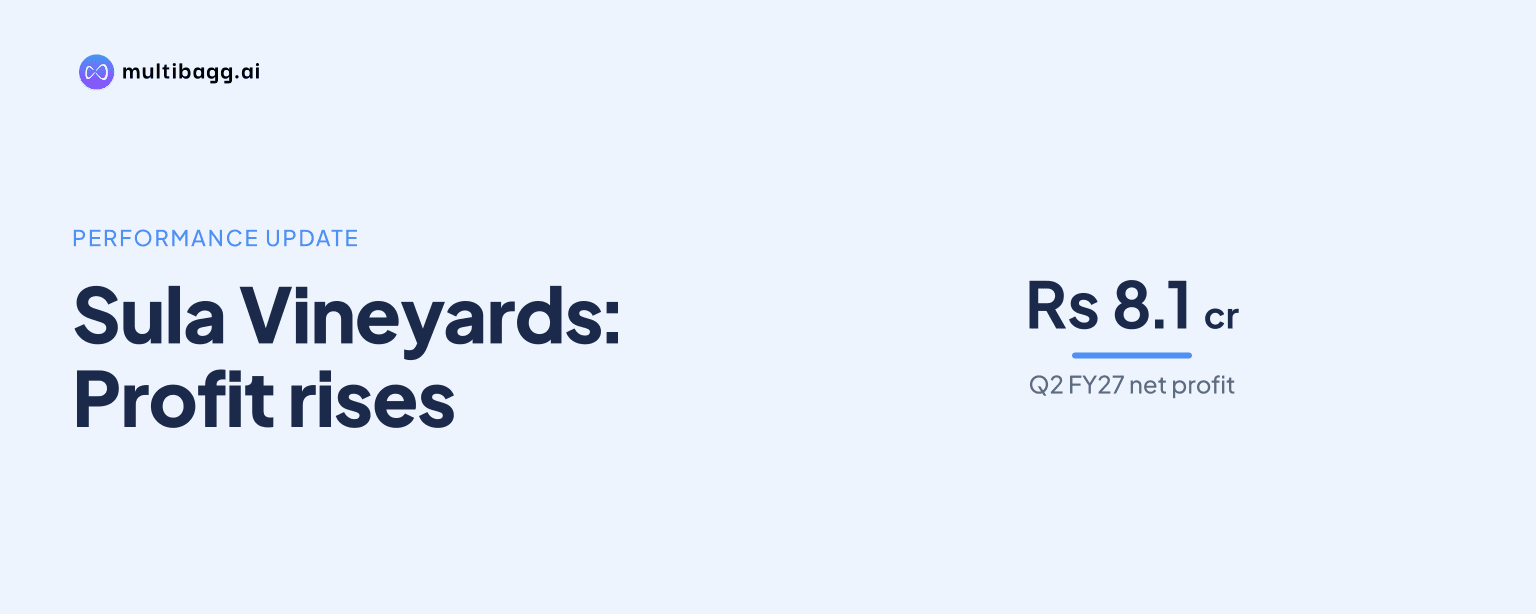
Sula Vineyards Limited reported Q2 FY27 net profit of ₹8.1 crore, up 35% year-on-year, while net revenue rose 4% to ₹136 crore and EBITDA increased 8% to ₹27.5 crore. The result matters because premium wines, wine tourism and operating-cost control supported earnings despite pressure on gross margin from higher grape costs.
Know Sula Vineyards inside out
Results, valuation, peers and who's buying, in one view.
How did Sula perform in Q2 FY27?
Sula reported growth across revenue, EBITDA and net profit in the September quarter of FY27. Net revenue from operations increased 4% year-on-year to ₹136 crore from ₹131 crore, marking the company’s third consecutive quarter of positive revenue growth. EBITDA rose 8% to ₹27.5 crore, while net profit increased 34% to about ₹8 crore.
The company separately reported consolidated revenue from operations of ₹145.44 crore for the quarter, compared with ₹139.66 crore a year earlier, an increase of 4.1%. Consolidated net profit was ₹8.09 crore against ₹5.99 crore in the corresponding quarter, while profit before tax rose to ₹10.92 crore from ₹8.27 crore. Earnings per share increased to ₹0.95 from ₹0.71.
Management said the quarter reflected improving business momentum and a stronger earnings conversion. The company also reported that operating expenses declined 4% year-on-year, helping EBITDA margin expand by 82 basis points to 20.3% despite a weaker gross margin.
What drove Sula's revenue and profit growth?
Sula said its elite and premium wine portfolio was the principal growth driver in Q2 FY27. Sales from this portfolio increased 9% year-on-year, and its contribution to own-brand sales rose by more than 400 basis points to an all-time high of 82%. This shift supported stronger realisations in a quarter when overall net revenue growth was modest.
The company’s flagship elite label, The Source, grew by more than 30% year-on-year during the quarter. Sula said it was expanding the brand’s distribution footprint across India. Management described premiumisation as central to its strategy for improving revenue quality and long-term profitability.
Wine tourism also made a larger contribution. Including direct-to-consumer wine sales at its tourism facilities, wine tourism accounted for nearly 20% of total revenue in Q2, up 220 basis points year-on-year. This indicates that tourism-linked sales were a meaningful part of the quarter’s revenue mix alongside retail distribution.
Why did Sula's gross margin decline despite higher EBITDA?
Sula’s gross profit margin declined by 280 basis points year-on-year in Q2 FY27, even as EBITDA margin improved. Management attributed 150 basis points of the gross-margin decline to higher blended grape costs, which it described as a one-time impact. An adverse market mix also weighed on gross profitability.
The difference between gross-margin pressure and EBITDA growth was driven by lower operating expenses. With operating expenses down 4% year-on-year, the company was able to lift EBITDA by 8% and expand EBITDA margin to 20.3%. The quarter therefore showed that cost discipline partly offset pressure in the cost of goods sold.
Management indicated that grape-cost relief was nearing, although it did not provide a quantified timeline or guidance for gross-margin recovery. Investors will need to distinguish between the premium portfolio’s sales momentum and the temporary input-cost effect when assessing operating performance.
Got a follow-up? Ask IRIS
What does the balance sheet and first-half data show?
Sula reduced net debt by ₹49 crore year-on-year to ₹306 crore as of September 2026. Management highlighted the debt reduction alongside the return to three successive quarters of positive revenue growth, presenting both as evidence of a strengthening financial position.
For the first half of FY27, consolidated revenue from operations rose to ₹266.23 crore from ₹257.95 crore in the prior-year period. First-half net profit increased 15% to ₹9.15 crore from ₹7.96 crore. The first-half profit figure shows that the second quarter contributed a substantial share of the period’s earnings.
The company’s management said it was optimistic that the second half of FY27 would build on Q2 momentum. That view rests on continued premium portfolio growth, wider distribution for The Source, wine-tourism revenue and expected relief from the elevated blended grape-cost impact. No numerical full-year forecast was disclosed in the earnings call material.
How does the quarter affect investors and the Indian wine market?
For investors, the key development is that Sula delivered faster profit growth than revenue growth. Net profit rose 35% while net revenue increased 4%, supported by lower operating expenses and a more premium product mix. The ₹49 crore year-on-year reduction in net debt is also relevant to assessment of the company’s balance-sheet position.
The result also highlights the importance of premium wines in India’s organised wine market. Management said Sula holds more than 70% to 75% of the Indian elite and premium wine market. It estimated that imported wine is almost equivalent in size to this segment, implying a combined market of roughly ₹1,000 crore.
Management also cited Telangana as a market that has grown consistently for five to six years and reached an all-time high in elite and premium sales. It said the state is more than 80% red-wine oriented and that Sula holds over 70% share in elite and premium wines there. These comments provide context for the company’s focus on premium labels and region-specific distribution.
Conclusion
Sula’s Q2 FY27 performance combined 4% net revenue growth with an 8% rise in EBITDA and a 35% increase in net profit to ₹8.1 crore. Premium wines, The Source and wine tourism improved the revenue mix, while lower operating expenses offset a 280-basis-point decline in gross margin caused partly by higher blended grape costs.
The next areas to watch are management’s expected easing of grape-cost pressure, the performance of the elite and premium portfolio, and continued progress in net debt reduction from ₹306 crore. Sula has said the second half of FY27 should build on the momentum seen in the September quarter, but it has not issued quantified full-year guidance.