










Sunlite Recycling Industries Ltd ATC output reaches 6 MT daily
Key highlights
- Sunlite began ATC production in April 2025 and reports output of about 6 MT per day.
- Sunlite started copper busbar production in September 2025 for electrical applications including transformers and rail traction.
- Combined ATC and busbar capacity is 2,640 tons at 56.87% utilisation.
- Sunlite plans a 1,000-ton value-added capacity addition by Q1 FY 2027-28 at an estimated cost of Rs 13 crore.
powered by IRIS
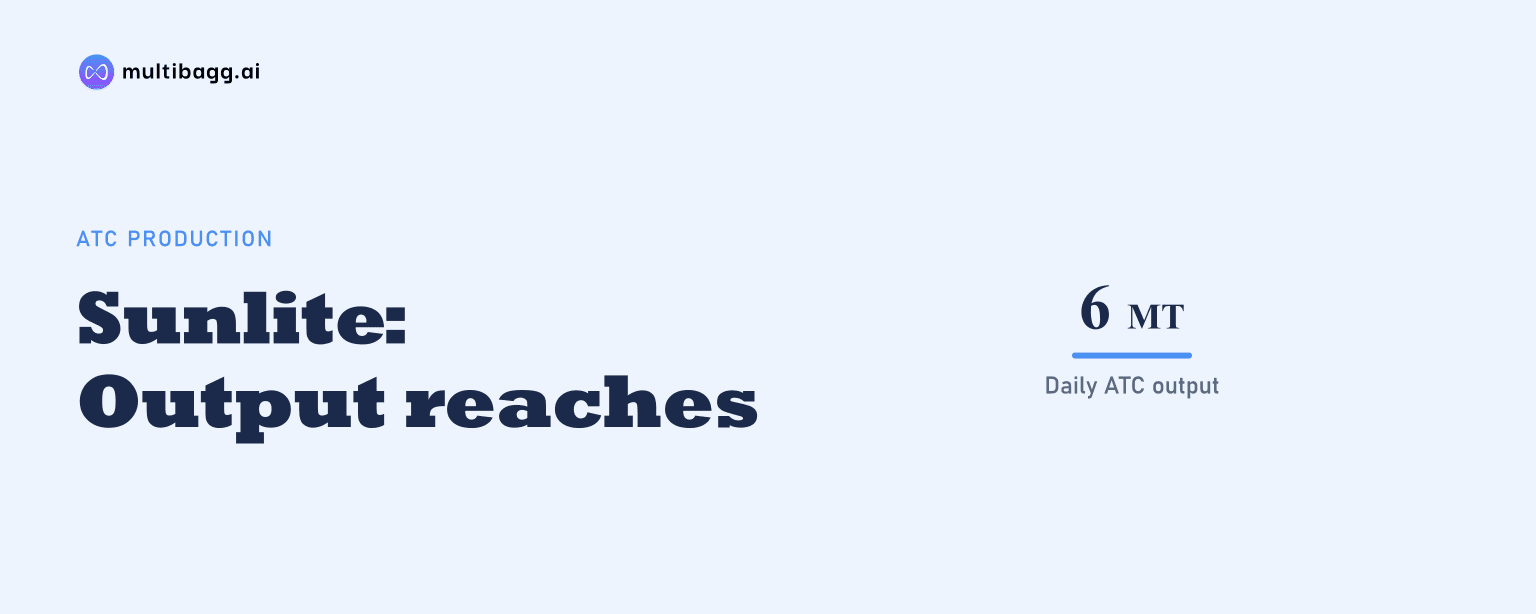
Sunlite Recycling Industries Ltd reports current annealed tinned coated copper, or ATC, output of about 6 metric tonnes, or MT, a day after production began in April 2025, and it plans a 1,000-ton combined value-added capacity addition by the first quarter of FY 2027-28.
Know Sunlite Recycling Industries inside out
Results, valuation, peers and who's buying, in one view.
Why is Sunlite moving into ATC and busbars?
Sunlite is moving further along its stated scrap-to-rod-to-wire-to-busbar-and-strips chain by producing ATC and copper busbars. The presentation describes this as forward integration into a higher-margin business-to-consumer, or B2C, segment, with ATC output beginning in April 2025 and busbar production beginning in September 2025.
The two products serve different electrical applications. Sunlite identifies ATC as an input for solar and electrical sectors, while it describes busbars as conductors that distribute large electrical currents in power systems. The additions sit alongside its existing copper wires and conductors, copper strips and aluminium rods.
The products also remain tied to Sunlite's recycling-based manufacturing model. ATC is made from 99.9% pure recycled copper, while busbars use electrolytic tough pitch, or ETP, recycled copper. The presentation says the company uses physical, material-to-material hedging for copper and links this mechanism to more stable margins during copper-price volatility.
What is Sunlite's ATC product and where is it used?
Sunlite's ATC is a high-conductivity copper wire or rod made from 99.9% pure recycled copper, annealed for flexibility and electroplated with a uniform tin layer. The company says the tin coating is intended to prevent oxidation, while the product is designed for solar and electrical-sector applications.
Sunlite reports ATC output of about 6 MT a day after commencing production in April 2025. This is a daily output measure, rather than an annual capacity figure, so it is not directly comparable with the 2,640-ton annual capacity disclosed for the combined ATC and busbar category.
The presentation says ATC offers conductivity, corrosion resistance and long-term performance, and it also says ATC capacity is being doubled. However, Sunlite does not disclose a standalone ATC capacity base, a separate ATC utilisation rate or a product-specific capacity target, so the scale of that doubling cannot be calculated from the presentation.
What ATC and busbar expansion has Sunlite planned?
Sunlite plans to add 1,000 tons of combined value-added product capacity by Q1 FY 2027-28 at an estimated investment of Rs 13 crore. The company says it will fund the project through bank loans and its own funds, with the stated purpose of meeting domestic and export-market requirements while increasing its product range.
The existing capacity for the combined copper ATC and busbar category is 2,640 tons at 56.87% utilisation. The planned 1,000-ton addition is therefore about 38% of the disclosed existing combined capacity, rather than evidence that the entire ATC-and-busbar category will double.
Sunlite says busbar production has already commenced and that further scaling will be supported by the planned expansion. It also reports acquiring new land for expansion, which it says supports overall capacity growth, but does not disclose the land area or the capacity it may accommodate.
Got a follow-up? Ask IRIS
Where will Sunlite's copper busbars be used?
Sunlite's copper busbars are solid rectangular conductors manufactured from ETP recycled copper for high-conductivity electrical applications. The company says they distribute large electrical currents with minimal voltage drop and heat loss in power systems.
The presentation identifies switchgear panels, transformers, electric-vehicle charging stations, rail traction systems and industrial bus ducts as busbar applications. These applications differ from ATC's stated solar and electrical-input role, broadening Sunlite's stated exposure across electrical equipment categories.
Busbar production started in September 2025, six months after the April 2025 start of ATC production. Unlike ATC, Sunlite does not disclose a current daily busbar output rate, busbar-specific utilisation or customer volumes, leaving the combined 2,640-ton capacity figure as the available operating measure for the two products.
How does this fit Sunlite's wider copper-capacity plans?
Sunlite says its integrated model runs from scrap through rod and wire to busbars and strips, with stated benefits including cost leadership, quality control and margin enhancement. The company also says operations are being de-bottlenecked and upgraded for 20% more capacity without major capital expenditure, although it does not identify the capacity base for that 20% figure.
Separately, a slide headed Sunlite Aluminium Private Limited, its wholly owned subsidiary, states that the parent company has 25,000 tons of existing copper-products capacity at 100.9% utilisation. It proposes adding 20,000 tons by Q1 FY 2027-28 at an estimated cost of Rs 24 crore, financed through bank loans and own funds.
That broader copper-products addition is 20 times the 1,000-ton value-added ATC-and-busbar project, based on the disclosed capacity additions. The presentation says the wider project is intended to meet domestic and export demand and lists income-tax, capital-subsidy and interest-subsidy benefits, without quantifying their value.
Conclusion
Sunlite has moved its forward-integration plan into production, reporting ATC output of about 6 MT a day following its April 2025 launch and starting busbar production in September 2025. Both products use recycled copper and extend the company's stated manufacturing chain into electrical products with distinct solar, power-distribution, rail-traction and electric-vehicle charging applications.
The next disclosed milestone is the 1,000-ton combined ATC-and-busbar capacity addition due by Q1 FY 2027-28, with estimated investment of Rs 13 crore through bank loans and own funds. What remains unresolved is the split of existing and planned capacity between ATC and busbars, as well as separate output and utilisation data for busbars.