










Tata Steel Limited India Deliveries Rise 16% as Margin Reaches 16%
Key highlights
- Tata Steel Limited's India deliveries increased 16% quarter-on-quarter in Q2 FY2027, while production rose 7%.
- Tata Steel Limited reported a 16% consolidated EBITDA margin, 90 basis points above the previous quarter's 15%.
- Sequential raw-material costs increased by about ₹4,475 crore because of higher coking coal, logistics and freight expenses.
- Tata Steel Limited reported first-half FY2027 consolidated revenue of ₹1,26,231 crore and EBITDA of ₹20,035 crore.
powered by IRIS
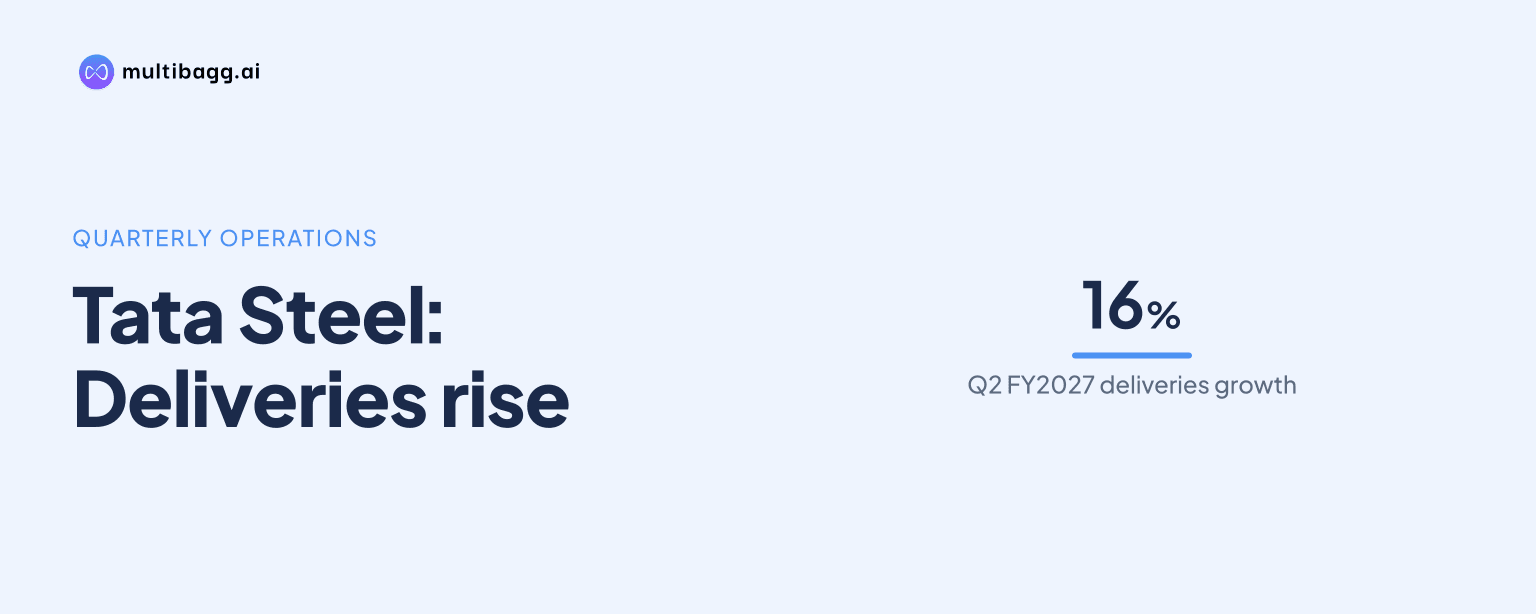
Tata Steel Limited reported its strongest-ever second quarter in India in FY2027, with deliveries rising 16% quarter-on-quarter and consolidated EBITDA margin reaching 16%, despite around ₹4,475 crore of sequential raw-material cost inflation. India’s volume performance helped offset losses in the United Kingdom and the Netherlands.
Know Tata Steel inside out
Results, valuation, peers and who's buying, in one view.
How did Tata Steel Limited perform in Q2 FY2027?
Tata Steel Limited delivered its strongest second-quarter performance in India, where deliveries increased 16% quarter-on-quarter, ahead of a 7% rise in production. Management said the result was achieved despite the monsoon season, which typically weakens construction activity and can affect steel demand.
India remains the company’s main earnings base and accounts for nearly three-fourths of its crude steel production. The company said its wide market reach, product mix and customer-focused approach supported demand across its selected segments. Higher deliveries allowed Tata Steel to maximise volumes during a period of elevated input costs.
The company reported consolidated revenue of about ₹1,26,231 crore and EBITDA of ₹20,035 crore for the first half of FY2027. This translated into a consolidated EBITDA margin of 16%. The earnings-call summary also indicated that the margin was 90 basis points higher sequentially, compared with 15% in the preceding quarter.
A separate earnings summary reported Q2 FY2027 revenue from operations of ₹65,436 crore, up 11.5% year-on-year, and net profit of ₹3,700 crore, up 16.2% year-on-year. India deliveries were reported at 23 million tonnes, up 8% year-on-year. These figures underline the scale of the India business in supporting consolidated performance.
What caused Tata Steel Limited's cost pressure?
The key pressure during the quarter was a rise of about ₹4,475 crore in raw-material costs on a quarter-on-quarter basis. Tata Steel attributed the increase to higher coking coal prices, logistics expenses and freight costs associated with the West Asia conflict.
Coking coal is a major input in integrated steelmaking, making its price movement important for Tata Steel’s margins. Higher freight and logistics costs added to the pressure, particularly when market conditions differ across the company’s operating regions. The stronger delivery performance in India therefore played a central role in absorbing part of the inflationary impact.
Management said it focused on volumes, cost management and capital allocation during the first half. The 16% consolidated EBITDA margin indicates that the company maintained operating profitability despite the sharp increase in input costs. However, the earnings discussion also showed that cost conditions remain an important factor for the second half.
Got a follow-up? Ask IRIS
Why are the United Kingdom and Netherlands operations important?
The United Kingdom and Netherlands businesses remained loss-making during the quarter, contrasting with the record performance in India. The earnings-call summary said European performance would depend on volume recovery, market conditions and regulatory outcomes.
Tata Steel’s management indicated that a decision on the Netherlands business had been deferred to March 2027. This leaves an unresolved strategic issue for the company, as the European operations continue to face a different demand, cost and regulatory environment from India.
The company also provided an outlook for Q3 realisations compared with Q2. In India, realisations were guided higher by ₹3,500 to ₹3,600 per tonne. In the United Kingdom, the guidance was for an increase of £28 to £30 per tonne. In the Netherlands, product-to-product realisations were expected to improve by about €30 per tonne, although the overall figure was expected to be around €11 per tonne lower because of mix.
These indications show that pricing and product mix will remain material to geographic profitability. They also demonstrate why India’s scale and delivery growth are important for the consolidated business while European operations remain under pressure.
What does the result mean for Tata Steel Limited investors?
The result highlights the extent to which India is supporting Tata Steel’s consolidated earnings. Delivery growth outpaced production growth in a seasonally weaker quarter, while the consolidated EBITDA margin improved to 16% despite higher coking coal, freight and logistics costs.
For investors, the result also separates the business into two clear operating trends. India showed stronger demand and volume execution, while the European units remained loss-making. The company’s financial performance will continue to reflect movements in steel realisations, raw-material costs and the pace of recovery in its overseas markets.
Management expects the second half to be stronger than the first half across geographies. That expectation is supported by the realisation guidance disclosed during the call, but the company also identified market conditions, volume recovery and regulatory outcomes as relevant variables for Europe.
The result does not remove the impact of cost inflation. Instead, it shows that India’s delivery growth and operating discipline provided an offset during the quarter. The upcoming quarters will show whether pricing gains and volume trends can sustain this margin level while input costs remain elevated.
Conclusion
Tata Steel Limited’s Q2 FY2027 earnings call showed that India remains the company’s primary earnings anchor. A 16% quarter-on-quarter rise in deliveries, compared with 7% production growth, supported a 16% consolidated EBITDA margin even as sequential raw-material costs increased by about ₹4,475 crore. Losses in the United Kingdom and Netherlands continued to weigh on the wider portfolio.
Investors will watch the company’s second-half delivery and realisation performance, including India’s guided ₹3,500 to ₹3,600 per tonne improvement in Q3 realisations. The deferred Netherlands decision, expected by March 2027, and the direction of coking coal, freight and European steel-market conditions remain the main disclosed issues to monitor.