










Chambal subsidy debtors reach Rs 4,157.3 crore by September
Key highlights
- Chambal’s subsidy debtors were Rs 4,157.3 crore at September 30, 2026, up from Rs 1,954.1 crore at March 31, 2026.
- H1-FY27 subsidy receipts were Rs 5,779.7 crore, compared with Rs 6,347.3 crore in H1-FY26.
- Market debtors rose to Rs 660.6 crore at September 30, 2026 from Rs 121.1 crore at March 31, 2026.
- Standalone H1-FY27 finance cost increased to Rs 39.2 crore from Rs 3.3 crore a year earlier.
powered by IRIS
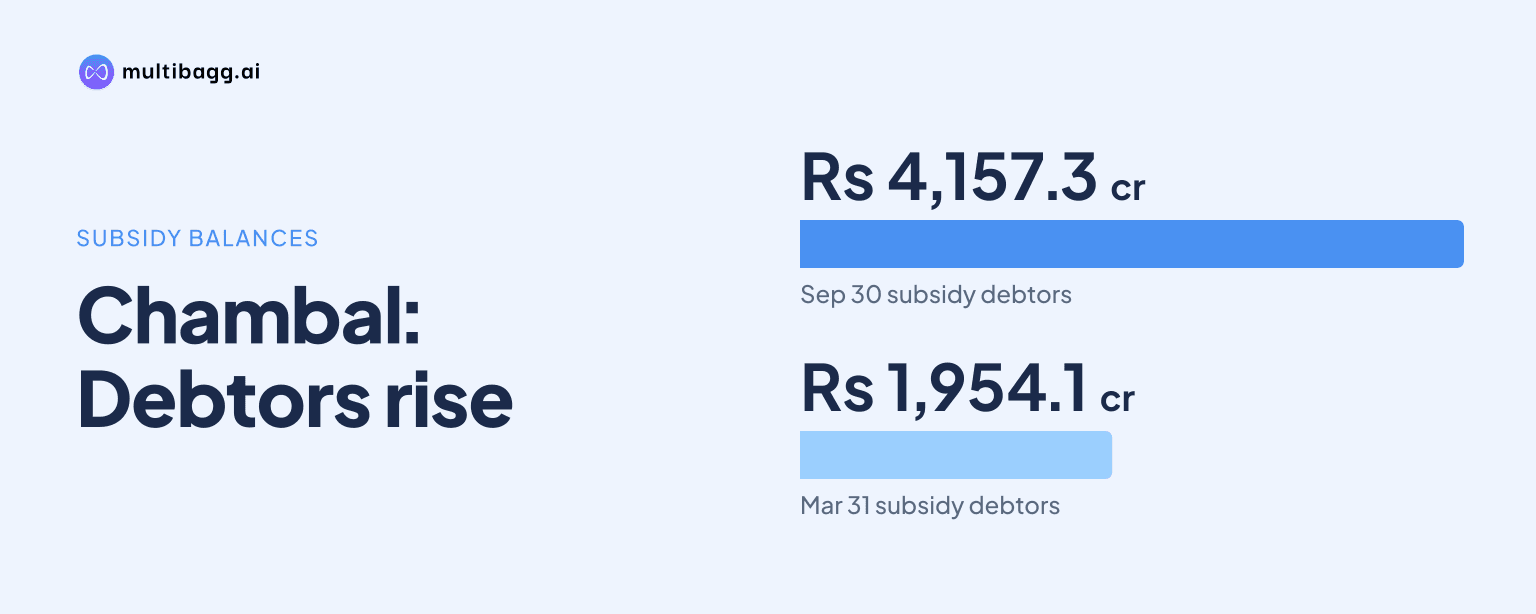
Chambal Fertilisers and Chemicals Limited reported subsidy debtors of Rs 4,157.3 crore at September 30, 2026, up Rs 2,203.2 crore from Rs 1,954.1 crore on March 31, 2026, while H1-FY27 subsidy receipts declined to Rs 5,779.7 crore.
Know Chambal Fertilisers & Chemicals inside out
Results, valuation, peers and who's buying, in one view.
What happened to Chambal’s subsidy receivables?
Chambal’s subsidy debtors more than doubled in the six months to September 30, 2026, reaching Rs 4,157.3 crore from Rs 1,954.1 crore at March 31, 2026. The Rs 2,203.2 crore movement was the larger increase across the two debtor categories disclosed by Chambal and left subsidy debtors well above market debtors of Rs 660.6 crore at the September reporting date.
The September 2026 subsidy-debtor balance was also Rs 2,346.3 crore above the Rs 1,811 crore reported a year earlier, at September 30, 2025. The increase therefore extended beyond the March 2026 closing position, with the latest September balance more than twice the prior-year September amount. Chambal’s presentation gives the balances but does not provide an ageing analysis, identify payment dates, or separate current and overdue subsidy debtors.
Did Chambal receive less subsidy during H1-FY27?
Yes, Chambal reported lower subsidy receipts in both Q2-FY27 and H1-FY27 than in the corresponding prior-year periods. Q2-FY27 subsidy received was Rs 3,299 crore, compared with Rs 3,835 crore in Q2-FY26, a reduction of Rs 536 crore. For the first half, subsidy received fell by Rs 567.6 crore to Rs 5,779.7 crore from Rs 6,347.3 crore in H1-FY26.
The figures measure different items and periods: subsidy received is reported for Q2 or H1, while subsidy debtors are outstanding balances at September 30 or March 31. However, Chambal’s disclosed data shows lower H1-FY27 receipts alongside a Rs 2,203.2 crore increase in the September 2026 subsidy-debtor balance from the preceding March-end. The presentation does not state that lower H1 receipts caused the rise in debtors.
Got a follow-up? Ask IRIS
How did Chambal’s market debtors change alongside subsidy debtors?
Chambal’s market debtors also increased, but their Rs 539.5 crore rise from March 31, 2026 to September 30, 2026 was smaller than the Rs 2,203.2 crore increase in subsidy debtors. Market debtors rose from Rs 121.1 crore to Rs 660.6 crore during the six-month period, while subsidy debtors rose from Rs 1,954.1 crore to Rs 4,157.3 crore.
At September 30, 2026, subsidy debtors were about 6.3 times the market-debtor balance of Rs 660.6 crore. The relationship was different at September 30, 2025, when Chambal reported Rs 1,811 crore of subsidy debtors and Rs 449.2 crore of market debtors. By the latest September date, subsidy debtors had increased by Rs 2,346.3 crore year on year, while market debtors had increased by Rs 211.4 crore.
The comparison shows that the reported increase in debtor balances was concentrated in the subsidy category rather than market debtors. Chambal does not provide sales-credit terms, collection days, debtor ageing, or a split between overdue and current amounts for the Rs 660.6 crore market-debtor balance. Those omissions limit conclusions about collection timing beyond the reported closing balances.
What do Chambal’s H1-FY27 financials show alongside the debtor increase?
Chambal’s standalone H1-FY27 operational income was Rs 12,026.5 crore, marginally below Rs 12,110.4 crore in H1-FY26, while earnings before interest, tax, depreciation and amortisation (EBITDA) rose 9% to Rs 1,751.7 crore. EBITDA margin increased to 14.57% from 13.24%, while standalone profit after tax rose 8% to Rs 1,338.4 crore from Rs 1,239.7 crore.
Finance cost was Rs 39.2 crore in H1-FY27, compared with Rs 3.3 crore in H1-FY26, an increase Chambal reported as 1,080% year on year. The presentation reports this movement alongside the debtor figures but does not link the higher finance cost to the Rs 4,157.3 crore subsidy-debtor balance. The disclosed figures establish that finance cost rose during the half year, rather than identifying the reason.
The quarterly standalone figures show revenue growth alongside a margin decline. Q2-FY27 operational income rose 9% year on year to Rs 6,999.5 crore, while EBITDA increased 7% to Rs 900.9 crore and EBITDA margin declined to 12.87% from 13.13%. Q2-FY27 finance cost was Rs 22.4 crore, against Rs 0.9 crore in Q2-FY26, providing context for the H1 increase.
Conclusion
Chambal’s September 2026 disclosure shows a pronounced build-up in subsidy receivables, with Rs 4,157.3 crore outstanding versus Rs 1,954.1 crore six months earlier and Rs 1,811 crore a year earlier. H1-FY27 subsidy receipts declined to Rs 5,779.7 crore from Rs 6,347.3 crore, although the presentation does not establish a direct causal relationship between lower receipts and higher debtors.
The next disclosure to watch is whether subsidy collections reduce the Rs 4,157.3 crore balance relative to subsidy receipts in subsequent quarters. Chambal gives no receivables-reduction target, collection timetable, ageing schedule, or management plan for the September 2026 balance, leaving the timing of conversion unresolved.