










NALCO targets six November vessels after October disruption
Key highlights
- NALCO dispatched one alumina vessel in October 2026, versus around four vessels a month through September.
- NALCO plans around six alumina-vessel dispatches in November 2026.
- Around four monthly alumina shipments represented about 120,000 tonnes for NALCO through September.
- Management expects average alumina prices of about $370 to $380.
powered by IRIS
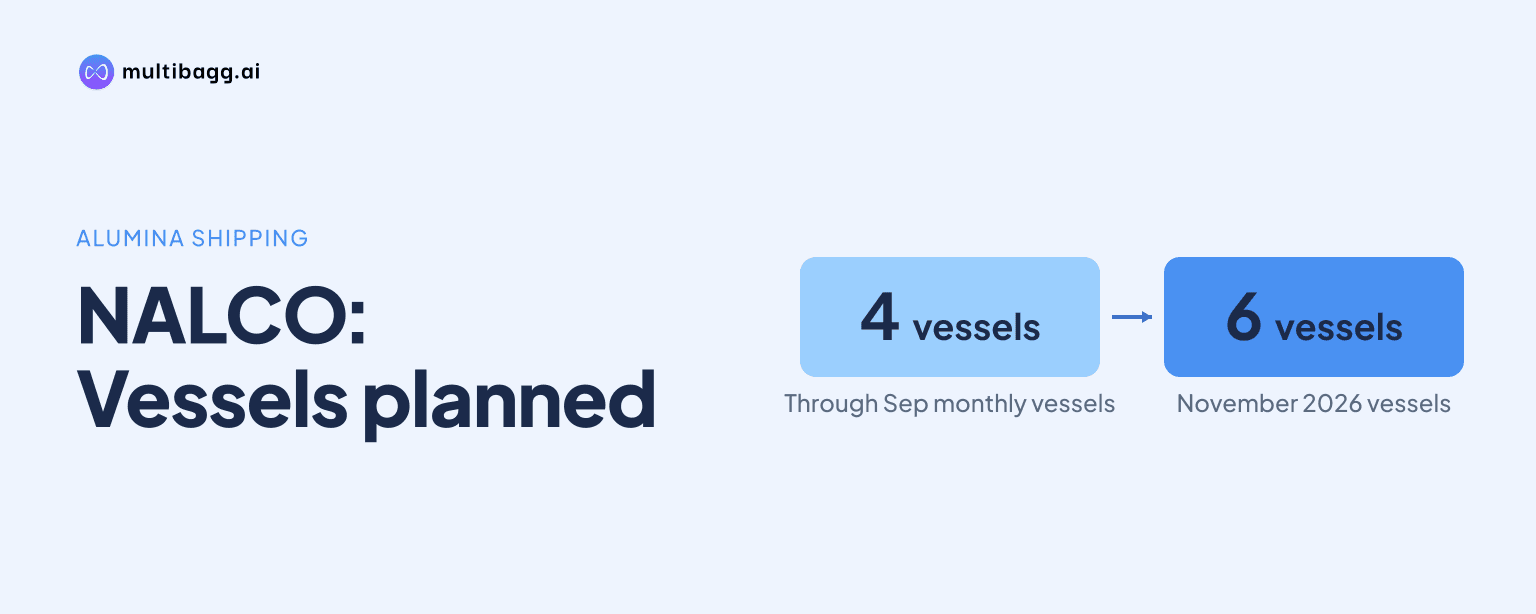
National Aluminium Company Limited plans about six alumina-vessel dispatches in November 2026 after Strait of Hormuz restrictions limited October to one vessel, versus roughly four monthly shipments carrying about 120,000 tonnes through September. NALCO said vessels had been ordered and were in line, but recovery remains dependent on logistics conditions.
Know National Aluminium Company inside out
Results, valuation, peers and who's buying, in one view.
How badly did Hormuz restrictions affect NALCO’s October alumina exports?
Hormuz-related restrictions reduced NALCO’s October 2026 alumina dispatches to one vessel from about four vessels a month through September. Management said four monthly cargoes represented around 120,000 tonnes of alumina shipments, while an analyst said exports were down 16% year on year amid Middle East disruption.
The restriction was a logistics issue rather than a disclosed reduction in NALCO’s alumina production target. Management said ships could not pass normally through the Strait of Hormuz and buyers were unable to put vessels in place. It added that vessels had subsequently been ordered and were waiting in line for November dispatches.
The sequence shows a sharp change in shipment activity: about four vessels a month until September, one vessel in October and a plan for six vessels in November. The November plan is above the earlier four-vessel monthly rhythm, while management said its expected run rate in coming months was around four vessels rather than six.
Why are Middle East restrictions affecting NALCO’s alumina sales?
Middle East smelters face higher delivered alumina costs because ships cannot move through the Strait of Hormuz normally, NALCO management said. Cargoes are being routed to ports including Sohar and then transported by land using trailers, a mechanism that raises costs for smelters and limits their ability to ramp to full capacity.
Management said alumina demand existed in the Middle East, but higher insurance and freight charges meant spot buyers were quoting lower prices. This meant regional alumina shortages did not automatically result in higher bids for NALCO cargoes. The company identified shipping access, rather than a lack of underlying demand, as the immediate constraint.
For the second half of the fiscal year, management expected Middle East aluminium production to exceed the first half as smelters affected by bombing and war-related disruption restarted. It did not give a date for normalisation of Hormuz shipping and said the pace of improvement remained dependent on the geopolitical situation.
What is NALCO planning for November and later months?
NALCO plans around six alumina-vessel dispatches in November 2026 and expects shipment activity to settle at around four vessels a month afterward. Management said the November vessels were already ordered and in line, describing the export position as normalising after October’s single-vessel dispatch.
At the earlier run rate, around four vessels carried about 120,000 tonnes a month through September. The planned six November cargoes therefore point to an intended recovery in dispatch activity after the October interruption, but management did not disclose the tonnage per November vessel or quantify the revenue associated with the planned catch-up.
NALCO also maintained a full-year alumina production outlook of 2.45 million tonnes. Management linked the target to output from four operating refinery streams and the expected contribution of a fifth stream. It said the fifth stream could add 200,000 tonnes of alumina, although a January start would limit its contribution during the financial year.
Got a follow-up? Ask IRIS
What alumina price and sales mix does NALCO expect?
NALCO management expects average alumina prices of about $370 to $380, depending on demand and supply conditions. It said prices had already increased, but did not expect a level above that range at the November 3, 2026 call despite its expectation that Middle East smelters would raise output in the second half.
The company said it had finalised a domestic bulk alumina pricing mechanism based on import parity. Management’s stated aim is to sell alumina domestically at the value received from exports rather than at a lower price. It said domestic pricing would use export relationships and export spot tenders from the preceding month.
NALCO has also issued an expression of interest for supply agreements with Middle East and other smelters lasting two or three years. Management said it expected excess alumina of around 2 million tonnes until its brownfield smelter expansion reached final ramp-up in financial year 2031 or 2032. It said successful long-term arrangements could improve commercial relationships and prices.
How does the export disruption fit NALCO’s second-half outlook?
NALCO management expects second-half margins to remain stable compared with the second quarter, supported by refinery, operating and royalty factors in addition to export normalisation. It said a new refinery stream could add Rs 150 crore to profit before tax, while techno-economic measures could add at least Rs 100 crore.
Management also said a first-half royalty impact would not recur in the second half and combined these items into an expected additional benefit of Rs 300 crore to Rs 350 crore. This is management’s outlook, not a reported result, and depends on refinery commissioning, operational measures and the absence of the earlier royalty impact.
Input costs remain relevant to the outlook. NALCO said caustic soda averaged Rs 47,000 per tonne in the first half and was forecast at around Rs 49,000 per tonne in the third quarter, compared with an earlier range of Rs 25,000 to Rs 32,200 per tonne. Management is targeting a reduction of at least 7 kilograms in caustic soda consumption over the next six months.
Conclusion
NALCO’s October disruption was concentrated in export logistics, with one alumina vessel dispatched instead of the roughly four vessels and 120,000 tonnes associated with its monthly pattern through September. The plan for around six November vessels indicates an effort to recover shipment activity, while the expected four-vessel monthly level remains management’s stated normal operating rhythm.
The next issue is whether NALCO completes the six planned November dispatches and sustains around four vessels monthly as Hormuz logistics develop. Management is also pursuing two- to three-year supply agreements, expects alumina prices of about $370 to $380, and is targeting 2.45 million tonnes of full-year alumina production as the fifth refinery stream is brought into operation.