



Credit Rating
Trident Ltd Credit Ratings Reaffirmed
Trident Ltd's bank facility ratings were reaffirmed by CARE Ratings at CARE AA; Stable for long-term facilities and CARE A1+ for short-term facilities.





IRIS
Multibagg AI is an AI powered stock research and analysis platform. We provide data, information, content, and analytics for publicly traded Indian companies listed on NSE and BSE. AI can make mistakes, check important information.
Prices might be delayed by a few minutes.
Join our Exclusive Community


Join our Exclusive Community
Made with 💙 in India. © Finsky Technologies Pvt Ltd. 2026


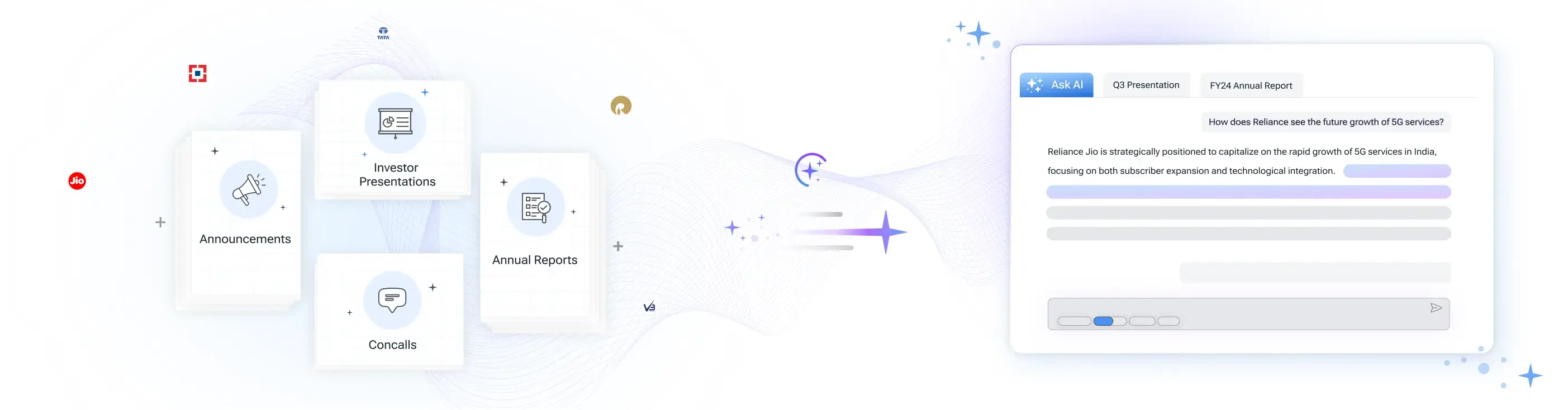
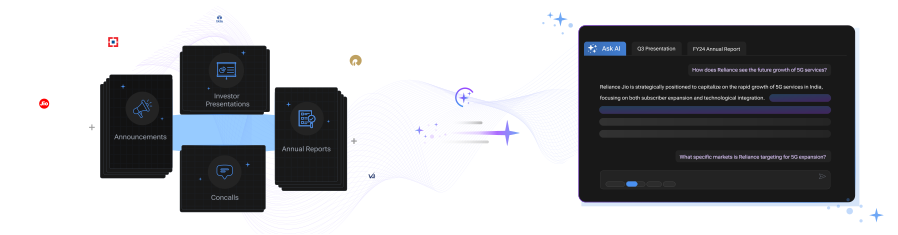
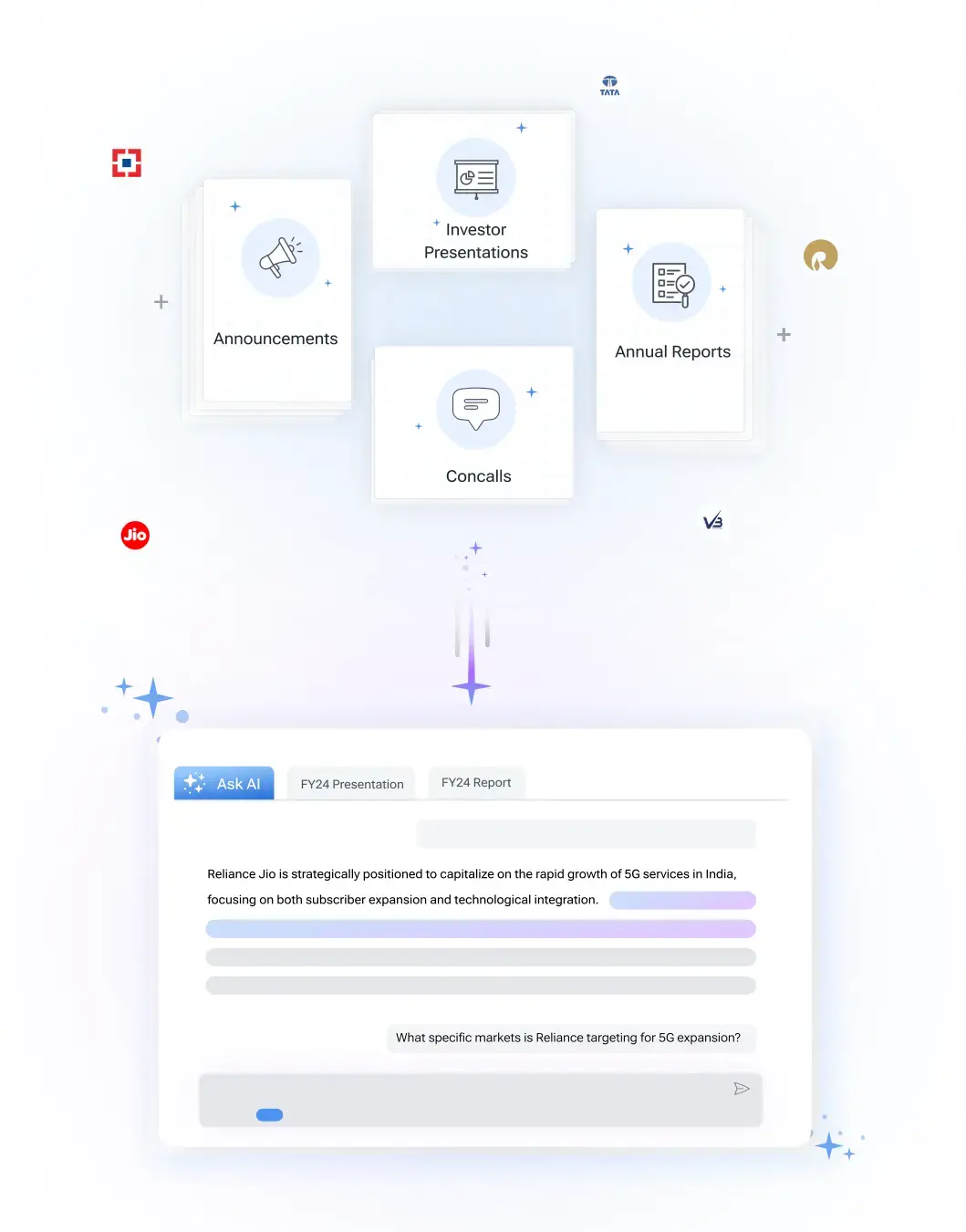
Get instant AI-powered insights about company performance, financials, and strategy. Ask questions about trends, competition, and developments while receiving responses backed by official documents and market data, with clear attribution to source documents.

 Discovery themes featuring this stock
Bearish
1
Neutral
8
Bullish
5
Bearish
13
Neutral
8
Bullish
25
Bearish
12
Neutral
0
Bullish
20
Bearish
12
Neutral
0
Bullish
20
Bearish
12
Neutral
0
Bullish
20
Bearish
12
Neutral
0
Bullish
20
| Symbol | Watchlist | Price | Market Cap | P/E | P/B | Div Yield (%) | ROE (%) | ROCE (%) | ROA (%) |
526.80 | 15,255 Cr | 14.80 | 1.38 | 0.95 | 9.21 | 11.05 | 7.18 | ||
23.35 | 11,899 Cr | 24.80 | 2.85 | 2.14 | 9.85 | 12.33 | 6.54 | ||
545.50 | 10,804 Cr | 44.33 | 4.24 | 0.27 | 9.56 | 11.79 | 4.89 | ||
731.10 | 7,139 Cr | 30.20 | 5.08 | 0.14 | 16.83 | 22.25 | 12.00 | ||
604.80 | 5,105 Cr | 50.12 | 2.59 | 0.00 | 5.17 | 8.69 | 2.03 | ||
103.76 | 4,608 Cr | 23.53 | 2.89 | 0.29 | 12.29 | 13.70 | 6.52 | ||
8.03 | 3,987 Cr | -5.27 | 0.00 | 0.00 | 3.46 | -3.72 | -12.03 | ||
| Median: 7 Co. | — | 526.80 | 7,139 Cr | 24.80 | 2.85 | 0.27 | 9.56 | 11.79 | 6.52 |



Trident Limited manufactures yarn, bath linen, bed linen, paper, chemicals and captive power through integrated facilities in Punjab and Madhya Pradesh. Its portfolio combines home textiles, paper and related manufacturing operations, serving domestic and international customers through established relationships and offices in India, the United States, United Kingdom, Dubai and Singapore.
Q2 FY27 demonstrated substantial operational improvement despite lower revenue. Consolidated EBITDA increased 45.25% year-on-year to INR 3,365 million, while EBITDA margin expanded to 19.37% from 12.85%, indicating stronger cost control, product mix or realization across the business.
Textiles remain the core engine, contributing 83% of standalone segment revenue in Q2 FY27, while paper and chemicals contributed 17%. Textile EBIT margin rose sharply to 18.32%, whereas paper and chemicals margin declined to 11.90%, creating an important margin divergence within the portfolio.
Trident remains meaningfully export-oriented, with exports representing 53% of standalone income in Q2 FY27. Its customer roster includes major global retailers and hospitality names, providing scale and market access, although this exposure also makes performance sensitive to international demand, currency movements, trade policies and customer purchasing cycles.
Balance-sheet metrics improved materially by September 2026. Standalone gross debt declined to INR 13,675 million and net debt to INR 7,215 million, reducing net debt-to-equity to 0.15 times and annualized net debt-to-EBITDA to 0.57 times, while the company continued declaring an interim dividend of INR 0.50 per share.
Textiles & Apparels
Other Textile Products
11,899 Cr
High Risk
24.8
25.5
4.1
2.9
30.85
20.15
Sales CAGR
Profit CAGR
ROE
ROCE
View Standalone
View Standalone
View Standalone
View Standalone
View Standalone
View Standalone
View Standalone
View Standalone
Trident Ltd (TRIDENT) is currently trading at 23.58 per share. Stock prices fluctuate during market hours on NSE and BSE based on demand, company updates, and overall market conditions. Refer to the live price chart above for the most recent price movement.
Trident Limited manufactures yarn, bath linen, bed linen, paper, chemicals and captive power through integrated facilities in Punjab and Madhya Pradesh. Its portfolio combines home textiles, paper and related manufacturing operations, serving domestic and international customers through established relationships and offices in India, the United States, United Kingdom, Dubai and Singapore. Q2 FY27 demonstrated substantial operational improvement despite lower revenue. Consolidated EBITDA increased 45.25% year-on-year to INR 3,365 million, while EBITDA margin expanded to 19.37% from 12.85%, indicating stronger cost control, product mix or realization across the business. Textiles remain the core engine, contributing 83% of standalone segment revenue in Q2 FY27, while paper and chemicals contributed 17%. Textile EBIT margin rose sharply to 18.32%, whereas paper and chemicals margin declined to 11.90%, creating an important margin divergence within the portfolio. Trident remains meaningfully export-oriented, with exports representing 53% of standalone income in Q2 FY27. Its customer roster includes major global retailers and hospitality names, providing scale and market access, although this exposure also makes performance sensitive to international demand, currency movements, trade policies and customer purchasing cycles. Balance-sheet metrics improved materially by September 2026. Standalone gross debt declined to INR 13,675 million and net debt to INR 7,215 million, reducing net debt-to-equity to 0.15 times and annualized net debt-to-EBITDA to 0.57 times, while the company continued declaring an interim dividend of INR 0.50 per share.
Over the past 52 weeks, Trident Ltd has traded between a low of ₹20.15 and a high of ₹30.85. The 52-week high and low indicate the stock’s price range over the last year and help investors understand its volatility and recent trading levels.
Trident Ltd has a market capitalization of approximately 11,899.06. Market capitalization represents the total value of a company’s outstanding shares and helps investors understand its size, stability, and relative risk compared to other listed companies.
Trident Ltd’s investment profile depends on its business fundamentals, valuation, and long-term outlook. The stock currently trades at a PE ratio of 24.80 and operates in the its sector sector. Investors typically assess financial performance, growth prospects, and individual risk tolerance before making investment decisions.
Based on its market capitalization of 11,899.06 Cr, Trident Ltd is classified as a Small Cap stock. Large-cap stocks are generally more stable, while mid-cap and small-cap stocks tend to offer higher growth potential along with higher price volatility.
Trident Ltd operates in the its sector sector. Sector classification matters because companies in the same sector are often affected by similar economic conditions, regulatory changes, and competitive dynamics, which can influence overall stock performance.
The Price-to-Earnings (PE) ratio of Trident Ltd is 24.80. The PE ratio compares a company’s share price to its earnings and is commonly used to assess valuation. Comparing the PE ratio with sector peers and historical levels provides better context.
Trident’s consolidated total income declined 3.67% to Rs 17,371 crore, while EBITDA margin rose to 19.37% from 12.85% a year earlier. Standalone textile EBIT margin increased to 18.32% from 9.37%, and consolidated net profit rose 93.09% to Rs 1,756 crore.
Trident reported standalone net debt of Rs 721.5 crore at September 2026. The figure reflects gross debt of Rs 1,367.5 crore less cash and cash equivalents of Rs 646.0 crore.
Trident has approved Rs 4,650 crore of investment across yarn, sheeting, paper and hybrid-power projects. The two yarn projects account for Rs 2,682 crore, including Rs 1,660 crore for the Dhar facility. The other Rs 1,968 crore is allocated to sheeting, paper and hybrid power.
Trident reduced working-capital borrowings by Rs 331.22 crore in the half year ended September 30, 2026. In the corresponding 2025 period, it recorded a Rs 25.12 crore increase, producing a Rs 356.34 crore swing between the two periods.