










APS plans phased battery storage entry to protect returns
Key highlights
- APS said it will trial BESS before scaling and has set a 30% return-on-investment target.
- APS reported H1 FY27 total income of Rs 439.41 crore, up 45% from Rs 302.93 crore in H1 FY26.
- Management said machinery for up to 3 gigawatts of BESS capacity could cost Rs 10 crore to Rs 15 crore.
- APS had Rs 25.60 crore of cash and bank balances and Rs 51.04 crore of total borrowings on September 30, 2026.
powered by IRIS
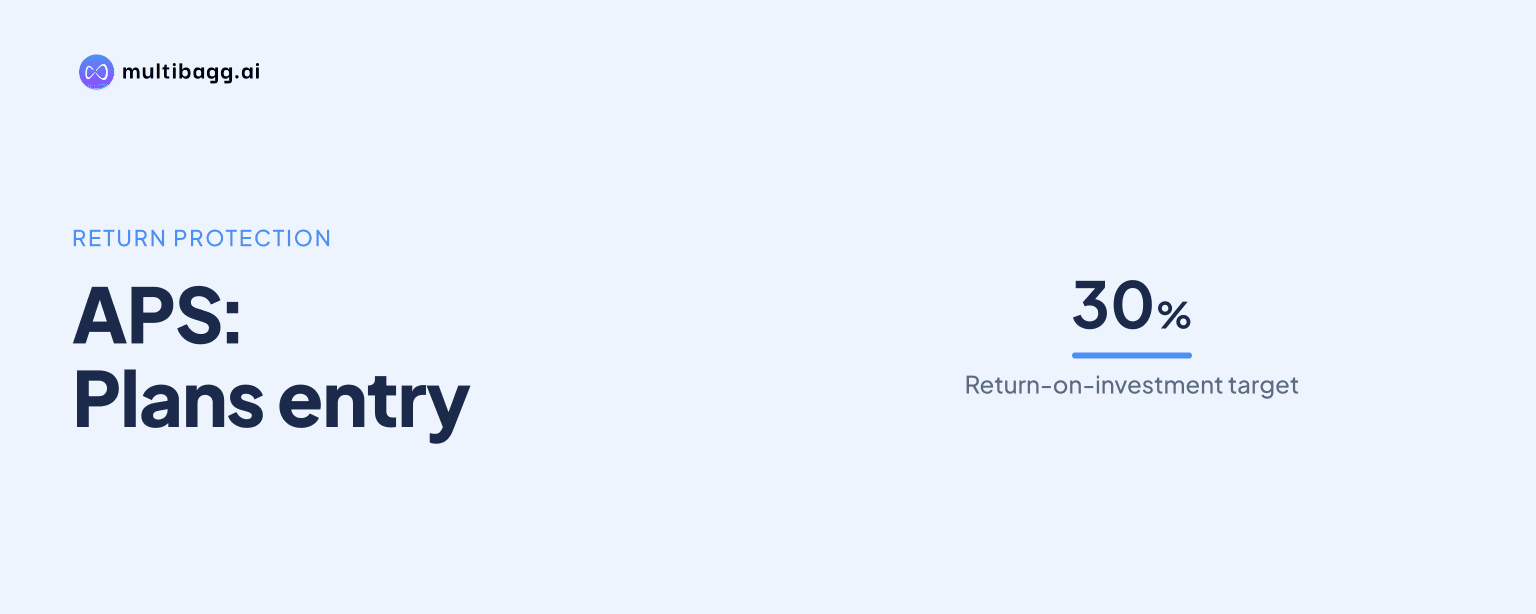
Australian Premium Solar (India) Limited said during its H1 FY27 earnings call that it will test Battery Energy Storage Systems (BESS) and build capability gradually before scaling, using a management target of 30% return on investment. The approach reflects limited residential demand, evolving policy support and management’s expectation that battery prices could fall over six to 18 months.
Know Australian Premium Solar (India) inside out
Results, valuation, peers and who's buying, in one view.
Why is APS entering BESS gradually?
APS is entering BESS gradually because management wants to validate demand and protect its investment-return target before committing substantial capital. On the November 19, 2026 earnings call, Chairman and Executive Director Nikunj Patel said APS would “invest and trial, test, and then invest more,” with a 30% return on investment as its main objective. Patel linked that target to a goal of doubling the balance sheet every two and a half years rather than locking capital into a business that may take longer to develop.
APS has not disclosed a committed BESS investment amount or a date for a full-scale launch. Patel said machinery alone for up to 3 gigawatts of BESS capacity could cost Rs 10 crore to Rs 15 crore, while battery-cell manufacturing is more complex than making battery packs or containers. APS acquired the remaining 49% stake in Aplus Solar Cell Limited, making it a wholly owned subsidiary, and management connected that step with its preparations for BESS activity.
Management’s phased approach also follows its broader capital-allocation model. Patel said APS has historically spent on capacity selectively as it earned and did not expand its machinery base 10 times in a single year when demand was favourable. The company started commercial production from an additional 400 megawatt TOPCon line on October 13, 2026, taking solar-module manufacturing capacity to 1.2 gigawatts, but was still awaiting Approved List of Models and Manufacturers approval for the new line.
Where does APS see BESS demand?
APS sees current BESS demand mainly in ground-mounted utility-scale solar projects, while residential and much of the industrial market remain less developed. Patel said India is installing about 40 gigawatts to 50 gigawatts of solar capacity and argued that storage demand could exceed solar additions because batteries serve electricity use after solar generation ends. He illustrated that a 1 kilowatt solar system producing about five units a day could require a 2.5 kilowatt to 3 kilowatt battery when daytime and night-time consumption are similar.
The company identified selected commercial users as an earlier demand pool. Patel said some industries in Maharashtra pay Rs 12 to Rs 15 for electricity, and up to Rs 20 in peak periods, which could support BESS adoption at current prices. In contrast, he said residential demand will not open until policies or consumer benefits are available, while storage at solar parks could address curtailment by preserving daytime electricity that cannot be sold for use at night.
APS also regards India’s existing solar base as a possible future source of battery demand. Patel said solar systems installed during the past 10 to 12 years could require batteries in the future, in addition to new projects. That opportunity remains conditional on policy, equipment availability, technical knowledge and an operating ecosystem, which management compared with the one to three years required to build solar installation capability in India after APS began operating in 2012.
Got a follow-up? Ask IRIS
How will APS build BESS capability?
APS plans to build a BESS operating ecosystem through smaller trials before expanding manufacturing or project activity. Patel said the company had already “started a few things” following the acquisition of the remaining 49% stake in Aplus Solar Cell Limited and would provide an update later. Management said APS has employees with more than eight, 10 and 12 years of company experience, which it believes could reduce the time needed to develop BESS relative to building its solar operations.
The initial focus discussed by management is BESS containers and battery packs rather than battery cells. Patel said Chinese suppliers have been producing BESS for five, eight and 10 years, which gives them an advantage in tailoring products and supplying them quickly. He nevertheless said Indian manufacturers could gain scope as demand develops, citing a 40% local-supply requirement for BESS containers and suggesting localisation requirements may rise gradually.
Battery pricing is another reason APS is not making a large immediate commitment. Patel said he expected prices to decline over the next six, 12 or 18 months if global market conditions improve, and said a 20% to 30% fall could make storage more affordable. This was management’s expectation rather than company guidance, and it leaves the timing and size of APS’s eventual BESS expansion dependent on market conditions.
Can APS fund a phased BESS investment?
APS has a larger financial base than a year earlier, but it has not earmarked a BESS budget. Total income in H1 FY27 was Rs 439.41 crore, up 45% from Rs 302.93 crore in H1 FY26. Earnings before interest, tax, depreciation and amortisation, or EBITDA, rose 21.08% to Rs 52.40 crore, while profit after tax increased 15.81% to Rs 33.12 crore.
The H1 FY27 EBITDA margin was 11.93%, compared with 12.89% in H2 FY26, while EBITDA was almost unchanged in absolute terms at Rs 52.40 crore versus Rs 52.32 crore. Patel said APS was spending more on marketing and staff while entering new states, with returns expected in three to six months. Management said it believed maintaining a double-digit EBITDA margin would be easier than reaching the 15% to 16% level raised by an analyst.
As of September 30, 2026, APS reported net worth of Rs 197.49 crore, compared with Rs 164.28 crore on March 31, 2026. Cash and bank balances stood at Rs 25.60 crore, total borrowings at Rs 51.04 crore, fixed assets at Rs 74.98 crore and total assets at Rs 454.38 crore. These figures provide context for management’s measured approach, but APS did not say how much cash, borrowing capacity or future cash flow would be assigned to BESS.
The company is also funding the ramp-up of its established solar operations. Its 1.2-gigawatt module base comprises 800 megawatts of TOPCon N-type capacity and 400 megawatts of Mono PERC capacity, according to management. Patel said utilisation of the new line could initially reach 50% in the first quarter after approval and 60% to 70% within six months, reinforcing APS’s stated preference for staged expansion.
Conclusion
APS’s BESS strategy is a conditional expansion rather than a large near-term capital commitment. Management sees potential demand from utility projects affected by curtailment, commercial customers facing high peak-period tariffs and solar systems installed over the past 10 to 12 years, but it is balancing that opportunity against undeveloped residential policy support, battery pricing and the need to build technical capability. The stated 30% return-on-investment target is the filter management has set for further spending.
The next developments to watch are an APS update on its initial BESS work through Aplus Solar Cell Limited, any change in the 40% local-supply requirement for BESS containers, and battery-price movement over the six to 18 months cited by management. APS’s planned ramp-up of the 400 megawatt TOPCon line following pending Approved List of Models and Manufacturers approval is also relevant because management has said it will fund expansion selectively as demand develops.