










Healthcare Stocks After the Democratic Win: Medicaid and ACA in Focus
Key highlights
- Tenet Healthcare shares rose 42.9% between 30 June and 16 October, against 2.1% for the S&P 500.
- KFF analysis of CBO estimates projects the 2025 law cuts federal Medicaid spending by $911 billion through 2034.
- Molina Healthcare drew 75% of its 2025 premium revenue from Medicaid.
- India exported $9.7 billion of pharmaceuticals to the US in 2025, about 90% of it generics.
powered by IRIS
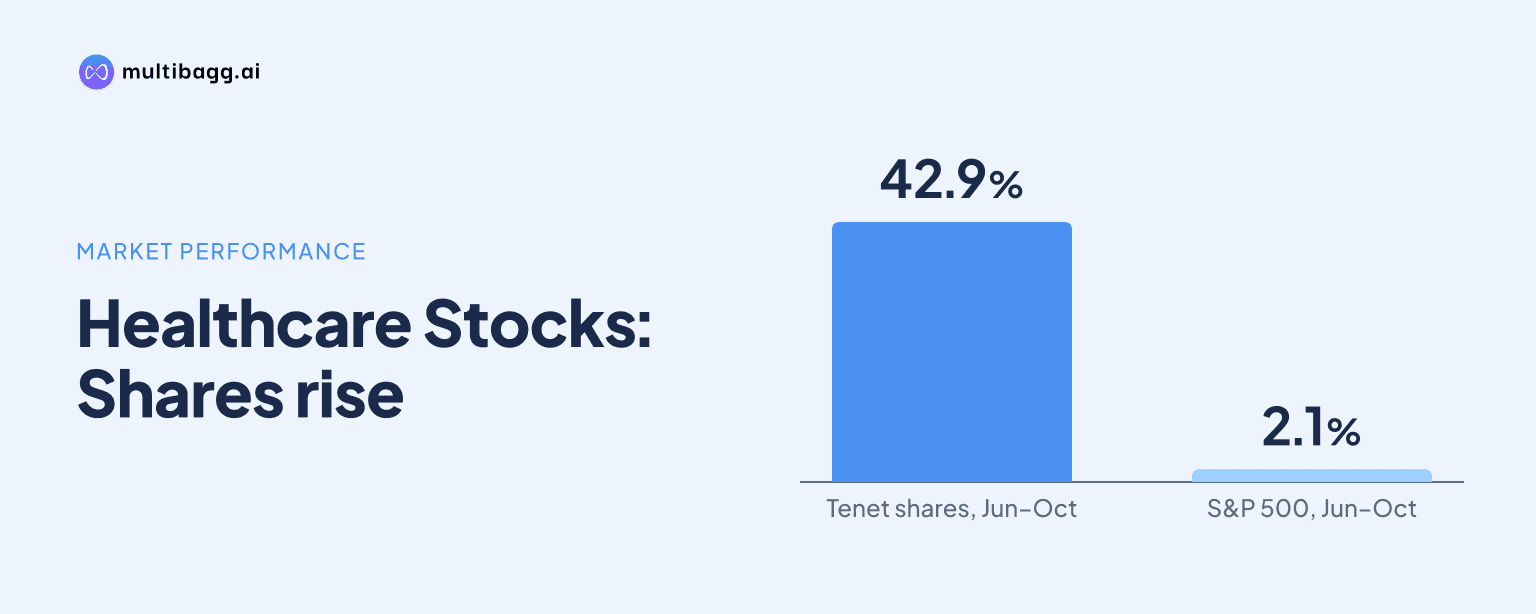
Healthcare stocks are in focus after Democrats were projected to win both chambers. House Democratic leader Hakeem Jeffries named reversing Medicaid cuts and extending ACA (Affordable Care Act) credits as priorities. Trump's veto limits what becomes law. Hospital operator Tenet Healthcare rose 42.9% between 30 June and 16 October, so part of the hope may already be priced in.
What are Democrats trying to change in healthcare?
Democrats want to reverse the Medicaid cuts in the 2025 tax and spending law and bring back the enhanced ACA tax credits. NBC News reports that Jeffries listed both among four priorities, alongside restoring congressional control over tariffs and stopping the war with Iran. NBC News projects Democrats will win about 255 House seats and flip the Senate, but counts are not final.
Medicaid is the US public health insurance programme for low-income people. The ACA runs the marketplaces where people buy subsidised plans. The enhanced credits that lowered those premiums expired at the end of 2025. Democrats' attempts to extend them stalled in the Senate. On 8 January 2026 the House voted 230 to 196 for a three-year extension, with 17 Republicans joining Democrats.
On Medicaid, KFF analysis of Congressional Budget Office estimates projects the law cuts federal Medicaid spending by $911 billion through 2034. New work requirements for enrollees begin on 1 January 2027, or earlier in some states, according to KFF. Hospitals and Medicaid-heavy insurers such as Molina, which drew 75% of its 2025 premium revenue from Medicaid according to CNBC, carry the most exposure. Jefferies named HCA Healthcare, Tenet Healthcare, Community Health Systems and Acadia Healthcare as hospital stocks that could benefit from a Democratic win.
What can actually pass with Trump's veto?
Less than the campaign promises suggest. Democrats can pass bills if both chambers agree, but the president can veto them. JPMorgan Asset Management's Tai Hui said "Trump still has veto power" and expects that to remain a sticking point. Overriding a veto takes two-thirds of each chamber. Two-thirds of the 435-seat House is 290, so about 255 projected Democratic seats would fall short even in the House alone.
The more realistic route is bargaining over must-pass spending bills. According to CNBC, a Democratic chamber cannot repeal the 2025 law alone, but it could use budget negotiations to seek funding changes or delays to some cuts. LPL's Jeff Buchbinder told CNBC, "They're probably going to push back on those Medicaid cuts."
Jefferies analyst Brian Tanquilut wrote in an October note that Democratic control of both chambers could delay scheduled Medicaid payment cuts to hospitals, possibly through debt-ceiling talks (negotiations to raise the legal limit on US government borrowing). He rated a full return of the expanded ACA subsidies as less likely than a delay to Medicaid cuts.
Timing matters too. The new Congress takes office in January. Until then, a lame-duck session (the outgoing Congress sitting until January) must handle the 11 December expiry of the stopgap funding law (a temporary law that keeps the government funded). Tai Hui expects a debt-ceiling deadline some time next year.
Got a follow-up? Ask IRIS
Has the market already priced in the Democratic win?
Partly, and the evidence is mixed. The S&P 500 healthcare sector index rose more than 9% in the three months before 19 October, according to Axios, which added that the move is hard to pin on the election alone. Hospital stocks ran well ahead of the broader market between 30 June and 16 October, according to Becker's Hospital Review.
Election hopes are not the only driver. Barron's pointed to investors shifting into defensive sectors such as healthcare amid worries about AI stocks, and Argent's Ellerbroek attributed the gains partly to the anti-AI trade. Tai Hui's view is that recent market moves were more about the AI story than politics. The Nasdaq Composite closed at 25,437.00 on 30 October, down 2.86%, its lowest close since 31 July. At the time of writing, no verified healthcare price moves for 4 November were available.
Does the result matter for Indian pharma stocks?
Only indirectly. The Medicaid and ACA fight is about US insurance coverage and hospital payments, not generic drug imports. India exported $9.7 billion of pharmaceuticals to the US in 2025, according to Business Today. About 90% of those exports are generics, according to the Global Trade Research Initiative, cited by Business Today.
Business Today reported in April that generics were exempt from the tariffs of up to 100% on branded medicines. Reports conflict on whether that exemption still applies. The Week reported on 29 September that Indian generics face the tariff unless the maker is actively building US plants. No analyst cited here has linked the result to Indian drugmakers.
Conclusion
The projected result raises the odds that Medicaid cuts to hospitals are delayed or softened, but not that they are reversed. Democrats can pass bills if both chambers agree, Trump can veto them, and their main bargaining power lies in must-pass spending bills and a debt-ceiling deadline that JPMorgan Asset Management's Tai Hui expects some time next year. Hospital and Medicaid-focused insurer shares had already moved, and part of that move reflected a rotation away from AI stocks rather than the election alone.
Watch the final seat counts, which could still shift by a few seats, and the 11 December funding deadline, which the current Republican-led Congress must address. Medicaid work requirements begin on 1 January 2027, and the timing of any debt-ceiling negotiations will show whether hospital payment cuts become a bargaining chip. For Indian investors, the tariff treatment of generics remains the more direct pharma risk.