










Indian Chaska more than doubled distributors by Q2 FY27
Key highlights
- Indian Chaska increased distributors from 145-plus in FY26 to 350-plus in Q2 FY27, a reported 141% rise.
- Indian Chaska expanded its range from 27-plus to 57-plus SKUs, a reported 111% increase.
- Indian Chaska reached 50,000-plus retailers in Q2 FY27, compared with 27,865-plus in FY26.
- Indian Chaska reported sales of Rs 7 crore+ in H1 FY27 across an eight-state footprint.
powered by IRIS
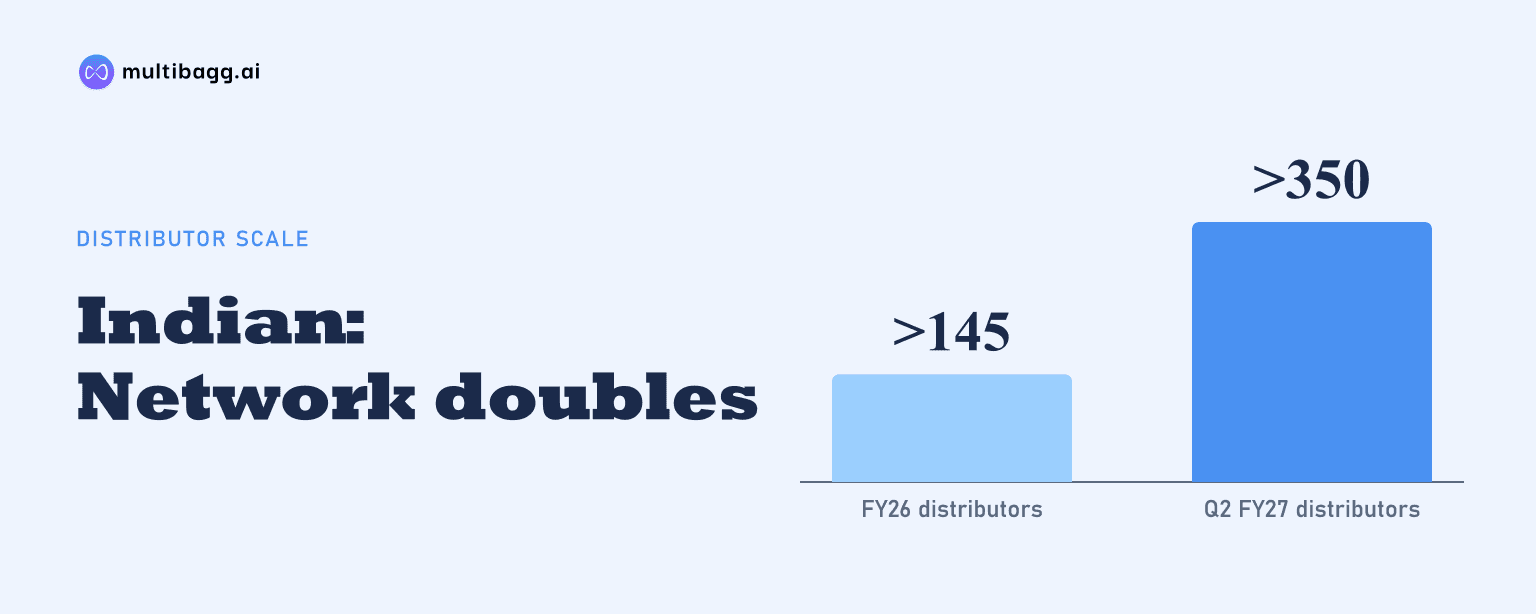
Patel Retail Limited's Indian Chaska more than doubled its distributor base to 350-plus in Q2 FY27 from 145-plus in FY26, a reported 141% increase, while its range rose to 57-plus stock-keeping units. Indian Chaska also reached 50,000-plus retailers, compared with 27,865-plus in FY26, across an unchanged eight-state footprint.
Know Patel Retail inside out
Results, valuation, peers and who's buying, in one view.
How quickly did Indian Chaska expand its distribution network?
Indian Chaska increased its distributor count from 145-plus in FY26 to 350-plus in Q2 FY27, representing reported growth of 141%. This was the highest reported growth rate among the brand's three stated scale measures: distributors, stock-keeping units and retailers.
Indian Chaska's retailer network rose by more than 79%, from 27,865-plus outlets in FY26 to 50,000-plus in Q2 FY27. The presentation describes this as deeper last-mile retail penetration and identifies distributors and retailers as the brand's trade-led route to market.
The number of states remained at eight in both FY26 and Q2 FY27 despite the growth in distributors and retailers. On the disclosed figures, Indian Chaska expanded its trade coverage within its reported geography rather than increasing the reported state count.
What products did Indian Chaska add to its range?
Indian Chaska expanded from 27-plus stock-keeping units, or SKUs, in FY26 to 57-plus in Q2 FY27, a reported 111% increase. Its range covers staples, spices, flours and processed foods, while management says the brand is now entering the seasonings category.
Indian Chaska is positioned as a value-led packaged-food brand focused on everyday Indian staples. The presentation lists Kitchen King Masala, Garam Masala, Biryani Masala and Misal Masala among its product labels, and displays Rs 5 and Rs 10 price points.
The increase in SKUs occurred alongside the rise in distributors from 145-plus to 350-plus between FY26 and Q2 FY27. Management identifies a wider range across staples, spices, flours and processed foods as a growth lever, but the presentation does not state how many added SKUs belong to each category.
Indian Chaska reported sales of Rs 7 crore+ in H1 FY27, compared with Rs 12.10 crore in FY26. H1 FY27 covers six months and FY26 is a full financial year, so the presentation does not provide a like-for-like sales growth comparison between those periods.
Got a follow-up? Ask IRIS
How broad is Indian Chaska's market reach?
Indian Chaska reported an eight-state distribution footprint in both FY26 and Q2 FY27, which the presentation describes as pan-India distribution. Within that footprint, its distributor base rose 141% to 350-plus and its retailer reach rose 79% to 50,000-plus.
The unchanged state count sits alongside an increase of more than 22,000 retailers from the FY26 base of 27,865-plus. The presentation does not identify the eight states, provide city-level coverage, or disclose the number of distributors and retailers in each state.
Indian Chaska is also one of the brands exported by Patel Retail Limited, alongside Patel Fresh and third-party labels. Patel Retail Limited reported exports to more than 35 countries, but it did not disclose Indian Chaska-specific export sales, countries served or overseas distributor numbers.
In Q2 FY27, export revenue was Rs 89.34 crore, or 52%, of Patel Retail Limited's manufacturing and processing sales, while domestic revenue was Rs 82.15 crore, or 48%. Those figures cover the wider manufacturing and processing segment, including own private labels and third-party brands, rather than Indian Chaska alone.
What manufacturing support does Indian Chaska have for expansion?
Indian Chaska has in-house manufacturing support from Patel Retail Limited's integrated processing ecosystem in Maharashtra and Gujarat, according to management. The company reports two processing facilities and one agri-cluster with total installed capacity of more than 1,50,000 metric tonnes per annum, or MTPA, supporting retail, private-label and export operations.
The Ambernath, Maharashtra facility has capacity of 14,400 MTPA and processes pulses, spices and groceries through cleaning, grading, sorting, packaging, deshelling and roasting. Patel Retail Limited says the facility is located within 60 kilometres of major stores, although it does not allocate its capacity or output by brand.
Patel Retail Limited's two Kutch, Gujarat locations add 43,200 MTPA and 93,000 MTPA of capacity. The 43,200-MTPA site focuses on peanuts and whole spices, while the 93,000-MTPA agri-cluster processes spices, flour, peanuts, sesame and mango pulp and includes 3,040 metric tonnes of dry warehousing and 3,000 metric tonnes of cold storage.
Manufacturing and processing revenue was Rs 619.22 crore in FY26, compared with Rs 444.34 crore in FY25 and Rs 531.72 crore in FY24. The segment generated Rs 376.29 crore in H1 FY27, but the presentation does not disclose Indian Chaska's share of segment revenue or the brand's manufacturing capacity allocation.
Conclusion
Indian Chaska's FY26-to-Q2 FY27 scale-up was led by trade reach and assortment: distributors increased 141% to 350-plus, SKUs increased 111% to 57-plus, and retailers increased 79% to 50,000-plus. The eight-state count was unchanged, indicating that the reported network gains were concentrated in greater distribution depth within the stated footprint.
The next disclosed development to watch is management's entry into the seasonings category and whether this wider range contributes to sales beyond the Rs 7 crore+ reported for H1 FY27. The presentation does not provide Indian Chaska sales by category, state, channel or export market, leaving those measures unresolved for future disclosures.