










Life Insurance Corporation of India VNB Margin Rises 750 Basis Points
Key highlights
- LIC reported a 750-basis-point increase in VNB margin in its November 5, 2026 earnings-call material.
- LIC's reported profit increased 22.8%, although no absolute profit amount was provided.
- The call highlights cited market-share erosion and a shrinking agent base as operational concerns.
- The supplied material identifies R. Doraiswamy, CEO and MD, as leading LIC senior management on the call.
powered by IRIS
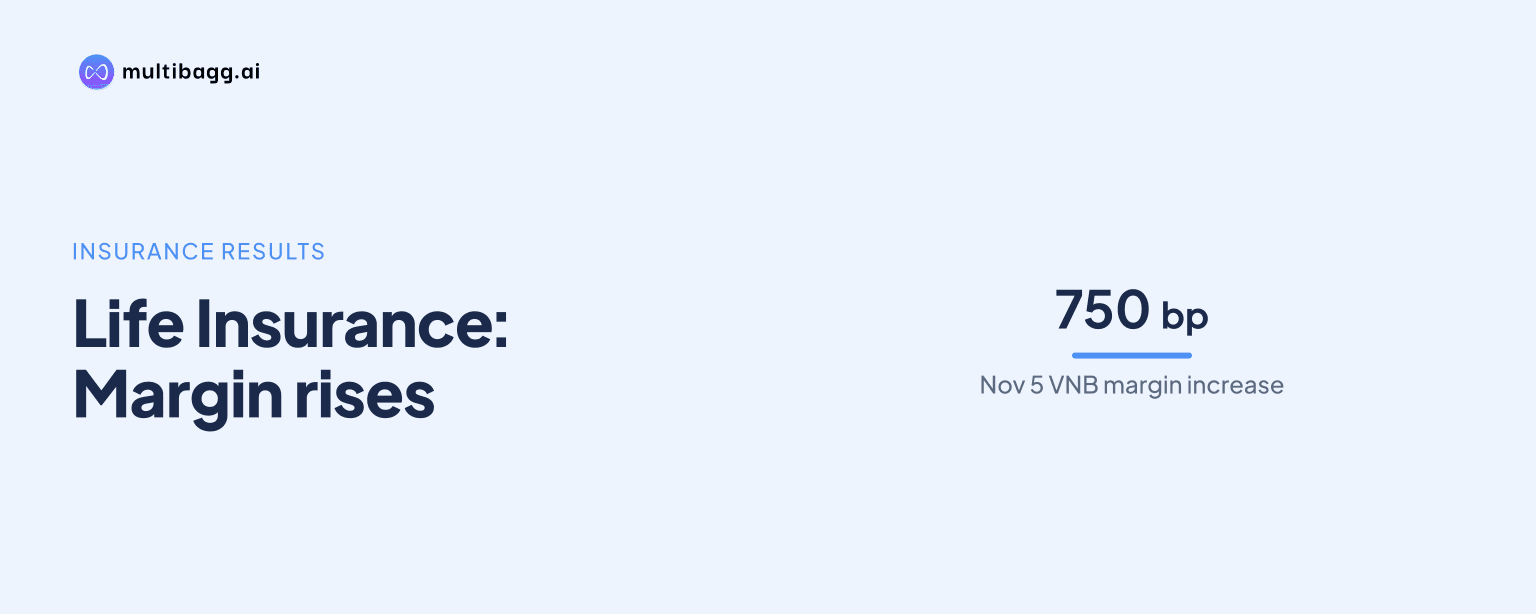
Life Insurance Corporation of India reported that its value of new business margin rose by 750 basis points in the earnings-call material released on November 5, 2026, while profit increased 22.8%, although market-share erosion and a shrinking agent base remained operational concerns.
Know Life Insurance Corporation of India inside out
Results, valuation, peers and who's buying, in one view.
What did Life Insurance Corporation of India report in the earnings call?
Life Insurance Corporation of India reported a 750-basis-point improvement in value of new business, or VNB, margin and a 22.8% increase in profit in the earnings-call highlights. The figures point to improved profitability in new business written during the reported period, even as the call material flagged distribution and market-share pressures.
VNB margin is an important measure for life insurers because it indicates the expected profitability of new policies relative to the premium base used in the calculation. A 750-basis-point increase equals a 7.5-percentage-point improvement. The supplied material does not state the starting margin, the closing margin, VNB in rupee terms, or the absolute profit reported for the quarter.
The conference-call material identifies R. Doraiswamy, Chief Executive Officer and Managing Director, as leading senior management on the call. The event transcript is dated November 5, 2026, and is presented as a Q2 2027 earnings call in the supplied headline material.
How did the reported margin and profit performance develop?
LIC's reported margin expansion and profit growth were the central financial outcomes highlighted in the call summary. The material characterises the performance as value-accretive growth, meaning that the reported new business mix and economics supported profitability rather than only premium volumes.
However, the available extract does not provide a line-by-line bridge for the improvement. It does not specify whether product mix, pricing, investment assumptions, expense management, persistency, or changes in actuarial assumptions contributed to the VNB-margin movement. These drivers therefore cannot be separately quantified from the source provided.
The transcript extract also contains a timing inconsistency. Its presentation header refers to a Q2 2027 earnings call, while the operator's welcome refers to LIC's Q1 FY27 earnings conference call. Investors using this material should rely on LIC's formal results release and investor presentation for the precise reporting period and complete financial statements.
Why are market share and agent numbers important for LIC?
Market share and the agent base matter because they indicate the scale and reach of an insurer's distribution franchise. The earnings-call highlights said market-share erosion and a shrinking agent base tempered the otherwise stronger profitability indicators.
LIC has historically relied on a large agency-led distribution model alongside other channels. A reduction in agent numbers can affect customer reach, policy servicing capacity and the ability to source new individual business, although the supplied material does not quantify the fall in agents or identify affected regions and channels.
The market-share reference also needs to be read alongside the margin result. A higher VNB margin can reflect a more profitable business mix, but lower market share can indicate that competitors are gaining a larger proportion of industry business. The call extract does not state the relevant market-share measure, its prior level, or the competitors involved.
Got a follow-up? Ask IRIS
What are the key figures from LIC's call material?
The key disclosed figures are a 750-basis-point VNB-margin increase and 22.8% profit growth. The available text does not provide revenue, premium income, assets under management, embedded value, VNB amount, policy count, or share-price movement for this reporting event.
For context, LIC's earlier disclosures show that premium growth and market share have been closely watched by investors. In the quarter ended June 30, 2024, the company reported total premium income of ₹1,13,770 crore, up 15.66% year on year, and profit after tax of ₹10,461 crore, up 9.61%. Those historical figures are separate from the November 2026 call material and should not be treated as comparable Q2 2027 data.
How does the update affect investors and the insurance sector?
For investors, the update places profitability and distribution strength in focus at the same time. The 750-basis-point VNB-margin increase and 22.8% profit growth are positive reported indicators, while the stated erosion in market share and agent base highlights areas that may influence business volumes and competitive positioning.
No share-price reaction, valuation change or earnings forecast was provided in the supplied text. It would therefore be unsupported to infer the market's immediate assessment of the result. The disclosed information supports only that LIC reported stronger margin and profit metrics alongside operating pressures.
For the broader life-insurance industry, the update illustrates the importance of balancing growth with the profitability of new business. Insurers compete for customers through agency networks, bancassurance, direct channels and product offerings. LIC's reported agent-base pressure is relevant because distribution capacity remains a core part of life-insurance operations.
Conclusion
LIC's earnings-call highlights show a clear improvement in reported new-business profitability, with VNB margin rising 750 basis points and profit increasing 22.8%. At the same time, the references to market-share erosion and a smaller agent base mean that operational scale and distribution remain significant factors alongside financial performance.
The next point to watch is LIC's formal results presentation and regulatory disclosures for the exact reporting-period classification, absolute VNB and profit figures, market-share data, and agent-count trends. The supplied material does not disclose targets, a recovery plan, or a scheduled update on these specific issues.