










Niva Bupa expects loan-linked and online volumes to hold under curbs
Key highlights
- Niva Bupa said its retail business grew in the 30s in October despite a higher comparison base.
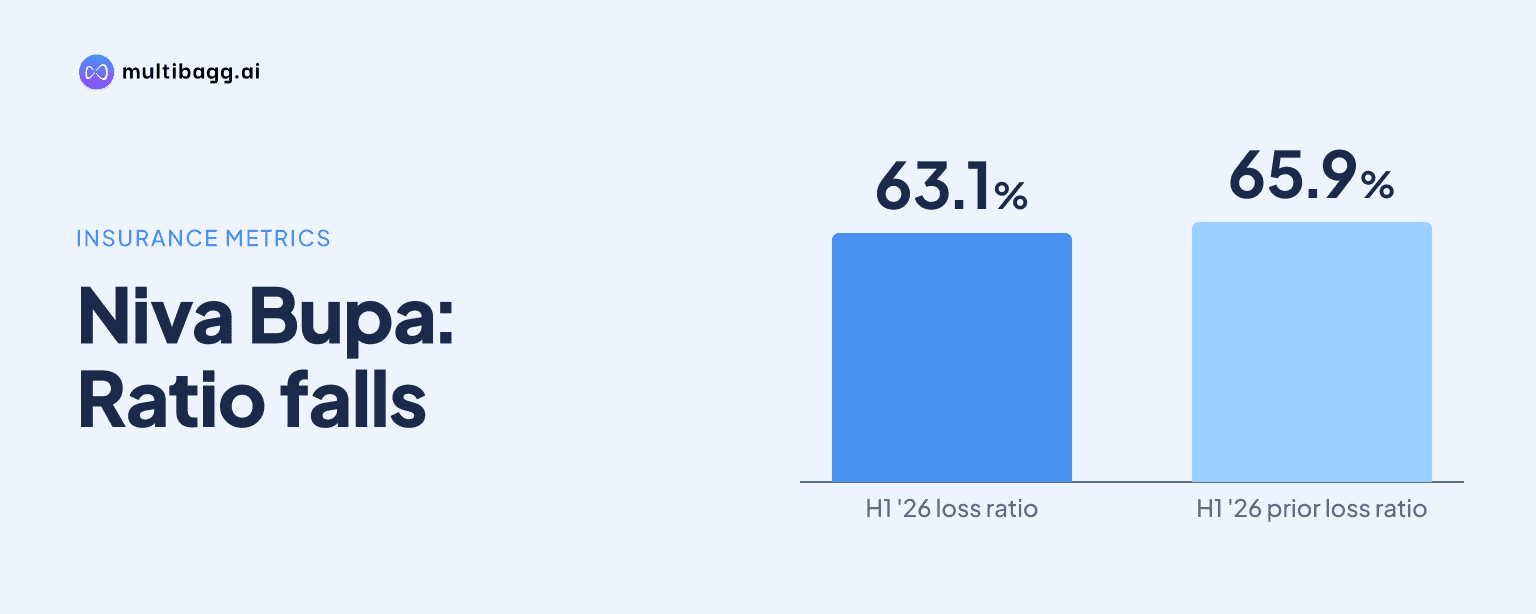
- Niva Bupa reported a 63.1% total loss ratio in H1 '26, down from 65.9%.
- Niva Bupa expects loan-linked health-cover volume to remain stable or rise even if commissions decline.
- Niva Bupa reported a 2.03 H1 solvency ratio and has approval to raise up to Rs 500 crore of debt capital.
powered by IRIS
Niva Bupa expects loan-linked health-cover and Policybazaar volumes to hold under proposed commission curbs, with loan-linked volumes potentially rising, after its retail business grew in the 30s in October. Management said lower channel value may result, but stable or lower customer prices could increase insurance demand.
Know Niva Bupa Health Insurance Company inside out
Results, valuation, peers and who's buying, in one view.
Will Niva Bupa's loan-linked health-cover volumes hold up?
Niva Bupa expects loan-linked health-cover volumes to remain broadly unchanged and potentially increase even if commissions decline. Management said hospitalisation is one of the major reasons for loan delinquency, making health cover relevant to lenders and borrowers in a loan transaction. Its expectation rests on the protection provided by the product, rather than solely on distributor compensation.
Management said the value generated by the attachment business may decline even if policy volume is stable or higher. It expects pricing changes and product innovation as partners adjust to the eventual rules, while seeking to protect consumers and loanees. Niva Bupa did not quantify the attachment channel's premium contribution, expected price movement or effect on acquisition costs under the draft framework.
The distinction between volume and value is central to management's position. Niva Bupa said the product remains important for every loan, but did not forecast unchanged revenue, margins or commissions from the channel. The final outcome will depend on how partners redesign their models once the regulator provides more clarity on the proposed commission rules.
What does Niva Bupa expect from Policybazaar?
Niva Bupa expects Policybazaar-sourced business to continue growing at the market rate, although management said Policybazaar's growth could slow under a revised commission structure. Management described Policybazaar as a familiar place for Indian customers seeking health insurance, supporting its view that online consumer demand can continue despite changes in distributor economics.
Niva Bupa said it will work with all partners, not only Policybazaar, on new business models under the regulations. The plan is to develop arrangements that allow both the insurer and its distributors to continue growing, rather than preserve existing commercial terms. Management gave no numerical forecast for Policybazaar volumes, channel revenue or the timing of a revised model.
October retail growth was the company's current demand indicator. Management said retail business grew in the 30s in October even though the comparison base changed because October in the prior year had delivered very good growth. It said it sees that growth trend continuing, but disclosed no full-year retail target and no separate online-distribution growth target.
How could Niva Bupa's commission reforms affect prices and demand?
Niva Bupa said it would pass benefits to customers when the regulations take effect, subject to its target of mid- to high-teens return on equity, or ROE. Management said amounts above that target would be passed on, but did not specify whether the benefit would take the form of lower premiums, higher sum insured or product changes in every channel.
Management believes that lower prices, or prices that remain unchanged for a period, can increase insurance demand. It cited the goods and services tax, or GST, experience as evidence that price elasticity affects customer demand. This was management's view of the likely market response, not a forecast for policy sales, gross written premium or the customer savings from lower commissions.
The acquisition-cost effect remains unresolved. An analyst referred to an acquisition ratio of about 29%, and management corrected the current figure to 21-point-something percent, but declined to estimate a post-reform level. Management said channel mix, potential price reductions and the regulator's final rules could all affect where the ratio settles.
Got a follow-up? Ask IRIS
What do Niva Bupa's claims and solvency figures indicate?
Niva Bupa reported that its total loss ratio declined to 63.1% in H1 '26 from 65.9% in the prior comparison, an improvement of almost 300 basis points. Management said the retail loss ratio was 67.4% and that retail improved by 77 basis points, meaning the larger movement in the overall ratio came from the group business mix.
Management said group business was flat or declining because it would not accept business where pricing did not support its combined-ratio requirements. It added that business-to-business activity was a smaller share of the overall book, while small and medium enterprise groups within employer-employee business continued to perform robustly. Management attributed the group-affinity outcome to mix, rather than a substantial improvement in attachment-business loss ratios.
Niva Bupa reported a solvency ratio of 2.03 in H1 under Indian Generally Accepted Accounting Principles, or Indian GAAP. Management said first-half solvency is seasonally lower because profits come in the second half, especially in quarter 4. It said modelling under both Indian GAAP and Indian Accounting Standards, or Ind AS, left it comfortable with the current solvency level.
Management said it does not expect to need equity capital and has board approval to raise debt capital of up to Rs 500 crore if required. It also said a future risk-based capital framework could align more closely with Ind AS, but the company is awaiting an exposure draft of a quantitative impact study from the regulator before disclosing its assessment. The effect of lower prices, claims-based capital requirements and new solvency rules therefore remains open.
Conclusion
Niva Bupa's view is that commission curbs may reduce value in particular distribution channels without necessarily reducing customer demand. Its case combines the loan-protection role of hospitalisation cover, Policybazaar's continuing consumer reach and management's belief that lower or stable prices can expand the insurance market. Retail growth in the 30s in October and the H1 '26 loss-ratio decline to 63.1% provide the operating backdrop for that position.
The next issues to watch are the regulator's final distribution rules, the pricing and product changes that Niva Bupa develops with partners, and the quantitative impact study for risk-based capital. Management has not estimated the eventual acquisition ratio, channel-level value effect or solvency impact. It plans to work with distributors on new models and retains approval to raise up to Rs 500 crore of debt capital if needed.